
Livraison le jour même ou le lendemain

Qualité garantie

Débloquez vos offres de bienvenue: Livraison GRATUITE | Jusqu'à -80 % | 30 jours d'essai gratuits à JoyPlus
Téléchargez l'application
By the Head of Product Recommendations at Joybuy
Induction hobs heat up quickly, but not all cookware is compatible with this type of cooking. To work properly, a saucepan, stockpot or casserole dish must have a sufficiently magnetic base that is perfectly suited to the hob. For British families cooking soups, sauces, pasta or stews, the choice isn't just about diameter or looks.
Product listings sometimes make appealing promises without detailing the limitations of use. Here are the points to check before buying an induction-compatible saucepan or stockpot.
The phrase "suitable for all hob types" is supposed to include induction. To be safe, though, it's better to look for an explicit mention in the technical specifications. The base should generally be magnetic and perfectly flat. On a utensil you already own, the magnet test can give you an initial clue, but it doesn't replace the manufacturer's information.
Also consider the other heat sources you use at home: gas, electric or ceramic hobs. A model compatible with induction can be versatile, but whether it can go in the oven, under the grill or directly over a flame depends on its design.
A non-stick saucepan makes cleaning easier and stops certain foods from sticking. This type of coating does, however, require a few precautions: moderate heat, no prolonged dry heating, and the use of wooden, silicone or plastic utensils.
Coated aluminium also needs a specific base to work on induction. Conversely, an uncoated stainless steel saucepan generally resists scratches better, but requires well-controlled temperatures and proper care to minimise marks and food sticking.
An enamelled cast iron casserole dish retains heat very well, but it can become particularly heavy once filled. Similarly, a 4-litre stockpot might suit a family but prove difficult to handle in a narrow sink or dishwasher.
Before ordering, compare:
The quality of heat distribution depends directly on the design of the base. An encapsulated or multi-layer base can promote more even heating, especially for soups, sauces and long, slow cooking. It must also remain perfectly flat to ensure good contact with the hob.
Models made from 304 stainless steel with a magnetic composite base are often compatible with several heat sources. This description reflects the composition stated by the manufacturer; it does not, on its own, guarantee identical results for every recipe.
A stockpot with a lid that is transparent lets you keep an eye on cooking without lifting the lid. For pasta, vegetables or soups, a pouring rim can also help reduce splashes when serving.
The "dishwasher safe" claim should be checked for each component. A removable handle, for example, may need to be washed by hand even if the pot itself is dishwasher safe.
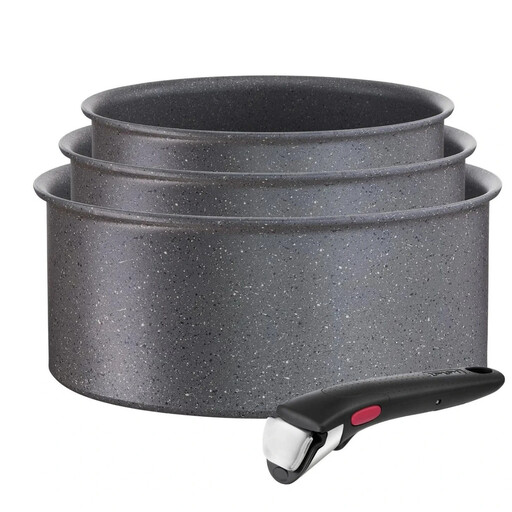
Why this choice suits this profile: the set includes saucepans of 16, 18 and 20 cm plus a removable handle. Stackable, it fits easily into a small kitchen and works well for students or households wanting to cover several uses.
Induction compatibility is clearly stated, as is use on gas, electric and ceramic hobs. The handle is removed before oven use, up to 250 °C according to the product listing.
Mineralia+ coating stated as PFOA, cadmium and lead free, Thermo-Signal indicator and dishwasher-safe utensils, except for the handle.
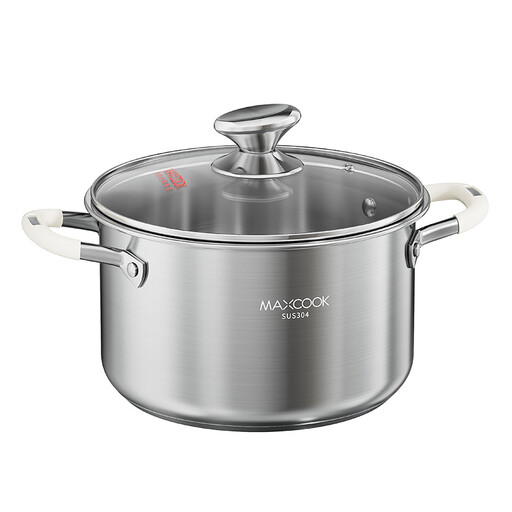
Why this choice suits this profile: its 4.3-litre capacity is ideal for soups, pasta, vegetables and family meals. Thanks to its glass lid, you can keep an eye on cooking without opening the stockpot.
The listing mentions a base suitable for induction, gas, electric and ceramic hobs. The silicone handles should, however, be kept away from a direct flame.
304 stainless steel, encapsulated base and 4.3 l capacity. Hand washing is recommended to preserve the finish, despite the stated dishwasher compatibility.
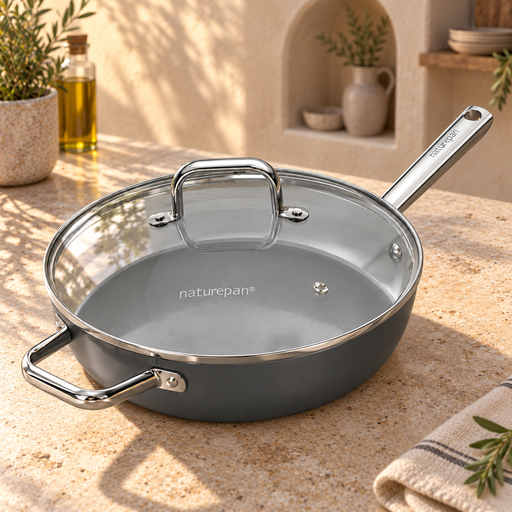
Why this choice suits this profile: this deep sauté pan is perfect for saucy dishes, stir-fried vegetables and slow-cooked meals for several people.
The listing states compatibility with induction, gas, electric and ceramic hobs, as well as oven use up to 260 °C according to the version described.
28 cm diameter, high sides, lid included and reinforced ceramic coating. The manufacturer states it is dishwasher safe, while recommending a gentle cycle.
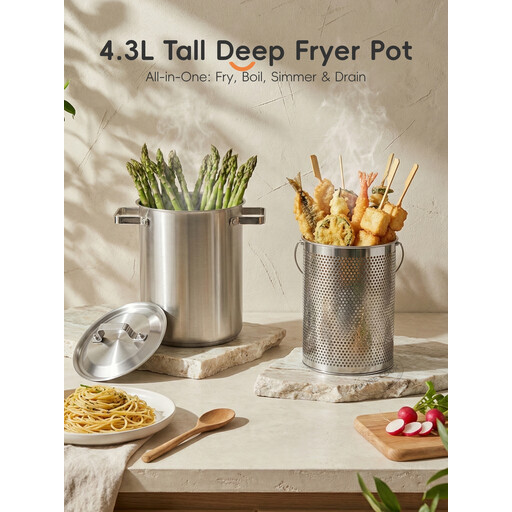
Why this choice suits this profile: its deep format and perforated basket are designed for home frying, while also allowing you to cook pasta, soup or blanch vegetables.
The magnetic composite base is stated as compatible with induction, gas and ceramic hobs. The depth reduces some splashes, but doesn't replace the necessary precautions with hot oil.
304 stainless steel, stated capacity of 4.3 l and removable basket. Never overfill the pot with oil and never leave frying unattended.
Discover a regularly updated selection of products meeting these criteria, for induction hobs as well as other heat sources.
Look for the induction symbol or an explicit mention in the product listing. The base must contain a magnetic material and be sufficiently flat. If you use multiple hobs, also check the minimum diameter detected by your cooktop.
For one or two people, a 1 to 2-litre saucepan is usually enough for sauces, milk or small portions. For three to five people, a 3 to 5-litre stockpot will be more suitable for soups, pasta and stews. A larger pot is useful for big meals, but it becomes significantly heavier once filled.
Use low to medium heat, avoid heating the pan when empty and use silicone or wooden utensils. Let it cool down before washing and check the manufacturer's instructions regarding the dishwasher. These few precautions slow down the wear of the coating and make everyday use easier.