
Livraison le jour même ou le lendemain

Qualité garantie

Débloquez vos offres de bienvenue: Livraison GRATUITE | Jusqu'à -80 % | 30 jours d'essai gratuits à JoyPlus
Téléchargez l'application
An induction saucepan needs to tick several boxes: heat evenly, remain stable on the hob and offer a capacity suited to one or two people. Whether you want to heat milk, prepare a sauce, soup, pasta or a baby meal, the diameter and material often matter more than the marketing claims printed on the packaging.
Before buying, it is best to avoid three common pitfalls: induction compatibility being advertised without any indication of suitability for other hobs, a non-stick coating that is difficult to maintain, and a capacity that is either oversized or too limited for everyday needs.
An induction-compatible saucepan generally has a magnetic base. However, this does not necessarily guarantee that it will be perfectly suitable for gas, electric or ceramic hobs. If your home has several types of hob, check that the product listing clearly mentions compatibility with the following: induction, gas, electric and ceramic.
Also beware of bases that are too narrow, as some induction hobs may not detect them properly. The outer diameter and the area that is actually magnetic are therefore two details to check before buying.
A non-stick saucepan makes cleaning easier and helps prevent food from sticking, but its coating needs a little care. Metal utensils, abrasive sponges and overheating will accelerate wear. A claim such as « PFOA-free » or « PFAS-free » describes a feature stated for the product concerned; it is not a general guarantee of its lifespan.
To protect the surface, opt for wooden, silicone or heat-resistant plastic utensils. Also check the washing instructions: some models should not be cleaned in the dishwasher.
A 16 cm saucepan is ideal for heating milk, preparing a sauce or cooking an individual portion. However, a shallow pan increases the risk of spills when making soup, porridge or pasta. In this case, a deeper saucepan with an easy-grip lid is considerably more practical.
A small saucepan should not be chosen solely according to the space available in your kitchen. Consider the quantities you usually prepare and the minimum diameter recognised by your induction hob.
304 stainless steel, also referred to as food-grade stainless steel in the relevant product listings, stands up well to regular use and does not rely on a non-stick coating. However, it requires gradual heating and suitable cleaning to help prevent white or rainbow-coloured marks from appearing.
Aluminium with a non-stick coating heats quickly and is generally easy to clean. However, you should follow the care recommendations and avoid knocks that could damage the surface.
Enamelled cast iron retains heat for a long time and is particularly well suited to gentle cooking. Its main drawback is its weight, which can become inconvenient for a saucepan that is moved frequently.
A saucepan with a lid helps prevent splashes and retain heat. A glass lid lets you monitor cooking without lifting it, while a metal rim can improve its mechanical strength. Nevertheless, check the instructions regarding sudden changes in temperature.
A saucepan with a removable handle is easy to store and can be moved from the hob to the oven, depending on the manufacturer’s instructions. Before lifting the saucepan, make sure the handle is correctly locked in place. If young children are nearby, always point the handle towards the back of the hob and use an oven glove if the handle is hot.
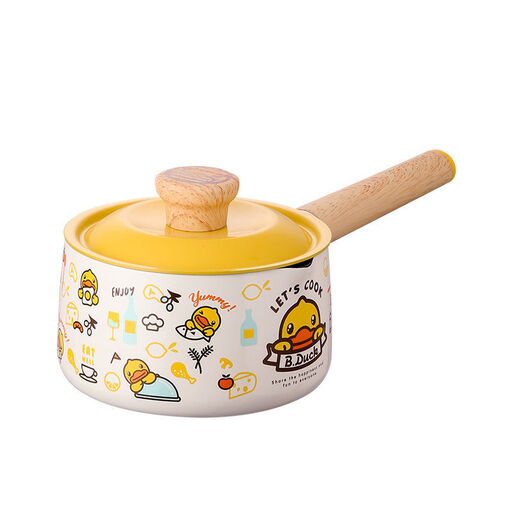
Why this choice suits this profile : its compact size is ideal for milk, sauces and small portions. It is advertised as having a non-stick design and being compatible with all heat sources.
The product listing specifies the compatible hob types and mentions an anti-overflow design. However, dishwasher cleaning is not recommended.
16 cm diameter, non-stick coating and advertised compatibility with induction, gas and other common heat sources.
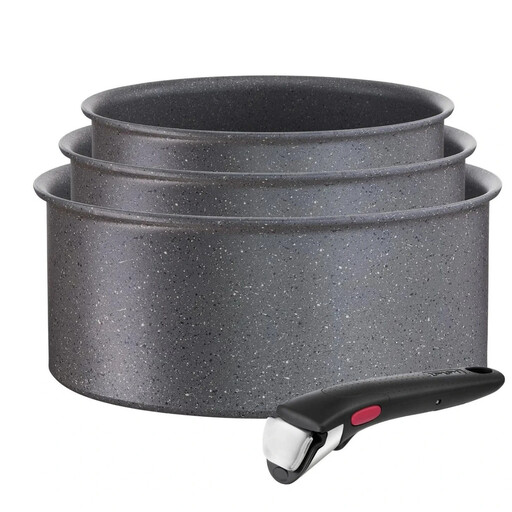
Why this choice suits this profile : its removable handle makes storage easier, and the product listing states that it is compatible with induction, gas, electric and ceramic hobs.
The handle can be removed for storage and must be taken off before placing the pan in the oven. The product listing also specifies that only the saucepan is dishwasher-safe.
Set including 16, 18 and 20 cm saucepans, with Mineralia+ non-stick coating and a handle advertised as having a 10-year guarantee.
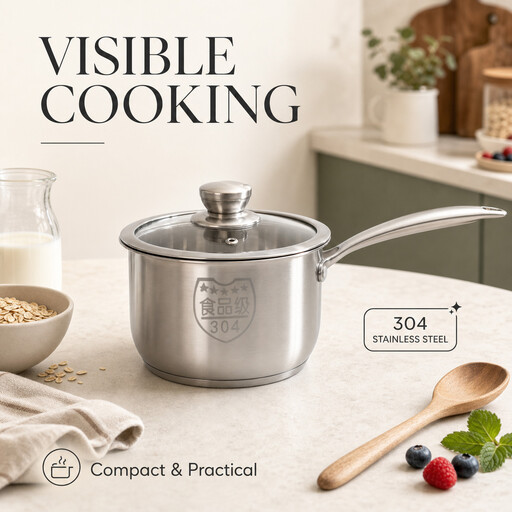
Why this choice suits this profile : its deep body and multi-layer magnetic base are suitable for soups, noodles, porridge, reheating and small portions.
The product listing details the material, magnetic base and compatible hob types. It recommends avoiding abrasive products and thermal shock to the lid.
304 stainless steel, tempered glass lid, riveted handle and stated compatibility with induction, gas and ceramic hobs.
We have compiled a complete, real-time updated list of products that fully meet these strict selection criteria and European safety regulations.
To extend the lifespan of an induction-compatible saucepan:
For food prepared for a baby, follow the usual food hygiene rules and check the temperature before serving. A saucepan for cooking baby food is not a medical device: its usefulness lies in its size, depth and ease of use.
Yes, if the product listing states that it is compatible with these heat sources. The sole mention « induction-compatible » is not enough to confirm that it can be used on all hobs. The models presented above advertise broad compatibility, which should be checked in each product listing before buying.
A 16 cm saucepan is generally suitable for milk, sauces and individual portions. An 18 cm saucepan offers more room for porridge, vegetables or a small soup. The 20 cm size is better suited to several portions or pasta, at the cost of taking up more space.
Its lifespan depends on how often it is used, the temperature and how it is maintained. There is no universal lifespan that applies to every coating. Moderate heating, non-metal utensils and gentle washing all help preserve the surface. If the coating shows visible signs of deterioration, stop using the saucepan concerned and refer to the manufacturer’s instructions.