
Livraison le jour même ou le lendemain

Qualité garantie

Débloquez vos offres de bienvenue: Livraison GRATUITE | Jusqu'à -80 % | 30 jours d'essai gratuits à JoyPlus
Téléchargez l'application
An induction saucepan needs to meet several requirements at once: it must be compatible with your hob, heat evenly, remain practical for everyday use and withstand the care routine recommended by the manufacturer. However, product pages sometimes blur the distinction between compatibility, coating and the capacity actually available.
Whether you live alone, as a couple or with your family, here are the criteria to consider before buying a saucepan, an induction stockpot, a cooking pot or a deep sauté pan.
The phrase “all hobs” is not always enough. A saucepan compatible with gas and electric hobs may still fail to work on induction if its base contains no magnetic material. For an induction hob, look for an explicit indication: induction compatible, a dedicated symbol or a magnetic base.
Compatibility may also depend on the technology used. Some borosilicate glass models, for example, require an induction adapter disc. The Belissam product presented below must be used with the MC60090 disc on an induction hob.
A diameter of 22 or 28 cm is not enough to determine the usable capacity. The height of the sides, the shape of the base and the thickness of the material directly affect how much you can actually cook.
A small 14 to 16 cm saucepan is suitable for sauces, milk, pasta for one person or baby food. For soup for the whole family, an induction stockpot with a capacity of 4 to 6 litres is a better choice. Also check the diameter of the base: wherever possible, it should match the hob’s heating zone.
A non-stick saucepan makes it easier to release food, but it is not indestructible. Prolonged heating when empty, metal utensils and abrasive sponges can accelerate wear.
Even when a product is advertised as dishwasher-safe, hand washing with a soft sponge is often preferable to help preserve the surface. Always consult the product specifications, particularly regarding oven use, dishwasher cleaning and removable handles.
Use these guidelines to help you choose:
A transparent lid lets you monitor cooking without lifting it. For steaming, look for a model equipped with a steaming basket or a suitable insert.
An encapsulated or composite base is designed to distribute heat more evenly. This is particularly useful on an induction hob, where stable contact between the base and the magnetic zone is essential.
Also check:
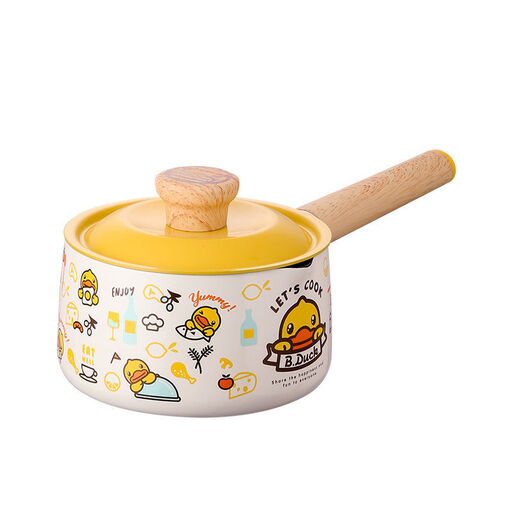
Why it is a compelling choice: its compact format is ideal for one person, a student or small everyday preparations. The product listing states that it is compatible with all heat sources.
Compatibility with induction, gas, electric and other hobs is stated directly in the listing, rather than relying solely on the phrase “all hobs”.
Its 16 cm format and stated non-stick surface are well suited to sauces, milk and small portions.
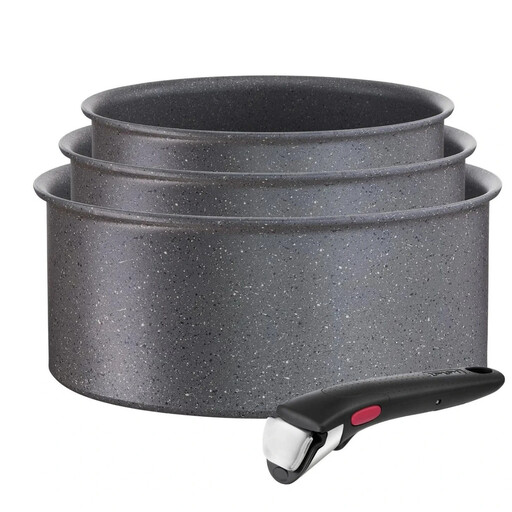
Why it is a compelling choice: its removable handle and stackable design meet the needs of compact kitchens and homes where every inch of storage matters.
The instructions specify that the handle must be removed before oven use and washed by hand, clearly defining the product’s usage limits.
It is compatible with induction, gas, electric and ceramic hobs, and can be used in the oven up to 250 °C without the handle.
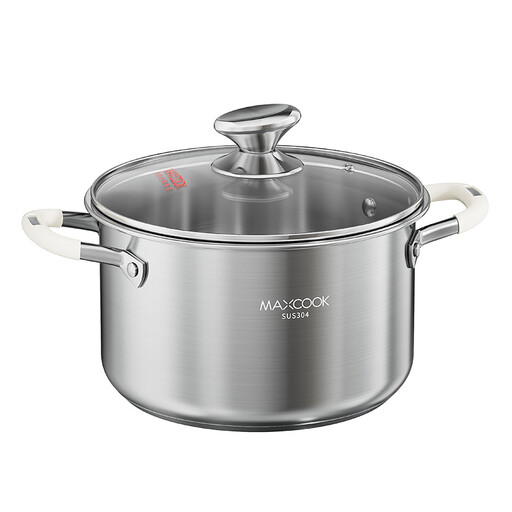
Why it is a compelling choice: its capacity is suitable for soups, pasta, slow-cooked dishes and family-sized meals. The glass lid lets you monitor the boil.
The 4.3 L capacity and composite base are listed separately, allowing you to compare volume and heat distribution rather than relying on diameter alone.
The listing specifies 304 stainless steel, compatibility with induction, gas, electric and ceramic hobs, and silicone handles.
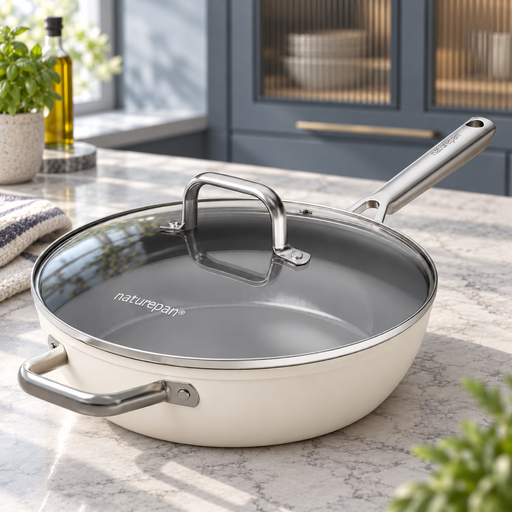
Why it is a compelling choice: its high sides and lid are ideal for vegetables, meat in sauce, slow-cooked dishes and recipes prepared in a single pan.
The listing clearly distinguishes the aluminium body from the ceramic coating and specifies the usage limits: it is not microwave-safe, and the lid must be removed before oven use.
Its 28 cm diameter, included lid and compatibility with induction, gas, electric and ceramic hobs make it a versatile choice. It is oven-safe up to 230 °C without the lid.
We have brought together an updated selection of products meeting these compatibility, capacity and usage criteria for hobs available in France.
To extend the life of your cookware:
An enameled cast-iron casserole should also be handled carefully because of its weight. With borosilicate glass, avoid exposing it to sudden temperature changes or impacts.
Often, yes, when the product listing specifies compatibility with gas, electric and ceramic hobs in addition to induction. Still, check the exact model: specifications may vary from one saucepan to another within the same collection.
A capacity of 4 to 5 litres is generally suitable for soups, pasta, vegetables and slow-cooked dishes prepared in larger quantities. For a single serving, 1 to 1.5 litres is usually sufficient. Leave some room below the rim to help prevent spills.
That depends on the product. Some listings permit dishwasher use but still recommend hand washing to preserve the coating. The removable handle on the Tefal model featured here must be washed by hand in particular. Always consult the manufacturer’s instructions before running the first cycle.