
Livraison le jour même ou le lendemain

Qualité garantie

Débloquez vos offres de bienvenue: Livraison GRATUITE | Jusqu'à -80 % | 30 jours d'essai gratuits à JoyPlus
Téléchargez l'application
Equipping your kitchen with the right cookware can sometimes feel like a daunting task. A non-stick induction pan might seem like a simple purchase, but between vague marketing promises and design flaws, a promising investment can quickly turn into a disappointment. As the Head of Product Recommendations at Joybuy, my mission is to help you decode the technical jargon to make an informed, durable choice that's truly right for your kitchen.
Before you take the plunge, let's review three common pitfalls that can cost you dearly and send your new pan to the trash in just a few months.
To avoid these traps, focus on a few non-negotiable technical points. These are the true guarantors of your future pan's quality and longevity.
This is the most critical point for performance and durability.
A pan for all stovetops, including induction, must have a base specifically designed to perform on this type of cooktop.
Think about how you will use it in your daily routine.
Instead of a random list, we've matched products to user profiles to help you find that perfect pan.
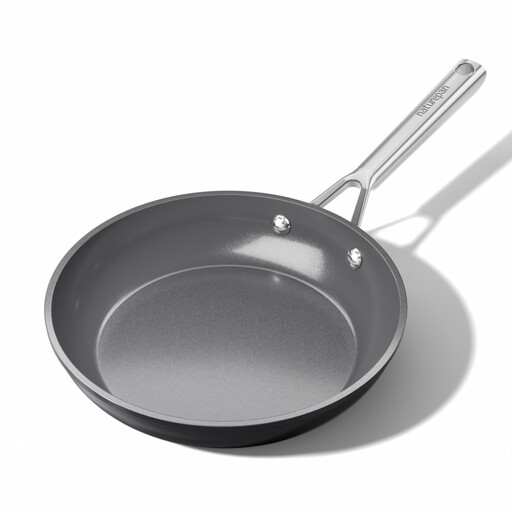
Why we chose it: Ideal for daily use (eggs, vegetables, fish), this 24 cm pan combines a reinforced ceramic coating for durability with a guaranteed PFAS-free design for cooking with peace of mind.
It goes beyond the simple "PFOA-free" claim by guaranteeing it is completely free of PFAS. Its stainless steel handle allows it to go in the oven up to 260°C (500°F), thus avoiding the false versatility trap.
Ceramic coating reinforced with diamond and titanium particles for increased durability. Optimised base for fast and even heat diffusion on induction.
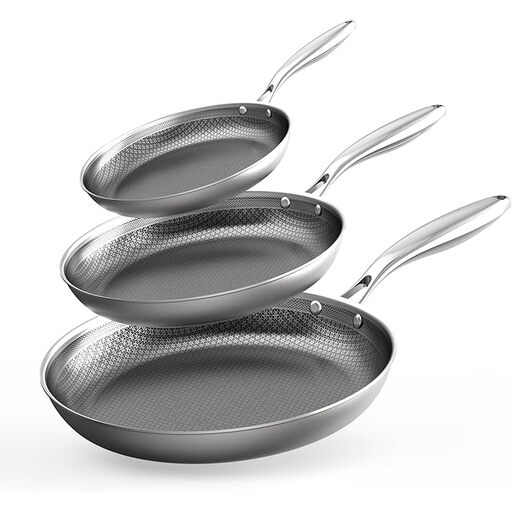
Why we chose it: This induction pan set (20, 25, and 30 cm) covers all of a family's needs, from a small omelette to a generous meal. The all-stainless-steel construction is a guarantee of rock-solid durability.
By offering a cohesive set, it ensures consistent induction performance across all sizes. No more headaches from mismatched pans with uneven performance. The handles stay cool on the stovetop, a detail that matters.
Versatile trio of sizes. Compatible with all stovetops, oven, and dishwasher for maximum convenience in daily use.
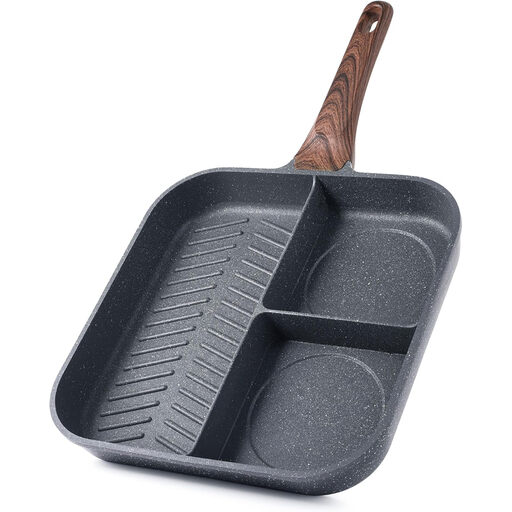
Why we chose it: This smart piece of cookware is the secret weapon for preparing a full breakfast or a varied meal without mixing flavours. You can cook eggs, bacon, and pancakes simultaneously, or a steak with its sides.
Its thick 4.5 mm base with a stainless steel bottom ensures excellent conductivity on induction, the usual Achilles' heel of sectioned pans. The coating is guaranteed PFOA- and PFOS-free.
Ultra-practical 3-in-1 design. Swiss ILAG non-stick coating for lightning-fast cleanup. Ridges for perfect searing marks and good fat drainage.
We have compiled a complete and up-to-date selection of products that meet our demanding selection criteria and safety standards.
Its longevity depends primarily on the quality of its coating and how it's maintained. An entry-level model will last 1 to 2 years. A reinforced ceramic pan or a hybrid non-stick stainless steel pan can last 3 to 5 years, or even longer, provided you take care of it: use wooden or silicone utensils, avoid thermal shock, and opt for hand washing.
The easiest trick is the magnet test: if a magnet sticks firmly to the outer bottom of the pan, it is ferromagnetic and therefore ready for induction. You can also look for the official induction symbol (a pictogram shaped like a coil) on the packaging or engraved on the bottom of the pan.
It all depends on your cooking style. A ceramic pan is often praised for being PFAS-free and having an ultra-smooth surface, perfect for delicate cooking at low to medium temperatures (eggs, fish). A non-stick stainless steel pan with a honeycomb texture offers the robustness of stainless steel for searing meats at high temperatures, while protecting the non-stick coating in the recessed areas. It's the most versatile option for those who want the best of both worlds: searing like a pro and cleaning up effortlessly.