
Livraison le jour même ou le lendemain

Qualité garantie

Débloquez vos offres de bienvenue: Livraison GRATUITE | Jusqu'à -80 % | 30 jours d'essai gratuits à JoyPlus
Téléchargez l'application
An induction-compatible non-stick frying pan can make everyday meals much easier. You still need to choose the right model, though. A pan advertised as suitable for «all hob types» may heat slowly on an induction hob, while a pan that is easy to clean may need to be washed by hand to preserve its coating.
Before comparing prices, it is therefore worth checking a few practical features. Here are the most common pitfalls, the criteria to consider and a selection of models suited to different cooking needs.
The term induction-compatible frying pan generally means that the base contains a ferromagnetic material. However, the part that is actually magnetic may be smaller than the pan’s overall diameter. A 28 cm frying pan may therefore have a noticeably smaller heating area.
To check compatibility, look for the induction symbol and read the manufacturer’s specifications. A magnet sticking to the base gives you a useful initial indication, but the technical specifications remain the most reliable reference.
«Titanium», «stone», «diamond» and «ceramic» often describe the composition or reinforcement of the coating. However, these labels alone are not enough to assess its lifespan. Heating the pan while empty, using excessively high temperatures or cooking with metal utensils can accelerate wear.
A non-stick frying pan is best used over a low or medium heat, with wooden, silicone or heat-resistant plastic utensils, unless the manufacturer states otherwise.
A heavy frying pan generally remains stable on the hob, but it can become less comfortable to handle once full. Conversely, a very lightweight model is easy to lift, but may be more susceptible to warping depending on its design.
A dishwasher is convenient, but hand-washing with a soft sponge is generally preferable for extending the life of the coating. Also check whether the handle and lid can be cleaned in the same way as the pan itself.
A 28 cm frying pan is often a good compromise between cooking surface and ease of handling. On an induction hob, make sure that its base properly covers the zone you are using.
An aluminium frying pan heats quickly and is generally fairly lightweight. However, it must have an induction-compatible base, usually reinforced with a magnetic plate.
Stainless steel offers good resistance to scratches and high temperatures. A multi-layer construction with an aluminium core helps distribute heat more evenly. On the other hand, without a non-stick coating, it requires greater control during cooking.
Ceramic is another coating option. Product descriptions may mention that the coating is free from PTFE, PFAS or PFOA. These statements should be understood as features declared by the manufacturer, rather than as a general guarantee regarding cooking results or product longevity.
If you are looking for a PFOA-free frying pan, check the exact wording used in the model description. Also check the maximum oven temperature permitted: this may vary depending on the handle, lid or removable components.
An oven-compatible frying pan should be allowed to cool gradually before washing to prevent thermal shock. Plastic or Bakelite handles do not necessarily withstand the same temperatures as the metal body.
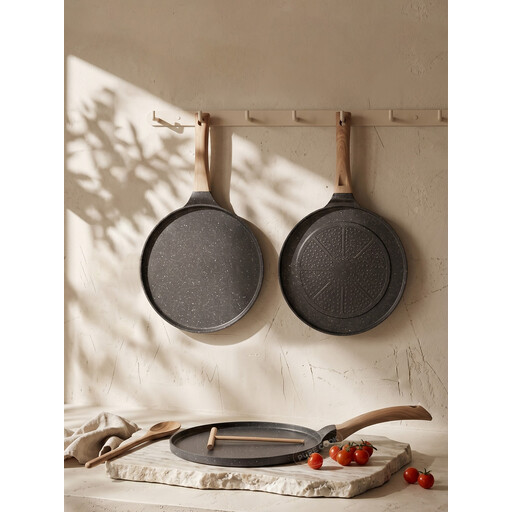
Why this choice suits this profile : Its 26 cm size and aluminium body are well suited to everyday meals, including eggs, vegetables and breakfast dishes.
The specifications state that it is compatible with induction, gas and ceramic hobs, and clearly specify that it should be washed by hand.
Lightweight aluminium, stone-effect non-stick coating and an insulated wooden handle.
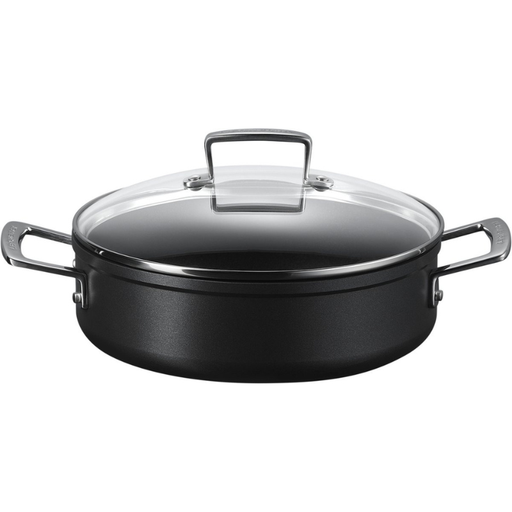
Why this choice suits this profile : Its stated 5.4 litre capacity and glass lid are ideal for slow-cooked dishes, family meals and oven cooking.
Compatibility with induction and other hob types is clearly detailed. However, the maximum oven temperature should be checked before each use.
Hard-anodised forged aluminium, glass lid and suitable for use on the hob and in the oven.
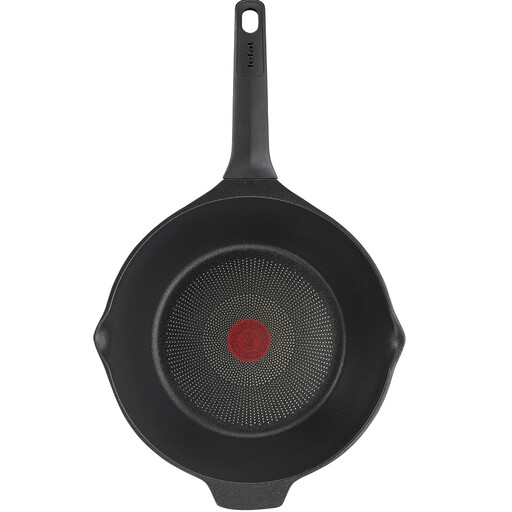
Why this choice suits this profile : Its tall, sloping sides make it easier to prepare stir-fried vegetables, noodles and large quantities of food.
The specifications state the diameter, induction compatibility and the presence of a Thermo-Signal indicator.
Cast aluminium, a stated PFOA-free multi-layer coating and dishwasher-safe cleaning.
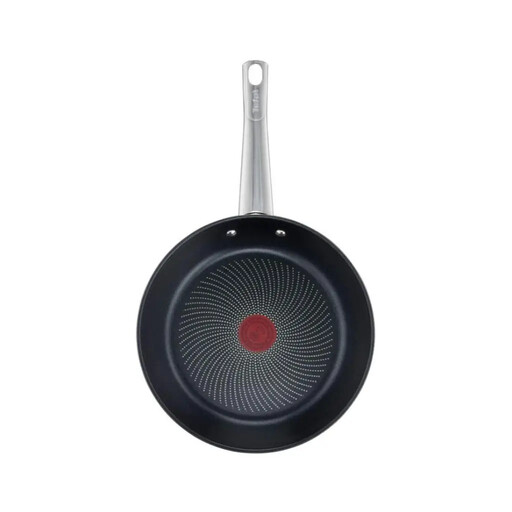
Why this choice suits this profile : This size meets the everyday needs of a household that wants to cook meat, vegetables and stir-fries on different types of hob.
The specifications list the four hob types, the maximum oven temperature of 250 °C and the PFOA-free claim.
Stainless steel, titanium-reinforced interior, temperature indicator and stated dishwasher-safe cleaning.
We have put together a comprehensive, real-time updated list of products that meet these strict selection criteria and European safety regulations.
If you are looking for a non-stick wok, choose tall sides and a base that is wide enough to cover your induction cooking zone. For a frying pan with a lid, check the lid’s oven compatibility separately. Finally, an uncoated stainless-steel frying pan can be perfectly suitable for searing, but it will not release food as easily as a non-stick surface.
A 24 cm frying pan is suitable for small portions, while a 26 cm diameter is versatile enough for two or three people. For a family, the 28 cm frying pan offers more cooking space, provided that its magnetic base matches the hob zone correctly.
Not necessarily. The body may withstand oven heat while the handle, lid or a removable component has a lower temperature limit. Always check the maximum temperature and the conditions of use stated in the model’s specifications.
Avoid overheating it while empty, thermal shock, metal utensils and abrasive cleaning products. Even when dishwasher use is permitted, hand-washing and thorough drying can help preserve the coating for longer.