You can switch to induction without replacing all your cookware, as long as the pans you use regularly have a compatible base. You can replace any incompatible pieces individually. If you need to keep those pieces, consider a ceramic hob or, where your installation allows, a mixed induction and gas hob. Before choosing a hob, also have its connection requirements checked against your home.
Who might be considering this?
Households wanting to keep their everyday cookware
If you’re replacing your hob but want to keep using your usual pans, start by testing the ones you use most often. UFC-Que Choisir points out that a pan without a ferromagnetic base won’t activate an induction zone.
People who cook often
If quick heating matters in your everyday cooking, induction is worth considering once you’ve checked your cookware is compatible. UFC-Que Choisir describes it as generally less energy-intensive than a ceramic hob, although this doesn’t determine how much energy each cooking session will use.
Households using a variety of cookware
If some essential pans don’t have a ferromagnetic base, you can compare replacing just those items with choosing a ceramic hob or a mixed induction and gas hob. On a mixed hob, the compatibility requirement still applies to the induction zones.
What should you check?
Start with the cookware you actually use, then decide which cooking method you want to keep.
| Criteria |
What to check |
Best suited to |
| Cookware compatibility |
Test the base of the pans you use often with a magnet and look for an induction symbol. |
I want to keep cooking with my usual pans rather than replace them unnecessarily; around 38% of consumers put keeping their cookware first. |
| Heating speed and energy use |
Check that your pans are compatible and that their diameter suits the zones you’re considering. |
If I cook frequently, heating speed and energy use matter more to me than keeping every piece of cookware; around 25% of consumers prioritise this need. |
| Replacing cookware straight away |
Identify any essential pans that aren’t compatible, then consider whether a ceramic hob or replacing just those items would suit the way you cook. |
My essential cookware isn’t suitable for induction, and I want to keep using it without replacing it straight away; this is the priority for around 25% of consumers. |
| Two cooking methods |
With a mixed hob, check which pans can be used on each type of zone and have the relevant installations inspected. |
I need to keep a gas burner for some pans while using induction for others; around 12% of consumers prioritise having both cooking methods. |
Mistakes to avoid
-
Assuming compatibility from the material name alone
The material listed for a pan isn’t enough to confirm that its base will activate an induction zone. UFC-Que Choisir explains that a pan without a ferromagnetic base won’t activate one.
Hold a magnet against the base of each pan you use regularly, and check for an induction symbol if one is shown.
-
Choosing a hob before checking the connection
Requirements vary depending on the hob you choose and your home’s existing installation. Don’t assume that specifications for one appliance apply to every hob.
Check the instructions for the model you’re considering, and have a qualified professional inspect the circuit and connection before buying or using it.
This check may show that your installation needs adapting.
-
Overlooking pan size
As UFC-Que Choisir explains, if a pan’s base is much smaller than the cooking zone, some of the energy may go unused.
Compare the diameter of the pans you use most often with that of the cooking zones you’re considering.
Brands to know
There are no brand profiles to display in this section.
Cookware for targeted replacements
These pans may be worth considering if you’re switching to induction and only need to replace a frying pan, wok or saucepan you use regularly. Test any pieces you’d like to keep separately.
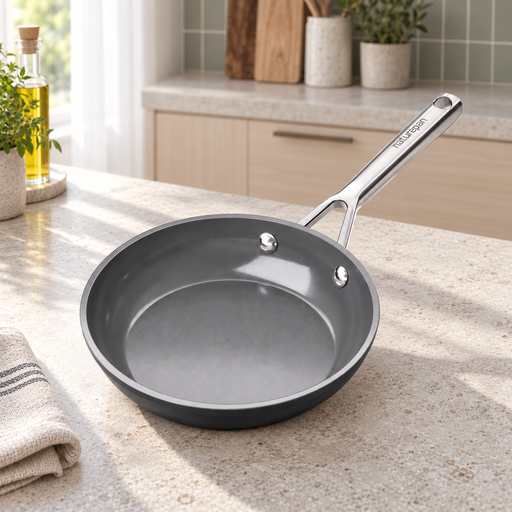 Image unavailable
Naturepan, 20 cm ceramic-coated frying pan
A handy replacement for an incompatible frying pan, without changing your other cookware. This aluminium pan with a ceramic coating is listed as suitable for induction; check the symbol or base before use.
View on Joybuy
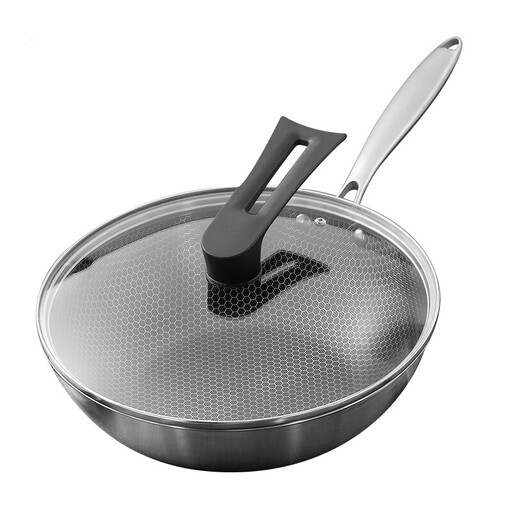 Image unavailable
Ochama Honeycomb, 30 cm wok with lid
Worth considering if your usual wok needs replacing. This 30 cm model with lid is listed as suitable for induction, gas and ceramic hobs; check its base before using it on induction.
View on Joybuy
 Image unavailable
Maxcook, 30 cm, 6.5 L stockpot with lid
A replacement for an incompatible stockpot if you need this 6.5 L size. The product is listed as suitable for induction, but its specifications give conflicting information about the type of steel. Confirm its composition and base compatibility before buying.
View on Joybuy
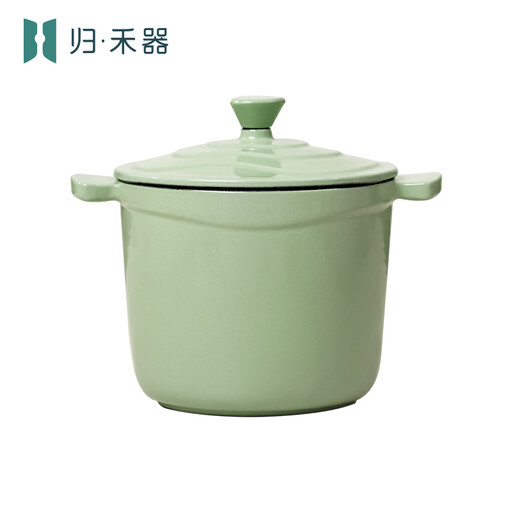 Image unavailable
Guihe, 14 cm, 1.3 L enamelled cast-iron saucepan
A replacement for an incompatible small saucepan used for individual portions. This 14 cm, 1.3 L model is listed as suitable for induction; check its base before use.
View on Joybuy
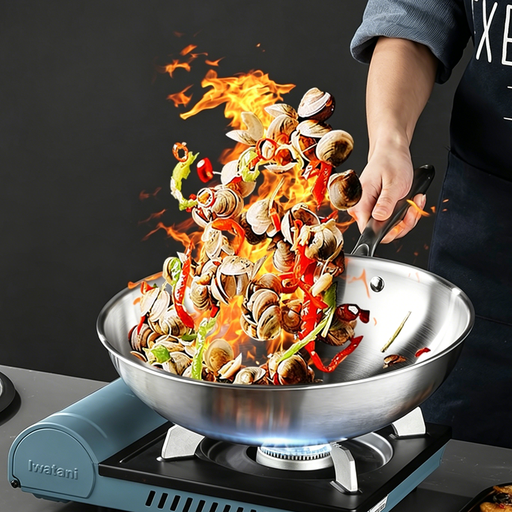 Image unavailable
Maxcook Tri-Ply 304, 28 cm wok with lid
Another size to consider if your current wok isn’t suitable for induction. This 28 cm stainless-steel wok with a glass lid is listed as suitable for gas and induction, and is described as having no non-stick coating. Check the base is compatible before use.
View on Joybuy
Frequently asked questions
How can I check my pans before switching to induction?
Hold a magnet against the base of each pan you use regularly and look for an induction symbol. The magnet sticking is a useful indication; UFC-Que Choisir points out that a non-ferromagnetic base won’t activate the zone.
Do you need to replace all your cookware?
No, as long as the pans you want to keep are suitable for induction. Test them one by one. If only a few essential pieces aren’t compatible, you could replace just those. If you need to keep them without replacing them, compare other cooking methods instead.
Does induction use less energy than a ceramic hob?
UFC-Que Choisir describes induction as generally less energy-intensive than ceramic hobs. That doesn’t determine how much energy your hob will use: cooking times, your pans and how well they fit the cooking zones also matter.
What should you check at home before choosing an induction hob?
Check the connection requirements in the instructions for the model you’re considering, then ask a qualified professional to inspect your circuit and existing installation. Choosing induction alone doesn’t tell you whether a particular hob can be connected in your home.


