Who is this hob suitable for?

People keeping their existing saucepans

If you are only replacing the hob, test the base of your saucepans with a magnet first, or look for the induction symbol. Non-ferromagnetic cookware will not heat up on an induction hob, as explained by UFC-Que Choisir.

Everyday cooks preparing several dishes

When the sauce, side dish and main course are cooking at the same time, compare the actual number of cooking zones, their diameters and the controls. A flexible zone is particularly useful for large pans or elongated cookware.

Renovators with an existing worktop

Before replacing a built-in hob, measure the cut-out, the space available beneath the worktop and the specifications of the electrical circuit. Dimensions and installation requirements vary by reference.

Priorities before buying

Start with your cookware and the existing cut-out, then choose the number of cooking zones and the features suited to your cooking habits.

Priority What to check Your needs
Cookware compatibility Test the attraction of a magnet, look for the induction symbol and compare the diameter of your pans with the cooking zones you use. I want to continue using my usual saucepans and frying pans without discovering after installation that they stay cold.
Cooking capacity Compare two, three or four cooking zones, their diameters, independent timers and the real benefit of a flexible zone. I often prepare several things at once, while still wanting to use a large stockpot, plancha or fish kettle when necessary.
Built-in installation and connection Check the appliance and cut-out dimensions, power rating, space beneath the worktop and the connection instructions in the manual. My new hob must fit into the existing worktop and be connected appropriately to the kitchen’s electrical installation.
Use and energy consumption Check the technology type, whether the hob switches off when the pan is removed and consumption measurements from comparable tests. I am looking for simple everyday cooking without assuming that energy savings alone will offset the possible cost of replacing cookware.

Mistakes to avoid

  • Assuming that a stainless-steel saucepan is automatically induction-compatible

    An induction hob requires a ferromagnetic base: cookware without one will not trigger heating, even if it looks suitable for the hob.

    Test the cookware you use most often with a magnet before choosing induction, then decide whether any replacements would work for you.

  • Choosing a width without measuring the existing cut-out

    A 60 cm flexible hob and a 90 cm version do not have the same built-in dimensions and cannot automatically be used as replacements for one another.

    Measure the cut-out, worktop thickness, clearance beneath the worktop and cable position, then compare them with the installation diagram for the exact model before buying.

    The worktop or installation may need to be modified, depending on the existing kitchen.

  • Treating a flexible zone as a universal advantage

    An extendable zone is mainly suited to certain pan shapes and may offer little benefit if you only cook with small, round saucepans.

    Choose this feature if you genuinely use a plancha, fish kettle, large stockpot or compatible rectangular pan. Otherwise, prioritise the cooking zones and controls that match the way you cook.

  • Connecting a built-in hob without checking the circuit

    Legrand’s guidance for fixed hobs specifies a dedicated circuit, with protection and cable cross-section suitable for the appliance’s power rating.

    Compare the power rating and connection instructions with the existing circuit. If in doubt, have the installation checked by a qualified professional.

    The circuit may need adapting if the existing installation does not meet the model’s requirements.

Brand guide

Bosch

The French range includes 60 cm hobs with three cooking zones, two-zone Domino modules and hobs with an integrated extractor.

  • The Bosch PIB375FB1E Domino is 30 cm wide and has two cooking zones; the PUC611AA5E is 60 cm wide and has three.
  • Bosch claims an average saving of 20% compared with ceramic hobs on certain models; this brand claim does not apply to the entire range. Check the cut-out dimensions and instructions for the model you choose.

Electrolux

The range includes 60 cm and 90 cm FlexiBridge hobs with flexible zones for large cookware and different cooking layouts.

  • The EIV65356 and EIV95550 models announced by Electrolux offer a flexible zone; the 90 cm version can create one large zone for a plancha.
  • These features apply to the models listed. Dimensions, power rating and built-in requirements must be checked for the exact reference.

Sauter

Sauter offers induction, gas and mixed hobs on the French market, including models with HoriZone flexible areas.

  • The HoriZone range is designed to accommodate wide, oval or rectangular cookware, depending on the model.
  • The cut-out, ventilation, power and connection requirements must be checked in the instructions for the hob you choose.

Brandt

Brandt is a brand worth considering for non-extendable induction hobs or mixed hobs, depending on the available models.

  • UFC-Que Choisir lists the Brandt BPI6310B among non-extendable models that achieved more than respectable results in its tests.
  • This assessment concerns this specific model and cannot be taken as applying to all Brandt hobs.

Hob options on Joybuy

Joybuy options for comparing a built-in ceramic hob when non-magnetic cookware needs to be kept, or a portable two-zone induction hob for compact cooking.
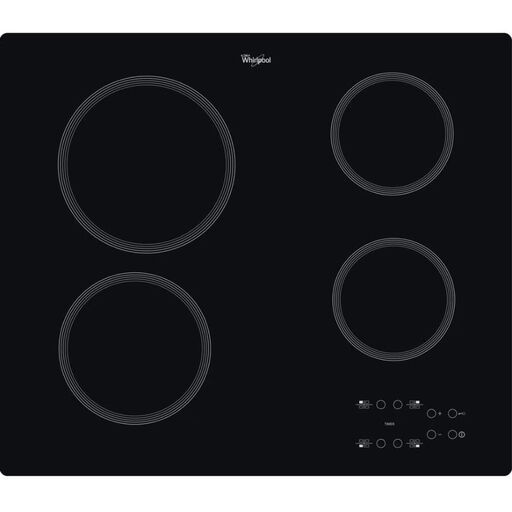
Whirlpool AKT 801-NE ceramic hob with four zones

Whirlpool AKT 801-NE, 4-zone ceramic hob

A built-in option for cooking on four zones without requiring a ferromagnetic base.

Four zones, nine power levels, an individual timer, touch controls, a child lock and a residual heat indicator are listed. The stated cut-out is 560 × 490 mm.

The hob is wired: check the circuit, ventilation, space beneath the worktop and instructions before buying.

Joybuy
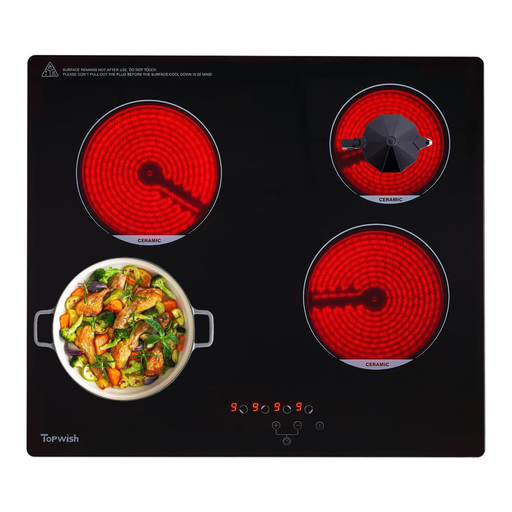
TOPWISH 60 cm ceramic hob with four zones

TOPWISH, 4-zone 60 cm ceramic hob

This four-zone ceramic hob is designed for kitchens where you want to keep cookware made from different materials.

The listing states that it has touch controls, a timer, a child lock, automatic shut-off and a residual heat indicator. The stated cut-out is 560 × 490 mm.

The listing mentions both 6 600 W and 6 000 W: confirm the rated power, cooking-zone diameters and installation instructions in the manual for the exact model.

Joybuy
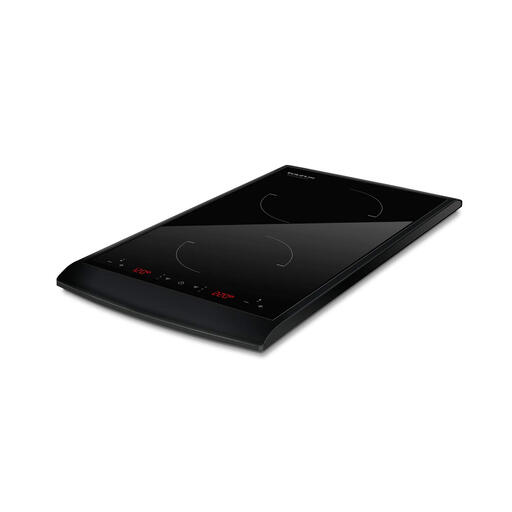
Taurus Dual Induction Hob Darkfire Domino portable induction hob

Taurus Dual Induction Hob Darkfire Domino

A portable two-zone induction hob for a small space, temporary accommodation or extra cooking capacity.

The product lists ten power levels, temperature adjustment, a timer, a child lock and overheat protection. It specifies induction cookware measuring 12 to 24 cm.

This model is not a direct replacement for a built-in hob and is unsuitable if you often use three or four pans at the same time.

Joybuy

Frequently asked questions

How can I check whether my saucepans work on induction?

Test the underside of the pan with a magnet: if it is attracted, the base contains a compatible ferromagnetic material, according to UFC-Que Choisir. The induction symbol is also a useful guide; copper, aluminium, glass, ceramic and non-magnetic stainless steel will not work without a ferromagnetic base.

Can a built-in induction hob be connected to a standard socket?

Not for a fixed built-in hob: Legrand states that it must not be connected to a standard socket and requires a dedicated circuit suited to its power rating. Follow the instructions for the exact model and have an installation with uncertain wiring checked by a qualified electrician.

Is a flexible zone useful with round saucepans?

Not necessarily. It is mainly useful for a plancha, fish kettle, large stockpot or rectangular pan. For standard round saucepans, prioritise the number of cooking zones, their diameters and how easy the controls are to read.

Does induction always cost less to run than a ceramic hob?

UFC-Que Choisir states that induction generally uses less energy than ceramic cooking because it heats the pan directly. This does not mean that replacing a working hob or incompatible cookware will be cost-effective for every household.