What should you check before choosing?
Induction
Consider it: if the cookware you want to keep has a base that attracts a magnet and is the right diameter for the zones.
The trade-off: cookware without a suitable ferromagnetic base will need to be used for something else or replaced.
Ceramic
Consider it: if keeping cookware without a ferromagnetic base matters more to you than switching to induction.
The trade-off: according to a comparison published by Bosch Home Appliances France, induction heats more quickly and directly.
Mixed induction and gas
Consider it: if you already have a suitable gas supply and want to use both induction-compatible cookware and other types of cookware.
The trade-off: you’ll need to check the requirements for the induction zones, as well as the gas installation and connection. Creating or modifying a gas supply requires a separate assessment.
Make a list of the cookware you want to keep, then check the installation requirements for your chosen technology.
| Priority |
What to check |
Your needs |
| Cookware compatibility |
For induction, test whether a magnet sticks to the underside of each pan. Also check that the base is flat and that its diameter is accepted, as stated in the hob’s instructions. |
I want to know which pans I can keep using before choosing an induction hob. |
| Cooking method |
Understand the difference between induction, which requires a suitable ferromagnetic base, and radiant or halogen ceramic zones. In its comparison of the two technologies, Bosch Home Appliances France describes induction as quicker and more direct. |
I’m interested in faster heating, but I need to decide whether it’s worth replacing some of my cookware. |
| Fitting and power supply |
Compare the actual cut-out and required clearances with the diagram for the exact model. Have its connection rating and compatibility with your existing electrical circuit checked. |
My new hob needs to fit and connect properly in my kitchen, not just have the same visible width as the old one. |
| Cookware not compatible with induction |
Compare a ceramic hob and, only if your kitchen already supports it, a mixed induction and gas hob. For a mixed hob, check the requirements for the induction zones and gas separately. |
I want to keep using some cookware without a ferromagnetic base, without assuming it will work on an induction zone. |
Which brands should you compare?
The ranges below give you models to look at, but specifications shouldn’t be assumed to apply across different models.
Electrolux
Electrolux France offers a range that includes induction, ceramic and mixed hobs.
- According to Electrolux France, the KDI641723K mixed hob combines one induction zone with three gas burners.
- For any model you’re considering, check the cut-out, clearances and connections separately in its instructions.
Bosch
Bosch Home Appliances France provides information to help you compare induction with ceramic hobs and plan an installation.
- In its comparison guide, Bosch describes induction as quicker and more direct than ceramic.
- Its general installation guidance doesn’t replace the measurements and instructions for your chosen model. Bosch recommends professional installation for induction hobs.
Whirlpool
Whirlpool France lists induction, ceramic and gas hobs.
- The product details for the WSQ2160NE induction hob specify four zones and a stated built-in width of 56 cm.
- The AKT8090LX ceramic hob has different specifications, including a connection rating of 4 700 W. Use the details for the exact model to check your kitchen.
Induction and ceramic hobs on Joybuy
These models represent two ways to replace your hob: choose ceramic to avoid induction’s requirement for a ferromagnetic base, or choose induction if your cookware and installation are suitable. For each model, check the instructions against your kitchen before ordering.
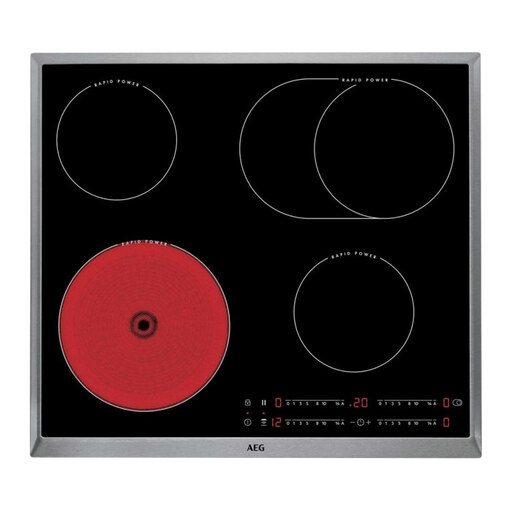 Image unavailable
HK654850XB Series 3000 — 60 cm ceramic hob
An option to consider if you want to keep cookware without a ferromagnetic base suitable for induction. Check the instructions for this model against your kitchen’s cut-out, clearances and electrical circuit.
View on Joybuy
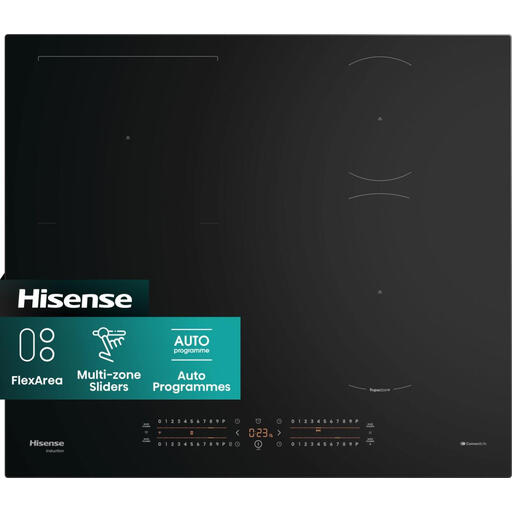 Image unavailable
Hisense HI6432BSCWF Hi6 — 60 cm induction hob
Worth considering if you’re planning to switch to induction with your current cookware. Test the bases with a magnet, check the diameters accepted in the instructions and compare the installation requirements with your kitchen.
View on Joybuy
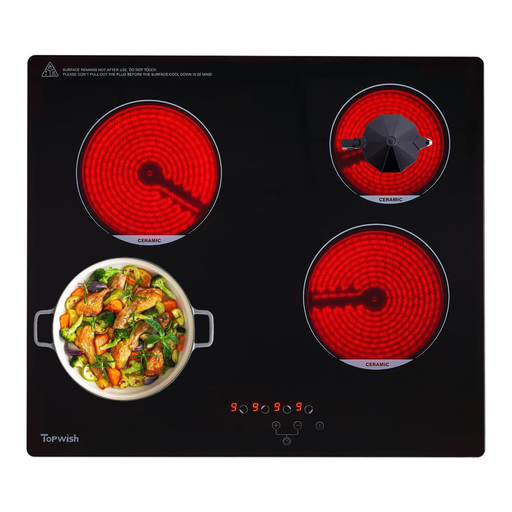 Image unavailable
TOPWISH — 4-zone, 60 cm built-in ceramic hob
Another ceramic option if you want to avoid the requirement for a ferromagnetic base. The product name lists touch controls, a child lock and a residual heat indicator. Check the power rating in the instructions before having the electrical circuit assessed.
View on Joybuy
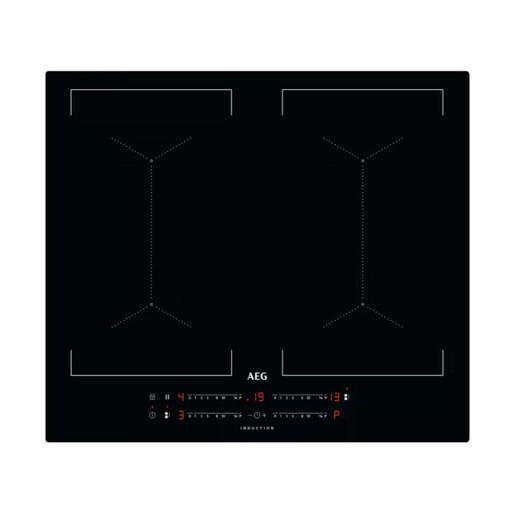 Image unavailable
AEG IKS64453IB — 4-zone, 60 cm induction hob with Bridge function
This induction model has a Bridge function, as stated in its name. Before choosing it, check the bases and diameters of your cookware, then compare the cut-out diagram and ventilation requirements with your intended location.
View on Joybuy
 Image unavailable
TOPWISH — 4-zone, 60 cm built-in induction hob
Worth comparing if your cookware meets the requirements for induction. The product name lists a Boost function, a timer and a residual heat indicator. Check the instructions for accepted diameters, installation and connection requirements.
View on Joybuy
Frequently asked questions
How can I tell if my pans will work on an induction hob?
Place a magnet against the base of each pan. According to Electrolux France, it should stick as a first indication. Then check the condition of the base and the diameters accepted by the zones on the hob you’re considering. The material name alone isn’t enough to tell you.
Will a ceramic hob let me keep cookware that isn’t compatible with induction?
It doesn’t require the ferromagnetic base needed for induction, so it’s worth considering if you want to keep this cookware. However, check that it’s suitable for the use described in the instructions. Bosch Home Appliances France describes induction as quicker and more direct than ceramic.
Can a new hob with the same width use the existing cut-out?
Don’t assume it will. Measure the actual opening in the worktop and the space beneath the hob, then compare them with the installation diagram for the exact model. Check the specified clearances and ventilation requirements before ordering too.
What should be checked before connecting the hob to the mains?
Ask a suitably qualified professional to compare the hob’s power rating and connection diagram with your existing circuit. In France, Promotelec cites NF C 15-100 as the standard for new, fully renovated, modified or extended installations. You can’t determine whether your installation is compliant and suitable from the new hob’s product details alone.
Will a mixed induction and gas hob let me use all my cookware?
It may have an induction zone for suitable cookware and gas burners for other types, but the layout varies by model. For example, Electrolux France says its KDI641723K combines one induction zone with three gas burners. Check the instructions and your existing gas installation. Any plans to create or modify a gas supply must be assessed separately.


