Households looking to keep their pans
You’re replacing a hob and want to find out which of your frying pans and saucepans you can keep using before choosing induction.


You can switch to induction without replacing all your pans, provided the ones you use have a flat, magnet-friendly base that suits the zones on your chosen hob. If keeping non-magnetic cookware matters more, consider a ceramic hob; a mixed-fuel hob could let you retain some gas cooking options, subject to suitable installation. In every case, check the cut-out and power supply before ordering.
You’re replacing a hob and want to find out which of your frying pans and saucepans you can keep using before choosing induction.
You use pans made from different materials, or you’re not sure what their bases are made of. Checking them can help you choose between induction, a ceramic hob or a mixed-fuel hob.
You’ll need to take the existing cut-out and your home’s power supply into account. Don’t assume a new hob will fit straight into the space left by the old one.
Start with the pans you actually use, then compare the cooking zones and installation requirements of the models you’re considering with your kitchen.
Consider it: if your everyday pans have compatible bases that suit the zones you choose.
The trade-off: pans without a ferromagnetic base will need to be used on another appliance or replaced.
Consider it: if you want to keep using non-magnetic pans, subject to the hob’s instructions.
Bear in mind: its cooking zones heat pans differently from induction zones, even though the surface may look similar.
Consider it: if you’d like to use induction while keeping some pans or cooking methods for gas burners.
What to plan for: induction zones still require suitable pan bases, while the gas section needs its installation and connection checked separately.
| Priority | What to check | Your needs |
|---|---|---|
| Pan compatibility | For induction, test the base of each pan with a magnet. Electrolux France also recommends a flat base; compare the base dimensions with the diameters accepted in the hob’s instructions. | I want to know which pans in my cupboard I can keep using, not just whether one saucepan works. |
| Pans to replace | Identify the pans you use regularly that don’t pass the magnet test. If only a few are affected, consider replacing those individually before switching to a different technology. | Keeping my cookware matters, but I’d also be happy to replace a few items if I want to switch to induction. |
| Cooking zones | Compare the number of zones, their dimensions and, for induction, the base diameters they recognise. Check how to use a dual or flexible zone if the model has one. | My larger pans and the number of dishes I cook at once need to suit the available zones. |
| Installation and power supply | Measure the cut-out and check the instructions for the exact model. Promotelec describes a dedicated circuit for a hob; ask a professional to check the power supply, protection and connection requirements. | I’m replacing a built-in hob and want to avoid choosing an appliance that won’t suit my existing kitchen. |
A positive result tells you nothing about your other pans or the base diameters recognised by the different zones.
Test each pan you use separately, then compare its base with the guidance in the instructions for the model you’re considering.
An induction hob and one with radiant or halogen zones may have a similar-looking surface, even though they have different requirements when it comes to cookware.
First check which technology each model uses, then check its zones and the pans it accepts.
The stated width alone doesn’t confirm that the existing cut-out and connection are suitable.
Measure the opening and ask a professional to check the available circuit against the installation instructions for your chosen model.
If the circuit, connection or worktop needs altering, budget for this separately from the cost of the hob.
Bosch France’s product listings include both induction and ceramic hob models, making it easy to explore both technologies.
The WSB2360BF is an example of a three-zone induction hob offered by Whirlpool France.
Smeg’s French range of mixed-fuel hobs combines induction zones with gas burners.
Electrolux France’s advice offers practical checks for cookware intended for induction.
This selection includes two ceramic hobs to consider if you want to keep using non-magnetic pans, and three induction hobs to explore if your everyday cookware is compatible. Always check the instructions for each model and make sure it can be installed as planned.
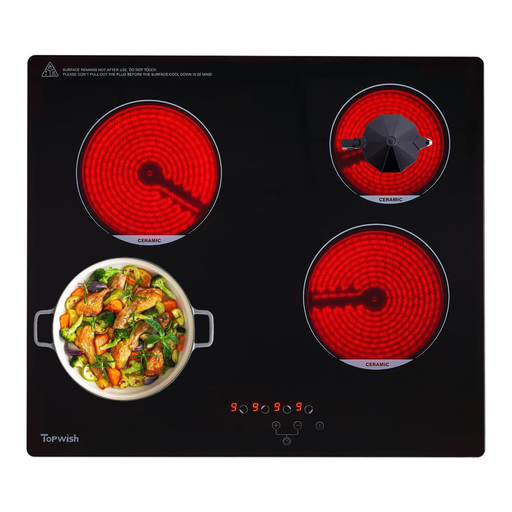 Image unavailable
Ceramic hob technology could let you keep using non-ferromagnetic pans, once you’ve checked the instructions and made sure they’re in good condition. Check the cut-out and ask a professional to confirm the total power rating and connection requirements before buying.
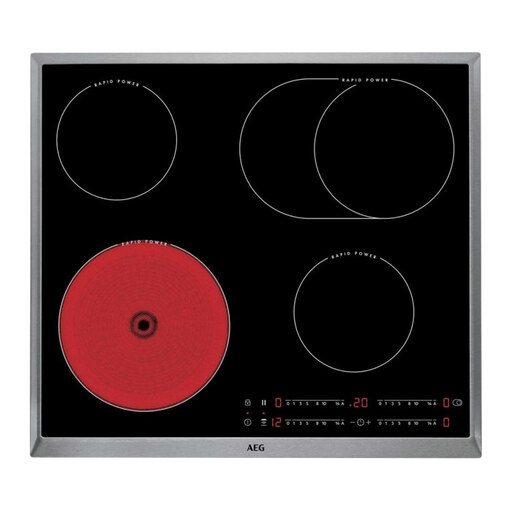 Image unavailable
Worth considering if you want to keep using non-magnetic cookware rather than switch to induction. Compare the required cut-out with your worktop and ask a professional to check the electrical circuit for this model.
 Image unavailable
This built-in hob has four zones and a Boost function. Before choosing induction, test your cookware bases, check the diameters accepted in the instructions and ask a professional to confirm the connection requirements.
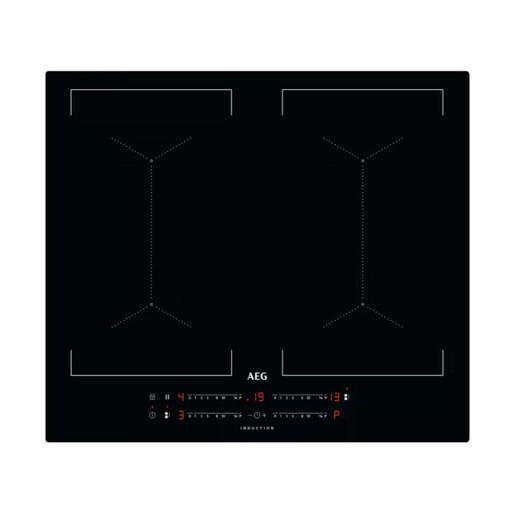 Image unavailable
The Bridge function may be useful if you use large pans. Test their bases and check the instructions for accepted dimensions; also ask a professional to confirm this model’s built-in dimensions and connection requirements.
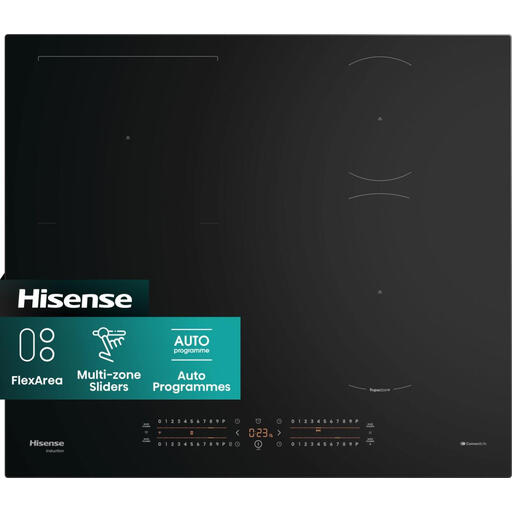 Image unavailable
Consider this if you’d like an induction hob and can keep using compatible pans. Check each base, the diameters accepted in the instructions, and the cut-out and power supply needed for installation.
Place a magnet against the base of each pan: if it sticks, the pan meets the first criterion given by Electrolux France. Also check that the base is flat and that its diameter is accepted in the instructions for the hob you’re considering.
No. The label ‘stainless steel’ alone doesn’t tell you whether every pan base is compatible. Test it with a magnet, and check the pan manufacturer’s information as well as the hob instructions.
It doesn’t require the ferromagnetic base needed for induction, because its zones heat pans in a different way. However, check the model’s instructions and make sure each pan is in good condition before using it.
Ask a professional to compare the cut-out, power rating and installation instructions for the new hob with your existing set-up. In France, Promotelec describes a dedicated circuit for a hob; a professional should check that the power supply and connection are suitable for your home and chosen model.