Households keen to keep their pans
If you want to keep several pans, start by identifying those with a ferromagnetic base. Que Choisir points out that this is essential for cooking on an induction zone.


A fully induction hob is a good choice if the pans you want to keep have a ferromagnetic base. If several of your pans aren’t compatible, a mixed induction and gas hob or a ceramic hob could let you continue using them, subject to checking the requirements for each installation. Before choosing a model, compare its cut-out dimensions and ventilation requirements with your kitchen, then have the electrical connection checked.
If you want to keep several pans, start by identifying those with a ferromagnetic base. Que Choisir points out that this is essential for cooking on an induction zone.
If the hob needs to fit an existing cut-out, its installation dimensions and the clearances specified in the instructions matter just as much as its features. Modifying the worktop may be difficult, depending on its material.
If you often cook with an oval casserole dish or a griddle, check the size of the cooking zones and whether they can be combined. Electrolux’s Bridge and flexible-zone features are available on specific models, not across the entire range.
Consider this if : the pans you’re keeping have a ferromagnetic base.
Bear in mind : other pans won’t work on the induction zones.
Consider this if : you want to use induction while keeping non-compatible pans for use on the gas burners.
Bear in mind : your kitchen must also meet the requirements for the gas section.
Consider this if : being able to keep using pans without a ferromagnetic base is your priority.
Bear in mind : radiant or halogen heating works differently from induction.
| Criteria | What to check | Consumers’ needs |
|---|---|---|
| Pan compatibility | Check the base of the pans you want to keep, then identify any that won’t work with induction. | I want to keep the pans I use most without finding out after purchase that they won’t heat up : around 33 % of consumers make compatibility their priority. |
| Cut-out and connection | Compare the cut-out and ventilation clearances with the model’s instructions ; have the circuit and connection checked. | When a new hob needs to fit my existing worktop, I want to avoid an unsuitable cut-out or an inadequate connection. Around 27 % of consumers prioritise getting the fit right. |
| Using non-compatible pans | Identify the pans you use regularly ; if you’re considering a mixed hob, also check the requirements for using the gas section. | If several of my pans aren’t suitable for induction, I want to be able to keep cooking with them : around 27 % of consumers see this as their main need. |
| Number and shape of zones | Count how many things you cook at once and compare the dimensions of any flexible zone with your larger pans. | An oval casserole dish or several dishes cooking at once can make the layout of the zones a deciding factor for me. This is the priority for around 13 % of consumers. |
Two hobs with similar external dimensions won’t necessarily fit the same opening. Que Choisir gives 56 × 49 cm as a common cut-out size for induction, but this won’t suit every model.
Measure the existing opening and compare it with the installation diagram for your chosen model, especially if the worktop would be difficult to modify.
A pan without a ferromagnetic base won’t work on an induction zone, even if it works with your current hob.
First check the pans you actually use ; if several aren’t suitable, also consider mixed and ceramic options.
Power requirements and connection instructions vary by model. For new or fully renovated installations covered by NF C 15-100, Promotelec specifies a dedicated 32 A circuit for an electric hob ; this does not remove the need to assess an existing installation.
Read the instructions for the hob you’re considering and ask a professional to check the circuit, its protection and the connection.
Combining two zones is only useful if a compatible pan’s shape and dimensions suit the resulting cooking surface.
Compare your larger pans with the dimensions listed for the specific model, rather than relying on the feature name alone.
The range includes built-in induction hobs with three or four zones, with features varying by model.
Some induction hobs in the range have Bridge or flexible zones for compatible larger pans.
These products illustrate two of the options covered here : induction for compatible pans and ceramic cooking as an alternative to induction. Portable appliances are included as supplementary options, but they are not direct replacements for a built-in hob.
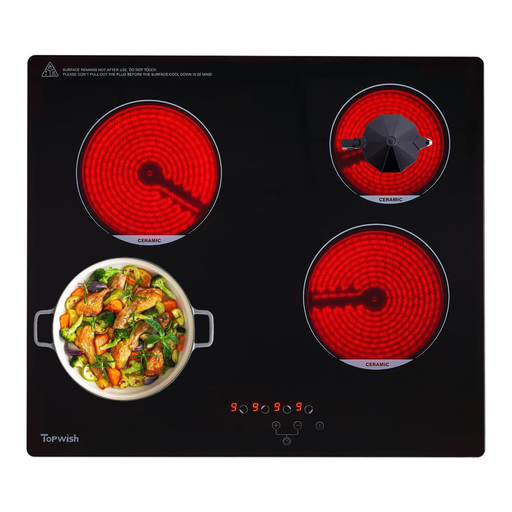 Image unavailable
This ceramic hob is worth considering if you’re looking for a built-in option without induction. The product name specifies four zones and a width of 60 cm. Before choosing this model, check the guidance for your pans, the cut-out size and the power requirements for the connection.
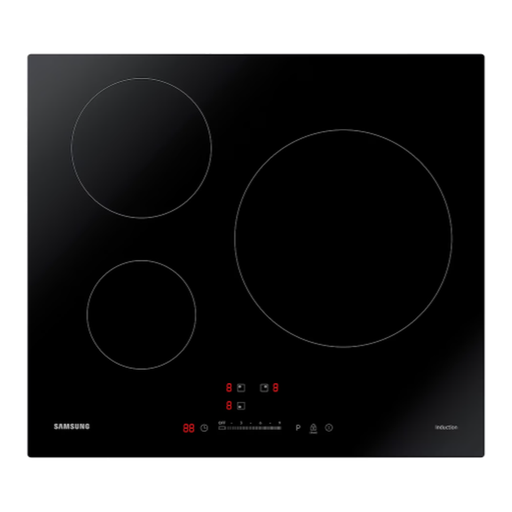 Image unavailable
This built-in hob is designed for households who want to cook with induction using pans with a ferromagnetic base. The product name specifies three zones and 7 200 W. Non-compatible pans won’t work on its zones ; also compare the cut-out, ventilation and circuit with the instructions.
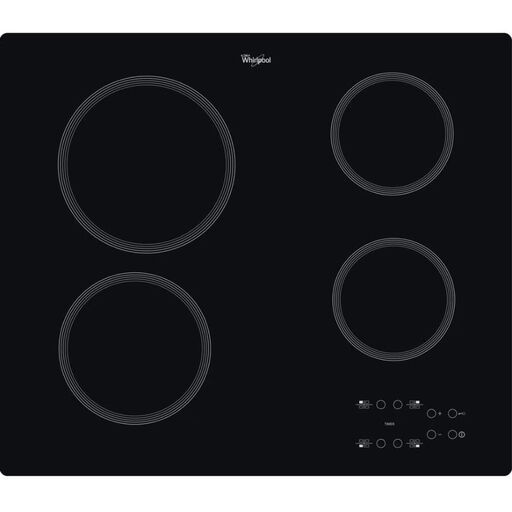 Image unavailable
This built-in radiant hob offers a four-zone option without induction. Check the manufacturer’s guidance for the pans you plan to keep, as well as the cut-out, ventilation and connection requirements for this model.
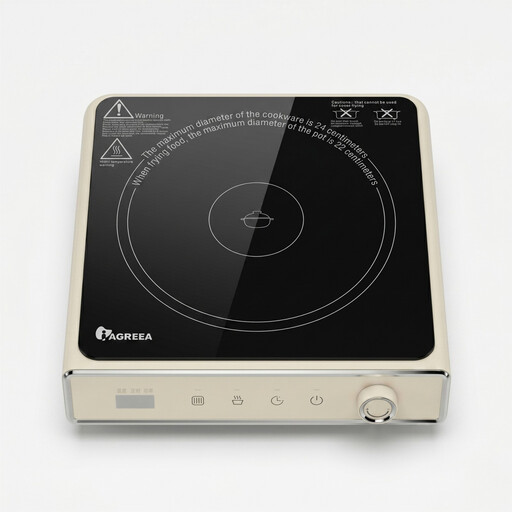 Image unavailable
This single-zone hob is worth considering as a portable option, rather than as a direct replacement for a built-in hob. The product name specifies 2 000 W ; check the manufacturer’s instructions to make sure it’s suitable for the pans you want to use.
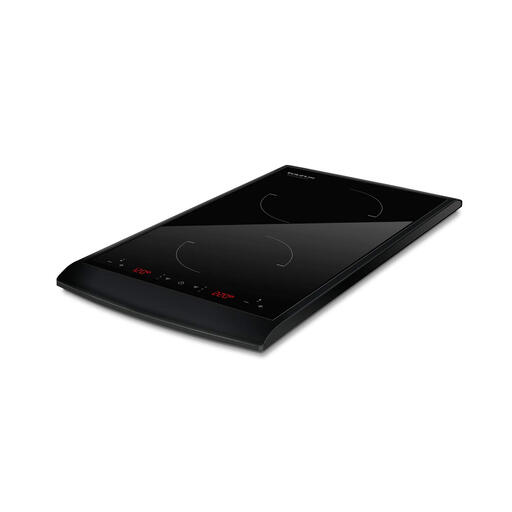 Image unavailable
This portable hob may suit households looking for two induction zones without modifying an existing cut-out. It isn’t a direct replacement for a built-in hob : check compatibility and the required diameter for your pans, as well as the power supply instructions in the manual.
They need to have a ferromagnetic base. Que Choisir points out that induction requires suitable pans : check each pan you want to keep before choosing a fully induction hob.
Measure the width and depth of the opening and the space available for installation, then compare them with the new hob’s diagram. Que Choisir often gives 56 × 49 cm as the cut-out size for induction, but this refers to the opening in the worktop and doesn’t apply to every model.
Yes. Ask a professional to compare the requirements of the hob you’re considering with your installation. Promotelec specifies a dedicated 32 A circuit for an electric hob in new or fully renovated installations covered by NF C 15-100 ; a professional should assess the circuit in an existing home rather than assume it’s suitable.
Start by counting how many pans you use at once, then check that they’ll fit on the hob you’re considering. If you often cook with a large pan that’s compatible with induction, also compare its dimensions with those of a flexible zone or two zones that can be combined.
Follow the clearances and ventilation requirements in the instructions for your chosen model. Que Choisir highlights the need to ventilate the space beneath or behind the hob ; check your existing kitchen layout before choosing a model.