Households looking to keep their existing cookware
You’re replacing your hob but want to keep using your saucepans, frying pans and casserole dishes. First, check their bases, then make sure the new hob’s cooking zones can recognise their diameters.


You can switch to induction without replacing all your cookware, provided the pans you want to keep have a ferromagnetic base and are recognised by the cooking zones you choose. A magnet is a useful first check, but the hob’s manual will tell you which pan diameters it accepts. If many of your pans aren’t suitable, consider replacing only those you need to or choosing a different cooking technology.
You’re replacing your hob but want to keep using your saucepans, frying pans and casserole dishes. First, check their bases, then make sure the new hob’s cooking zones can recognise their diameters.
You use large frying pans, rectangular dishes or several pans at once. The size and layout of the cooking zones matter just as much as their number. A zone that links two cooking areas could suit some of these needs.
You’re deciding whether to replace some of your cookware or choose a different hob. Sort through the pans you actually use and check the installation requirements before making a decision.
Start with the pans you want to keep, then consider how much cooking space you need and the specifications of your existing connection.
Consider this if: your most-used pans have a ferromagnetic base, or you’re happy to replace any that aren’t compatible.
Bear in mind: a pan without a ferromagnetic base won’t work on an induction zone, as UFC-Que Choisir points out.
Consider this if: keeping non-ferromagnetic pans matters more to you than switching to induction.
Bear in mind: it doesn’t use induction technology. You should also compare the size of the cooking zones with your pans.
Consider this if: you want to keep the option of cooking with gas while using induction with your compatible pans.
Check that: induction zones still require a ferromagnetic base, and the gas and electrical installation requirements are suitable for the model.
| Priority | What to check | What you need |
|---|---|---|
| Compatible cookware | Test the base with a magnet, look for the induction symbol and check the manual for the minimum diameter recognised by each cooking zone. Darty explains that a magnetic base and a detectable size are two separate requirements. | I’d like to keep my usual pans, including the smallest ones, without finding out after installation that a cooking zone can’t detect them. |
| Cooking zone layout | Compare the diameter and position of the zones with the pans you use at the same time. For a large dish, check the size of the flexible or linked zone, if the model has one. | When I have several pans on the hob, I need enough room for each one. A rectangular dish also needs a suitably sized zone. |
| Connection and fitting | Compare the voltage, maximum power, connection instructions and cut-out dimensions in the manual with your existing installation. Promotelec describes a dedicated circuit for cooking appliances; if in doubt, have your setup checked. | I want to make sure the hob I choose can be connected and fitted in my kitchen, not just that it looks the right width. |
| How much cookware to replace | Make a list of the pans you use regularly and separate those you can keep from those you’ll need to replace. If you’re considering a combination hob, check the gas installation requirements too. | If only a few pans won’t work on induction, I’d rather look at replacing those than replace all my cookware straight away. |
The words “stainless steel”, “aluminium” or “copper” don’t tell you on their own whether a pan has a ferromagnetic base. Even with a suitable base, a small pan might not be recognised by every cooking zone.
Test the base with a magnet, look for the induction symbol and compare the diameter of smaller pans with the specifications in the manual.
Several round zones might not suit a large frying pan or rectangular dish. Some models have a Bridge function that links two zones, but you’ll still need to check the dimensions.
Measure the bases of the pans you use most and check the size and layout of the cooking zones.
The connection requirements and cut-out dimensions depend on the model. Promotelec describes a dedicated power supply for cooking appliances; having an old hob doesn’t necessarily mean its space and connection will suit the new one.
Measure the worktop cut-out and compare the installation with the specifications and manual for the hob you’re considering. Ask a professional to check if you’re unsure whether they’re compatible.
These cookware sets may be useful if you’re adding to or replacing your cookware for induction. They don’t replace the need to check the hob’s cooking zones and installation requirements.
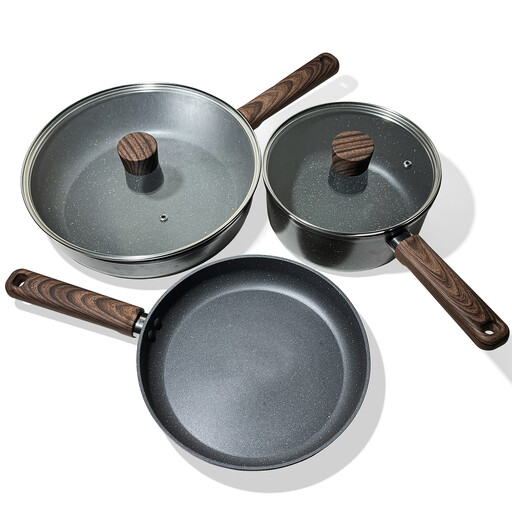 Image unavailable
A set to consider if you want to replace a few pieces of cookware for induction. The product name lists three pieces, pan protectors and induction compatibility. Check the base dimensions against your hob’s cooking zones before choosing.
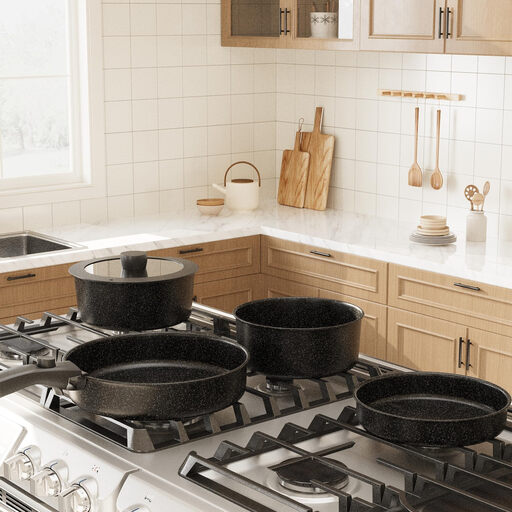 Image unavailable
Worth considering if you’re planning to replace more of your cookware. The product name lists 19 pieces, removable handles and compatibility with gas, electric, ceramic and induction hobs. Check which pieces are included and the dimensions of their bases to make sure they suit the way you cook.
They need a ferromagnetic base. Look for the induction symbol and hold a magnet against the base as a first check. Then consult the hob’s manual to find the minimum diameter recognised by each cooking zone.
No. A material name doesn’t always describe the composition of the base. Some stainless steel pans have a magnetic base, while aluminium or copper pans need a suitable base to work on induction. Check the symbol, the base and the size of the pan.
Yes. Compare the voltage, power requirements and connection instructions for your chosen model with your existing installation. In France, Promotelec describes a dedicated circuit for cooking appliances. If you’re unsure, have the connection checked in your home.
It can be useful for a large dish or rectangular pan that doesn’t fit a round cooking zone. According to Electrolux, its Bridge function links two zones. Check the dimensions this creates on the hob you’re considering.
It lets you keep the option of cooking with gas, but a pan without a ferromagnetic base still won’t work on its induction zones. Also check that your gas and electrical installations meet the requirements for the model you choose.