Households keen to keep their cookware
If you regularly use the same saucepans and frying pans, check each one before choosing induction. You’ll find out which pieces you can keep and which may mean choosing a different option.


You can switch to induction without replacing all your cookware, as long as the pans you use most have a magnetic base and are within the size limits for the hob you’re considering. If only a few pieces aren’t suitable, replace them individually. If you need to keep a lot of non-magnetic cookware, consider a ceramic hob instead.
If you regularly use the same saucepans and frying pans, check each one before choosing induction. You’ll find out which pieces you can keep and which may mean choosing a different option.
If only some of your pans are unsuitable, how you use them and their size can help you decide what to replace, without automatically buying a whole new set.
If essential pieces fail the magnet test and you don’t want to replace them, the compatibility of your cookware may point you towards a different type of hob.
Start with the cookware you actually use: the base and dimensions of each piece will determine whether induction lets you keep your current set, replace a few items or consider a different hob.
| What matters to you | What to check | Who this applies to |
|---|---|---|
| Keeping compatible cookware | Test the base of the pieces you use regularly with a magnet, then compare the diameter of each base with the limits given in the hob’s instructions. | I want to keep using my usual saucepans and frying pans without finding out later that an essential piece won’t work on induction. Around 50% of consumers would make keeping their cookware their top priority. |
| Replacing only a few pieces | Identify any unsuitable pans you genuinely need. For replacements, check for an induction symbol and a magnetic base. | I’m missing a few pieces of cookware for switching to induction, but would rather keep everything else. Around 30% of consumers would make replacing selected pieces their priority. |
| Keeping non-magnetic cookware | Identify any essential pieces that fail the magnet test. If you’re looking at another electric hob, consider a ceramic hob; check the requirements for a possible gas connection separately. | I want to keep using non-magnetic cookware that I don’t want to replace, even if that means ruling out induction. Around 20% of consumers would make this their main priority. |
UFC-Que Choisir points out that induction requires suitable cookware. For another electric option, Bosch says its ceramic hobs work with all types of cookware, although they heat differently from induction hobs. Gas is a separate option, and any connection requirements should be checked independently.
The material listed or the way a pan looks doesn’t prove it’s compatible: its base may be made from several layers.
As recommended by Electrolux France and Whirlpool France, hold a magnet against the base. When buying a new piece, also check for an induction symbol.
A magnetic base doesn’t mean you can skip checking that the pan fits the cooking zone. The size limits depend on the hob you choose.
Measure the bases of your smallest pans in particular and compare them with the guidance in the instructions for the model you’re considering.
Power ratings and connection instructions are specific to each model; you can’t work them out from the specifications for a different hob.
Before ordering, check the exact product specifications and instructions. If necessary, ask a qualified professional to assess your installation rather than assuming it’s suitable based on the power rating alone.
These frying pans and this cookware set are for replacing kitchen items, not for buying a hob. Before choosing, check what your current cookware is actually missing and compare the base of each new piece with the requirements of the hob you’re considering.
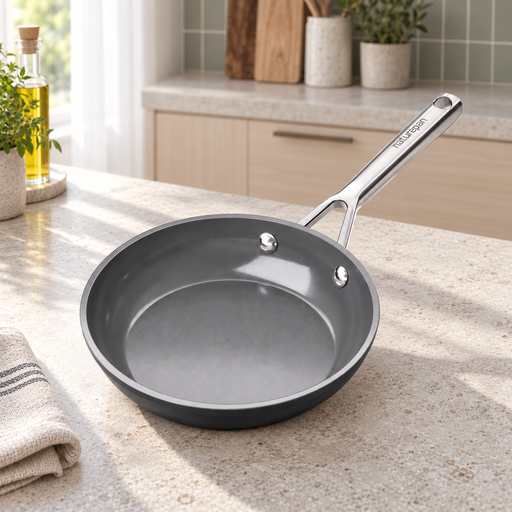 Image unavailable
Worth considering if you need to replace a frying pan but want to keep the rest of your cookware. The title specifies a non-stick coating and induction compatibility; check that the base diameter suits the cooking zone you plan to use.
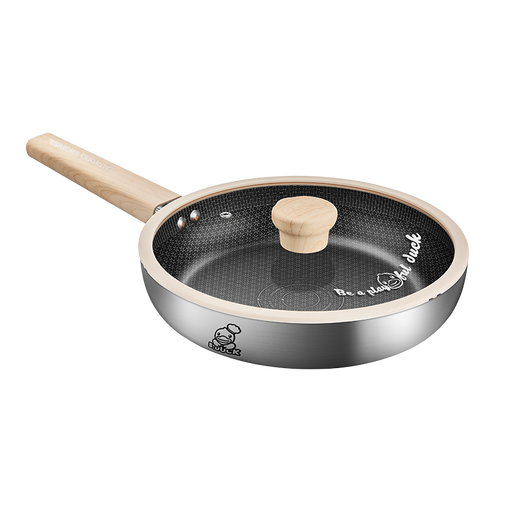 Image unavailable
Worth looking at if a frying pan of this size is what your kitchen is missing. The title mentions induction and gas compatibility; compare the base diameter, rather than the stated 26 cm overall diameter alone, with your hob’s guidance.
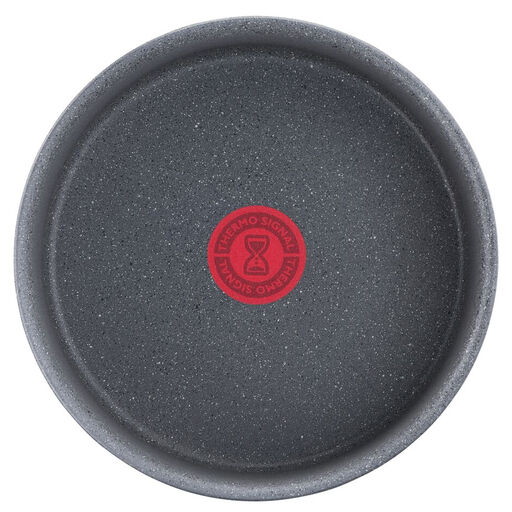 Image unavailable
Worth considering if you’re looking to replace a small pan for induction cooking. Check exactly what’s included, whether a compatible handle is available and whether the base suits your cooking zone: the stated 16 cm diameter won’t answer all these questions.
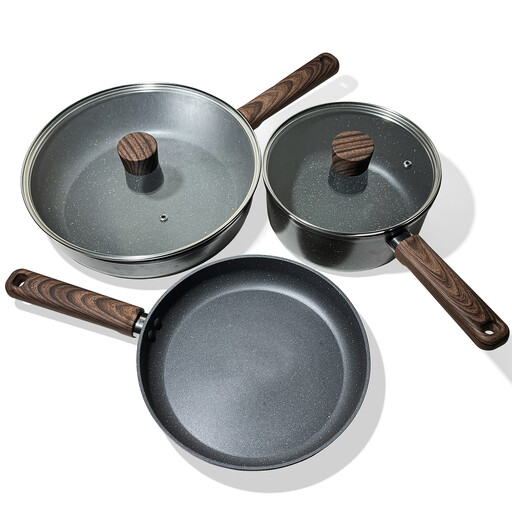 Image unavailable
A three-piece set is only a targeted replacement if you need to change several items of cookware. Before comparing it with your needs, check what’s included, whether it’s induction-compatible and the base dimensions of each piece.
Hold a magnet against the base of each pan. If it sticks, that’s an initial sign of compatibility, as Electrolux France and Whirlpool France explain. Also check for an induction symbol, make sure the base is in good condition and check the size limits in the instructions for the hob you’re considering.
No. The material name alone isn’t enough to tell. Electrolux France points out that some pans with layered bases are compatible, even if their visible material might suggest otherwise. Test the actual base with a magnet and check the manufacturer’s marking.
No. If the pans you use work with the hob you choose, you can keep them and replace only the pieces you’re missing. If you want to keep a lot of non-magnetic cookware, consider a ceramic hob instead, which Bosch says works with all types of cookware.
No: check the specifications and instructions for the exact model you’re considering. For example, Electrolux gives a maximum total electrical power rating of 7 350 W for its EIT814 model. This figure doesn’t describe other hobs and isn’t enough to tell you whether your installation is suitable.