You want to keep your existing pans
Before replacing your hob, you want to find out which of your saucepans and frying pans will work on induction, then replace only what you need to. UFC-Que Choisir recommends checking the base with a magnet.


You can switch to induction without replacing all your pans, as long as the ones you use most often have a ferromagnetic base and fit the cooking zones on your chosen model. If some essential cookware isn’t compatible, a ceramic hob removes the need for a ferromagnetic base. A dual-fuel induction and gas hob can keep both cooking methods available, provided your home can accommodate it. In every case, check the cut-out dimensions and electrical specifications of the exact model before making a decision.
Before replacing your hob, you want to find out which of your saucepans and frying pans will work on induction, then replace only what you need to. UFC-Que Choisir recommends checking the base with a magnet.
For a large stockpot, oval casserole or griddle, check the shape and size of the cooking zones, as well as the conditions for using any flexible zone.
You’re weighing up induction, ceramic and dual-fuel hobs. Cookware compatibility matters just as much as electricity consumption and whether the hob can be installed in your home.
Make a list of the cookware you actually use, then check its bases against the cooking zones you’re considering. Next, check the model’s specifications and whether it can be fitted in your kitchen.
| Criteria | What to check | Who it’s for |
|---|---|---|
| Cookware compatibility | Test the bases of the items you use most with a magnet, or look for the induction symbol. Also compare the base diameter with the cooking zone you plan to use. | If I want to keep my usual pans, I need to know which ones will work before choosing a hob. Around 36% of consumers would put compatibility at the top of their list. |
| Cooking zones and flexible zones | Compare the number and size of the zones with your cookware. For a flexible zone, check the coverage requirements. | With an oval casserole or griddle, I need to know whether its shape will work on a suitable zone. Around 29% of consumers would prioritise compatibility with large cookware. |
| Energy use | Compare consumption figures based on the same usage assumptions, without converting them directly into your personal costs. | If I cook often, I want to factor energy use into my choice of technology without assuming I’ll make the same savings at home. This would be the main consideration for around 21% of consumers. |
| Two cooking methods | Check how the zones are arranged on a dual-fuel hob, along with the model’s requirements and your home’s installation constraints. | If some of my cooking still relies on gas, I’d like to keep using it while using induction for compatible cookware. Around 14% of consumers would prioritise having both cooking methods. |
Ceramic hobs don’t require the ferromagnetic base needed for induction. To compare the energy use of the two technologies, ADEME reports annual consumption of 200 kWh for ceramic and 115 kWh for induction, based on 409 cooking cycles a year. These figures rely on specific usage assumptions and don’t predict how much energy your household will use.
If only a few items fail the magnet test, replacing that cookware could let you choose induction without replacing your entire collection. A dual-fuel induction and gas hob meets a different need: keeping both cooking methods. You’ll still need compatible cookware for its induction zones, and you’ll need to check that the hob is suitable for your home.
The base needs to be ferromagnetic for the pan to work on induction; the material name doesn’t always tell you whether it is.
Hold a magnet against the base of each saucepan or frying pan you rely on, then identify what needs replacing before choosing a hob.
A similar advertised width doesn’t guarantee the same cut-out or electrical specifications. For example, Electrolux lists a maximum power of 6 000 W for the DAI6301C and 7 350 W for the EIV64453.
Compare the installation diagram and instructions for your chosen model with your kitchen and home’s specifications.
Joining cooking zones doesn’t mean that every shape of cookware will work. Whirlpool states that the large zone on the WBB3760BF switches off if it isn’t fully covered.
Measure the bases of your larger items and check their shape against the requirements for the zone on the model you’re considering.
Annual figures published by ADEME are based on usage assumptions; your results at home will depend on factors including your cooking habits.
Use the comparison to help choose between technologies, but don’t take it as a guarantee of your personal savings.
The range includes the three-zone DAI6301C and the four-zone EIV64453: two 60 cm induction hobs with different configurations.
Bosch Electroménager France lists the PIJ631HB1E as a 60 cm, three-zone induction hob.
The WSB2360BF and WBB3760BF show two different ways to accommodate larger cookware.
These two products suit two possible steps in switching to induction: choosing a hob or replacing a single incompatible saucepan. Whether they’re right for you depends on your cookware and, for the hob, your kitchen.
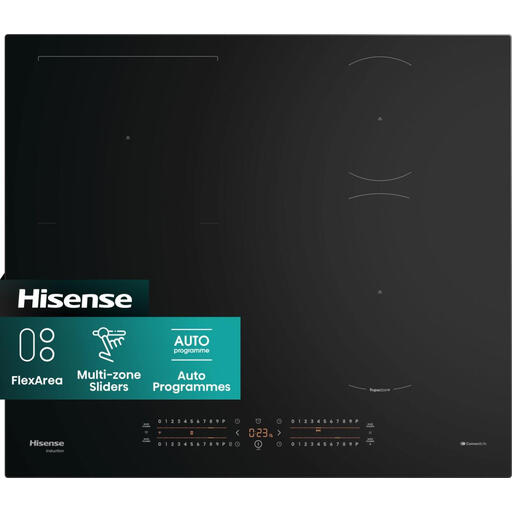 Image unavailable
A replacement hob if you’re switching to induction. If you plan to use its Bridge zone with larger cookware, check the shape and base against the operating requirements in the instructions. Before choosing it for your kitchen, also check the cut-out and connection specifications.
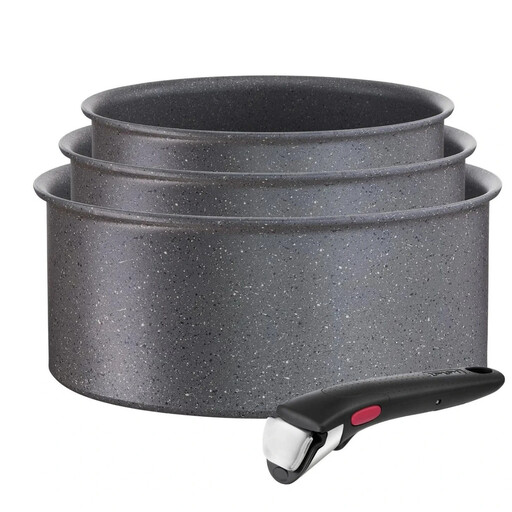 Image unavailable
Worth considering if you need to replace one incompatible saucepan rather than all your cookware. The title specifies a 16 cm size and a removable handle; check exactly what’s included in the variant and the diameter of its base to make sure it suits your chosen cooking zone.
Hold a magnet against its base: if it sticks, the base contains iron, according to the test described by UFC-Que Choisir. Also look for the induction symbol, then compare the base diameter with the cooking zones on the hob you’re considering.
No, not if the ones you want to keep have an induction-compatible base and suit the cooking zones you’ve chosen. Test the items you use most first to find out which ones genuinely need replacing.
Not necessarily. Electrolux France gives the DAI6301C a 560 × 490 mm cut-out; the advertised width of another hob doesn’t mean it will fit the same opening. Check its own installation diagram and electrical specifications.
No. Its shape and coverage requirements vary by model. For example, Whirlpool states that the large zone on the WBB3760BF switches off if it isn’t fully covered. Compare the dimensions of your dishes’ bases with the instructions.
Not necessarily by the same amount as a published average. ADEME reports 115 kWh a year for induction compared with 200 kWh a year for ceramic, based on 409 cooking cycles a year. Your consumption will depend on how you use your hob.