
Livraison le jour même ou le lendemain

Qualité garantie

Débloquez vos offres de bienvenue: Livraison GRATUITE | Jusqu'à -80 % | 30 jours d'essai gratuits à JoyPlus
Téléchargez l'application
An induction hob frying pan isn’t just about its diameter or how it looks. A poorly designed base can lead to uneven heating, a fragile coating can lose its effectiveness quickly, and an uncomfortable handle can make cooking a chore. A few simple checks are all it takes to avoid unpleasant surprises when you buy.
The label all hob frying pan doesn’t automatically mean it works with induction. To work on an induction hob, the pan must have a magnetic base. A model designed for gas, electric or ceramic hobs won’t necessarily work on an induction hob.
Look for the words compatible with induction, “IH” or the corresponding symbol. If you’re unsure, hold a magnet to the base of the pan: if it sticks, that’s a promising first sign. However, the manufacturer’s specification sheet is still the most reliable reference.
A non-stick frying pan makes cooking eggs, fish or pancakes a breeze. However, its lifespan depends heavily on how you care for it. Metal utensils, abrasive sponges and heating the pan when empty can quickly damage its surface.
Claims like PFAS-free, PFOA-free or “ceramic coating” should be examined carefully. They describe a feature claimed for the product in question, but they don’t guarantee its performance or longevity.
A large pan can become surprisingly heavy once it’s full. On the other hand, a model that’s too light may shift on the hob or distribute heat less evenly. The shape of the handle, the height of the sides and whether a lid is included also play a big part in everyday comfort.
Each material has its advantages and suits different uses:
A multi-layer construction, for example an aluminium core sandwiched between two layers of stainless steel, can improve heat distribution. Just make sure this feature is actually listed in the model’s specification sheet, rather than just in a marketing description.
A 28 cm frying pan is generally suitable for several portions, stir-fried vegetables or a nice piece of meat. However, it takes up more space on the hob and in the dishwasher.
Also remember to measure the diameter of the cooking zone on your hob. If the pan’s base is noticeably smaller than the zone, it may heat up more slowly and less evenly.
To preserve a non-stick surface, choose wooden, silicone or heat-resistant plastic utensils. Even if a pan is labelled as dishwasher-safe, washing it by hand with a soft sponge often helps keep the coating looking and performing well for longer.
If you’re looking for a durable frying pan, stainless steel, carbon steel or cast iron can be good choices, provided you’re happy with a specific handling and care routine. For quick, everyday cooking, a non-stick or ceramic coating is generally easier to live with.
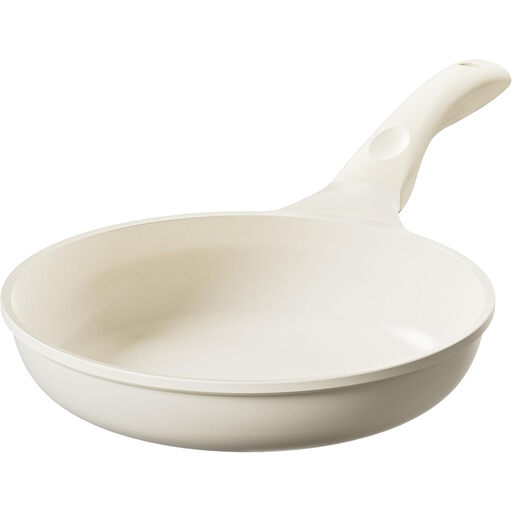
Why this choice suits this profile: with its 24 cm diameter, this model is easy to handle in a small kitchen and works well for single portions. The product specification states compatibility with induction, gas and electric hobs.
Its clearly stated diameter helps you avoid choosing a pan that’s too bulky. The ceramic coating, claimed to be PTFE, PFOA and PFAS-free, should still be treated gently with non-metal utensils.
A compact size, a bakelite handle and compatibility claimed with several hob types.
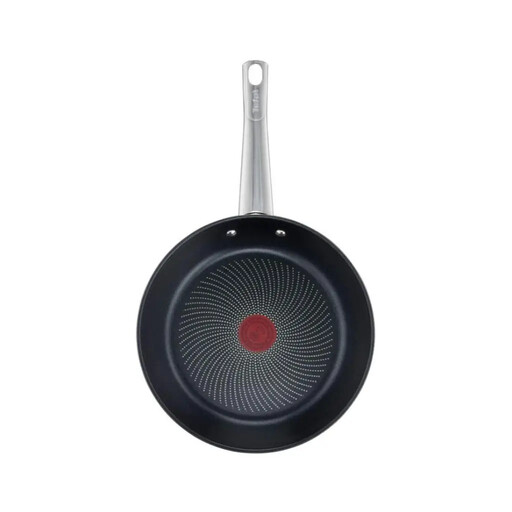
Why this choice suits this profile: this 28 cm model combines a stainless steel exterior with a titanium-reinforced non-stick coating. It’s suitable for family meals and induction hobs.
The specification clearly states its compatibility with gas, electric, ceramic and induction hobs, as well as oven use up to 250 °C. These limits should, of course, be respected.
A Thermo-Signal temperature indicator, a riveted stainless steel handle and cleaning claimed to be dishwasher-safe.
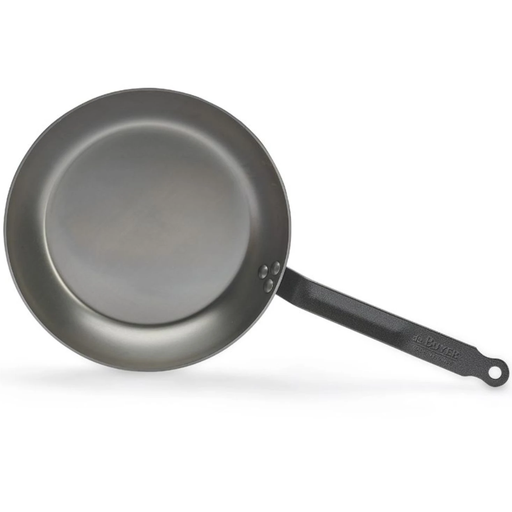
Why this choice suits this profile: this 3 mm carbon steel pan is designed for high-temperature cooking, searing and frying. It works on induction as well as other heat sources.
Its carbon steel construction means it doesn’t rely on a non-stick coating, but it does require an initial seasoning, thorough drying and a thin layer of oil after each use.
A thickness of 3 mm, a diameter of 28 cm and manufacture claimed in France.
We’ve put together a comprehensive list, updated in real time, of products that fully meet these demanding selection criteria and European safety regulations.
Check the specification sheet and look for the words compatible with induction or “IH”. The base must contain a ferromagnetic material. A magnet can be used as an additional check, but it doesn’t replace the manufacturer’s information.
It depends on how often you use it, the cooking temperature and how you care for it. Avoid heating the pan when empty, using metal utensils and abrasive products. If the coating flakes, warps or no longer allows even cooking, it’s best to replace the pan.
Stainless steel doesn’t require you to replace a non-stick coating, but its purchase price and cooking method may differ. Careful preheating and the right amount of fat can help reduce sticking. So the choice depends as much on your cooking habits as on the budget you have for your equipment.