What should you look for?
Start with the kind of cooking you do most often: using a hob, pressure cooking, combining several cooking modes in one appliance or preparing food by hand.
| What matters to you |
What to check |
Who it’s for |
| Quick cooking on the hob |
Check that your cookware has a magnetic base and that its diameter suits the induction zones. |
When I often cook in a frying pan or saucepan, I want my usual cookware to work with my new hob. Around 31 % of consumers would put this kind of everyday cooking at the top of their list. |
| Slow-cooked dishes and batch cooking |
Compare the capacity with the portions you prepare. For a traditional pressure cooker, also check that its base is compatible with your hob. |
For pulses or casseroles made in larger quantities, I’m mainly looking for an appliance suited to pressure cooking and the amount of food I make. This would be the main priority for around 31 % of consumers. |
| Reheating and smaller batches |
Check the capacity, available modes and dimensions, depending on whether the appliance is freestanding or built-in. |
With limited space, I want to be able to reheat, defrost and cook without needing several appliances, while accepting the capacity limits of the model I choose. Around 23 % of consumers would prioritise this versatility. |
| Preparing food by hand |
Choose a utensil based on the task you repeat, the quantity you need to prepare and the amount of manual effort you’re happy with. |
For grating, whisking or finely slicing a small quantity, I sometimes prefer a hand-held utensil. It can’t, however, replace an appliance for heating food. Preparing food without a motor would be a priority for around 15 % of consumers. |
Appliances for different needs
These Joybuy models cover electric pressure cooking, induction and combination microwaves. Start by choosing an appliance that suits the dishes you make, then check the dimensions and usage requirements of the model you’re considering.
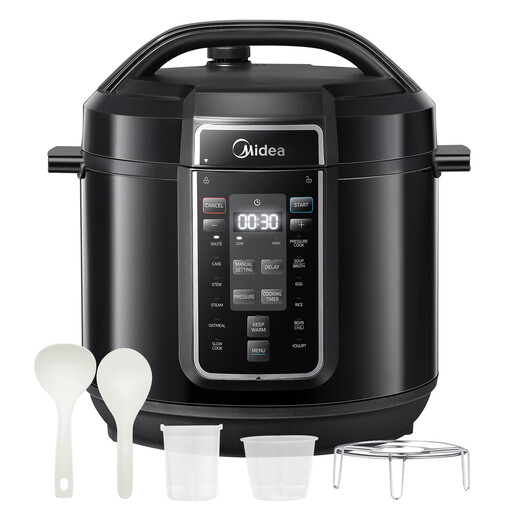 Image unavailable
Midea 9-in-1, 8 L pressure multi-cooker
Worth considering if you cook dishes under pressure or prepare several portions in an electric appliance. The product listing states a capacity of 8 L, a power rating of 1 200 W and 12 programmes. This wattage doesn’t measure the energy used per recipe. Follow the fill limits and pressure-release instructions in the manual.
View on Joybuy
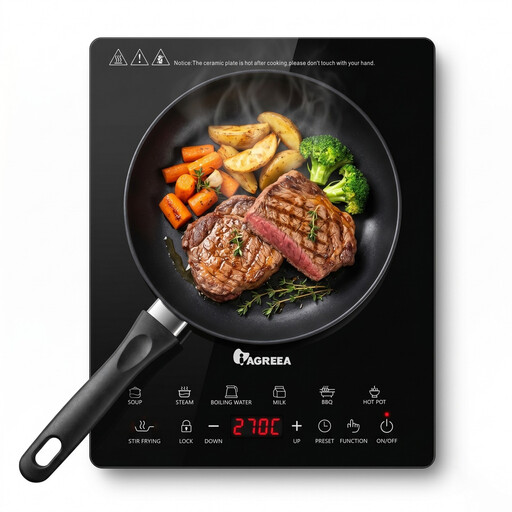 Image unavailable
IAGREEA DF200-14V10, 2 000 W portable induction hob
Worth a look if you want to cook in a frying pan or saucepan on a portable hob. The product listing states that it has eight power levels, a temperature range of 60 to 270 °C and is suitable for cookware measuring 12 to 26 cm. Check that your pans have a magnetic base; the maximum power rating doesn’t show how much energy a cooking session uses.
View on Joybuy
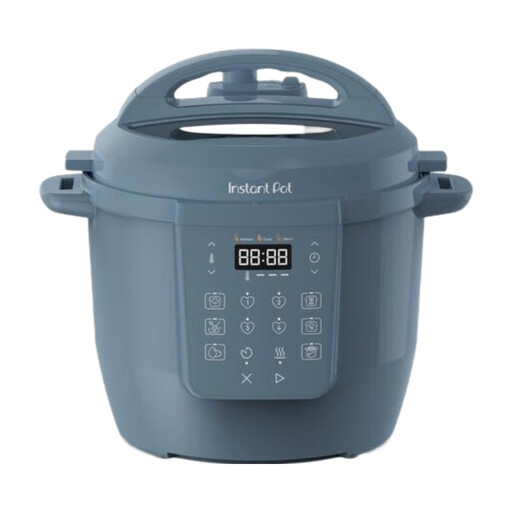 Image unavailable
Instant Pot Classic 5,7 L, Daydream Blue
Worth considering if you’re looking for a 5.7 L multi-cooker for dishes suited to pressure cooking. Compare the capacity with your usual portion sizes and follow the model’s fill limits and pressure-release instructions.
View on Joybuy
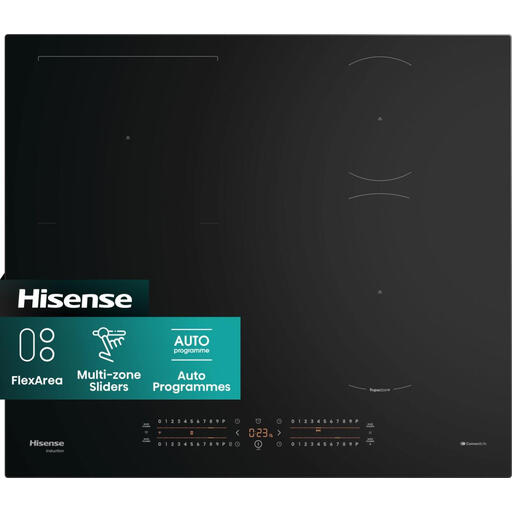 Image unavailable
Hisense HI6432BSCWF Hi6, 60 cm induction hob
Worth comparing if you’re looking to replace your hob with a 60 cm induction model. Before choosing, check the available space, the power supply required for installation and whether your cookware has a magnetic base. The stated width doesn’t tell you how much energy the hob will use to cook your dishes.
View on Joybuy
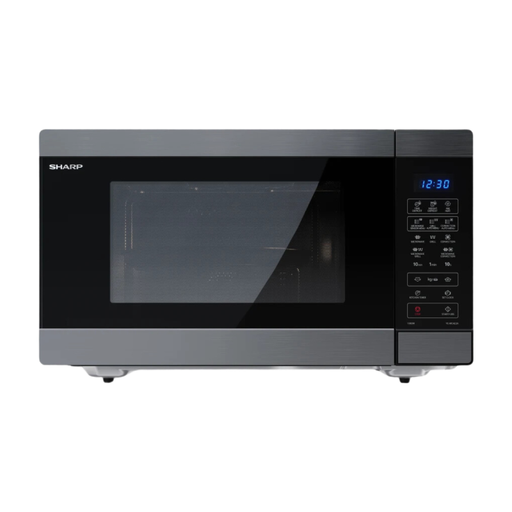 Image unavailable
SHARP YC-MC422AE-SB, 42 L combination microwave
Worth considering if you want one appliance for reheating and other cooking modes. The product listing states a capacity of 42 L and a 3-in-1 configuration. Check the available space, the dishes you use and the instructions for each mode before considering it as a replacement for another appliance.
View on Joybuy
Frequently asked questions
How can I compare the energy used by two ovens?
For domestic ovens with an energy label, compare the kWh per cycle in the same mode and take the oven’s capacity and the dishes you plan to cook into account. The maximum wattage alone doesn’t tell you how much energy will be used to cook your meal.
Is an energy label enough to help me choose a combination microwave?
No. It doesn’t replace checking the modes you’ll use and the information specific to each model. Check the capacity, dimensions, functions and manual, and only compare energy use for similar types of use.
Can I keep using my pans with an induction hob?
Yes, as long as their bases contain magnetic metal and their dimensions are suitable for the hob you choose. Bosch Home Appliances specifies this material requirement for induction, so check every pan you plan to use.
When can I open a pressure cooker after cooking?
Wait until the pressure has been released, following the instructions for your model. For its SENSOR pressure cooker, SEB also says that the pressure indicator must be fully lowered before opening.
Does a larger capacity always mean less energy per meal?
No. First, choose a capacity that suits the portions you actually prepare. To compare the energy use of two appliances, compare cooking sessions with similar quantities, modes and results, rather than looking only at their capacities.


