If you cook regularly, induction is a good choice if your cookware is compatible and you want responsive heat. A ceramic glass hob with radiant zones is worth considering if you want to keep using cookware that is not induction-compatible. For a profile of 409 cycles a year, ADEME gives reference figures of 115 kWh/year for induction and 200 kWh/year for ceramic glass, but these are not a guarantee of how much your future appliance will use. A cooker combines a hob and an oven, while a portable hob is mainly suited to occasional use. In every case, check the available space and the model’s electrical requirements before buying.
Who are these options for?
People who cook often and want responsive heat
If you regularly prepare several parts of a meal, an induction hob can give you the responsive control you need, provided you have compatible cookware. ADEME’s published consumption figures can help you compare it with a ceramic glass hob, but they cannot predict your own energy use.
People replacing their hob who want to keep their cookware
If you want to carry on using your saucepans and frying pans, check their bases before switching to induction. UFC-Que Choisir points out that this technology requires suitable cookware. A ceramic glass hob with radiant zones is another option to compare with your existing set-up.
People short on space or looking for an extra cooking zone
A small kitchen may have room for a suitable built-in hob or a portable appliance, depending on the space available and how many things you need to cook at once. A single-zone portable hob, such as Tefal’s Everyday Slim, serves a different purpose from a main hob with several zones.
Which criteria should you consider first?
When choosing equipment for cooking at home, first decide how many cooking zones you need and what size will fit. Then compare the technology, your cookware and the connection requirements. A portable hob and a cooker serve different needs from a built-in hob on its own.
| Criterion |
What to check |
Consumers concerned |
| Responsiveness and energy use |
Compare the heating method and controls on the models you are considering. To put energy use into context, ADEME publishes reference figures based on 409 cycles a year; these are not measurements for each individual hob. |
When I cook often, I want to adjust the heat easily without losing sight of my electricity use. Around 36% of consumers put this at the top of their list. |
| Existing cookware |
Check that cookware intended for induction has a ferromagnetic base, and make sure the cooking zones are wide enough for your larger frying pans or casserole dishes. |
If I replace my hob, I want to carry on using the saucepans I use regularly. Keeping existing cookware would be the main priority for around 29% of consumers. |
| Space and number of cooking zones |
Check the dimensions and cut-out required, then count how many things you cook at once and decide whether you also need to buy an oven. |
In a small kitchen, I need to prepare meals without choosing an appliance that is too bulky or not having enough cooking zones. Around 21% of consumers would put finding the right size first. |
| Existing electrical installation |
Compare the total power, the connection specified in the instructions and your existing installation. If you are unsure they are compatible, ask a professional for advice. |
If I want to replace my hob without planning electrical work, I need to know whether the new model is suitable for my existing installation. This would be the main criterion for around 14% of consumers. |
Mistakes to avoid before you buy
-
Confusing a ceramic glass surface with induction
Hobs that look similar can use different heating methods. According to UFC-Que Choisir, induction requires cookware with a ferromagnetic base that the hob can detect.
Check which pieces of cookware you rely on, and compare their diameters with the cooking zones on the model you are considering.
Switching to induction may mean replacing cookware that is not compatible.
-
Choosing based on the external width alone
Two hobs of a similar width may require different cut-outs and may not have the same number of cooking zones. Electrolux, for example, offers different configurations on its EHF65451FK and EHV6232FOK models.
Measure the available cut-out and depth, then check how many dishes you need to cook at the same time.
An unsuitable cut-out may mean having to alter your worktop.
-
Assuming maximum power means it will suit your cooking
The stated total power alone does not tell you whether the cooking zone sizes, number of zones and controls will suit the way you cook. You also need to check the model’s connection requirements.
Compare the cooking zones and how you will use them. If in doubt, ask a professional to check that the requirements in the instructions are compatible with your existing installation.
-
Expecting a portable hob to do everything a family hob can
A single-zone portable appliance can give you an extra cooking surface, but it cannot handle several dishes at once like a hob with multiple zones.
Choose this format for occasional use or when one cooking zone is enough. Otherwise, compare built-in hobs that will fit your space.
Brands to know when comparing
The features below relate to the ranges or models mentioned, not every appliance from each brand. Always check the specifications of the model you are considering.
Bosch
Bosch offers built-in induction hobs, with features that vary by model.
- Bosch’s specifications for the PIJ611BB5E list a 28 cm cooking zone, PowerBoost, Quick Start and a timer with automatic shut-off.
- Check the number of cooking zones, cut-out and power requirements for the specific hob. The PIJ611BB5E’s features do not represent the entire range.
Electrolux
The range includes electric ceramic glass hobs with three or four cooking zones, depending on the model.
- Electrolux lists a maximum total power of 6 400 W for the EHF65451FK and 5 700 W for the EHV6232FOK.
- These two models have different configurations, so compare their cooking zones, installation dimensions and electrical requirements separately.
Sauter
Sauter offers built-in induction hobs with cooking and control features that vary by model.
- Sauter says the SI934B has a 28 cm cooking zone and timers, among other features. The brand also describes guided cooking features for the SPI1638SX.
- These manufacturer descriptions are not comparative performance measurements and do not apply to every Sauter hob.
Brandt
Brandt is one of the brands to consider when comparing induction hobs or cookers that combine a hob and oven.
- UFC-Que Choisir mentions the BPI6310B induction hob in a 2025 article about tested models. Brandt also offers cookers.
- A result for the BPI6310B does not describe other models. For a cooker, check the hob, oven, dimensions and connection requirements separately.
Tefal
The Everyday Slim portable induction hob is worth considering for an extra cooking zone or a smaller space.
- Tefal lists a 2 100 W cooking zone and seven heat settings for the Everyday Slim.
- Its single cooking zone cannot replace the ability to cook several dishes at once on a multi-zone hob. You will also need induction-compatible cookware.
Induction hobs and portable appliances on Joybuy
These models suit two different needs: fitting a multi-zone induction hob for everyday meals, or adding a portable cooking zone when an extra hob is all you need. Before choosing, compare the dimensions, your cookware and the electrical requirements for each model.
 Image unavailable
TOPWISH, 60 cm built-in induction hob, four cooking zones
For preparing several parts of a meal at once, provided the cut-out and electrical installation are suitable for this built-in hob.
The description lists a total power of 7 200 W, nine heat settings, a boost function, a timer and a cut-out of 565 × 495 mm. Use cookware with a ferromagnetic base, and ask a professional to check the connection requirements in the instructions.
View on Joybuy
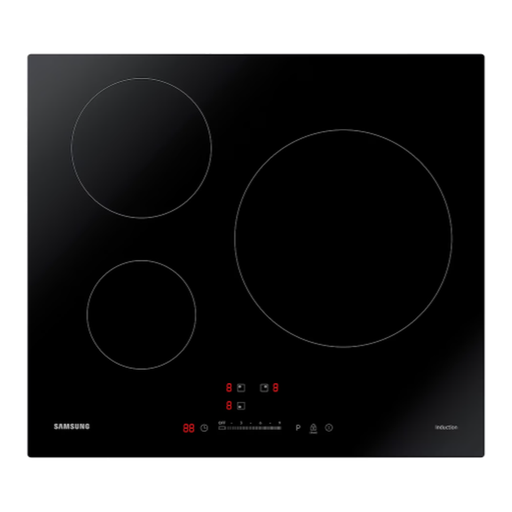 Image unavailable
Samsung NZ63M3707AK, three-zone induction hob
For cooking on several zones with a built-in hob, provided its size suits your kitchen.
The stated total power is 7 200 W; the description mentions PowerBoost and a cut-out of 560 × 490 mm. Check that you have ferromagnetic cookware, and ask a professional to check the connection requirements in the instructions.
View on Joybuy
 Image unavailable
IAGREEA DF200-14V10, 2 000 W portable induction hob
For adding an extra cooking zone or cooking when one zone is enough, rather than replacing the ability to cook several dishes at once on a multi-zone hob.
The description lists eight power settings, seven programmes, a timer of up to three hours and flat magnetic-base cookware measuring 12 to 26 cm. Check the plug or connection requirements before use.
View on Joybuy
 Image unavailable
ochama, 2 000 W portable induction hob
For an extra cooking zone when you do not need to prepare several dishes at the same time.
The description lists ten heat settings, six preset functions and touch controls. You will need ferromagnetic cookware; check the model’s dimensions and plug or connection requirements too.
View on Joybuy
Frequently asked questions
Can I keep using my old saucepans with an induction hob?
Yes, as long as the hob detects their ferromagnetic base. UFC-Que Choisir explains that cookware without this type of base will not trigger the heating, so check the saucepans and frying pans you use regularly.
Does a ceramic glass hob work like an induction hob?
No. A ceramic glass surface alone does not tell you which technology is used. Induction heats compatible cookware using a magnetic field, while an electric hob with radiant zones transfers heat from the elements beneath the glass.
How can I compare the energy use of induction and ceramic glass?
ADEME’s reference figures are 115 kWh/year for induction and 200 kWh/year for ceramic glass, based on a profile of 409 cycles a year. They help you compare the technologies within that profile; your own energy use will depend, among other things, on how you cook, your cookware and the model you choose.
Can I replace my hob without checking the electrical installation?
No. Before buying a built-in hob, compare its power and connection requirements, as set out in the instructions, with your existing installation. If you are not sure they are compatible, ask a professional to check rather than assuming changes will be possible.


