Households keeping their existing pans
You’re replacing a hob and want to check whether your usual cookware will work with induction. Check each base individually: not every item in a cookware set is necessarily compatible.


You can switch to induction without replacing your pans, as long as their bases are ferromagnetic and they’re the right size for the cooking zones you choose. UFC-Que Choisir points out that cookware without a ferromagnetic base won’t work on an induction hob. If you need to keep using incompatible cookware, compare ceramic hobs, or consider a mixed-fuel hob if you’d like to keep gas and can have the installation checked.
You’re replacing a hob and want to check whether your usual cookware will work with induction. Check each base individually: not every item in a cookware set is necessarily compatible.
You cook several dishes at once and need to choose the number, size and layout of the cooking zones to suit the cookware you use.
You’re considering a mixed induction and gas hob, provided your kitchen and its connections can accommodate the model you choose.
Start by checking your cookware, then confirm that installation is feasible and the cooking zones are suitable before comparing costs.
| What matters | What to check before buying | Who it matters most to |
|---|---|---|
| Cookware compatibility | Test each base separately with a magnet, then check the hob manual for the sizes accepted by its cooking zones. | If I want to keep my everyday pans, I check each one for compatibility before choosing. Around 29% of consumers prioritise cookware compatibility. |
| Installation feasibility | Compare the cut-out and available space with the model’s requirements. For induction, have the required circuit and electrical protection checked. | If my kitchen’s space or power supply presents constraints, I want to know whether the model can be installed in those conditions. Around 23% of consumers put suitability for their home first. |
| Number and layout of cooking zones | Count how many pans you use at once and compare their sizes with the cooking zones, including any that can be joined together. | When I cook with several pans at the same time, their number and size need to match the available cooking zones. Around 18% of consumers prioritise the hob’s layout. |
| Overall cost | Weigh up the price of the hob, any cookware that needs replacing and any adaptations that may be required. ADEME recommends comparing appliance energy use in the context of how you use them. | If I want to manage both the cost of replacing my hob and the cost of using it, I also factor in cookware and any work that may be needed. Around 18% of consumers prioritise the overall cost. |
| Keeping gas | Check how the cooking zones are divided between gas and induction on the exact model, then check the installation and ventilation requirements. | If I want to carry on cooking with gas as well as using induction, I check the number of zones of each type and whether installation is feasible. Around 12% of consumers primarily want to keep gas burners. |
Enedis states that an induction hob needs its own circuit and dedicated protection. For a mixed-fuel hob, Cegibat, a GRDF service, also sets out installation and ventilation requirements specific to the gas connection. Have the requirements for your chosen model and home checked.
An induction hob may have a ceramic glass surface. That doesn’t mean it will work with cookware that doesn’t have a ferromagnetic base.
Check the heating technology listed for the model, then test each item of cookware if you’re considering induction.
Dimensions and power supply requirements vary between models. Enedis states that an induction hob needs its own circuit and dedicated protection; a mixed-fuel hob also involves gas-related checks.
Compare the manual with the space available, and have the necessary connections and protection checked before buying.
Adapting your kitchen or its power supply may involve extra costs.
On a mixed-fuel hob, some cooking zones are reserved for gas, so the total number doesn’t tell you how the two technologies are divided.
Check the product details for your chosen model and count the gas and induction zones separately.
Two hobs from the same brand or a similar range may differ in their technology, dimensions and features.
Check the full model number and the features that matter for your kitchen before making your decision.
Compare its induction and ceramic models to find the type of cooking zones you’re looking for.
The 600 Series FlexiBridge EIV64453 may be worth considering if joinable cooking zones suit your cookware and cooking habits.
The PM3643D combines induction and gas for households looking to keep both cooking methods.
The models mentioned cover different needs, with both ceramic and induction options.
This selection includes induction hobs and other hobs relevant to this choice. Check the heating technology, cookware compatibility and installation requirements on each model’s product page.
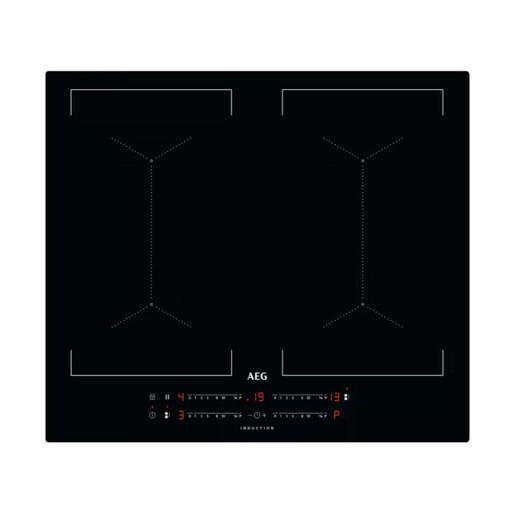 Image unavailable
Worth considering if you need four cooking zones and would like to combine two for compatible cookware.
The product details list a width of 60 cm. Built-in installation should be carried out by a professional; a suitable power supply and adequate ventilation are required.
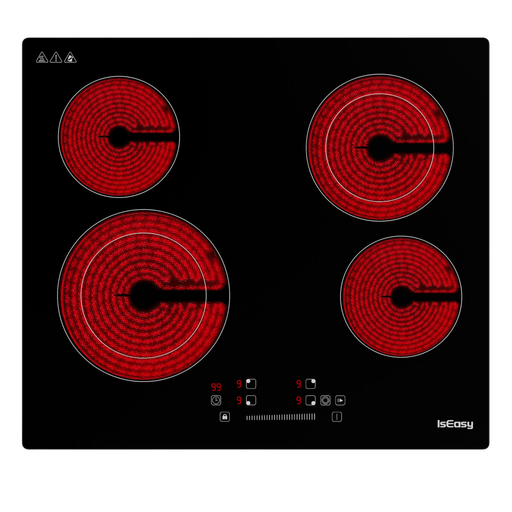 Image unavailable
Compare this model if you’re looking for a four-zone hob with touch controls and dual-circuit cooking zones.
The product title mentions a nine-level touch slider and a 99-minute timer. Check the exact heating technology to make sure it suits your cookware.
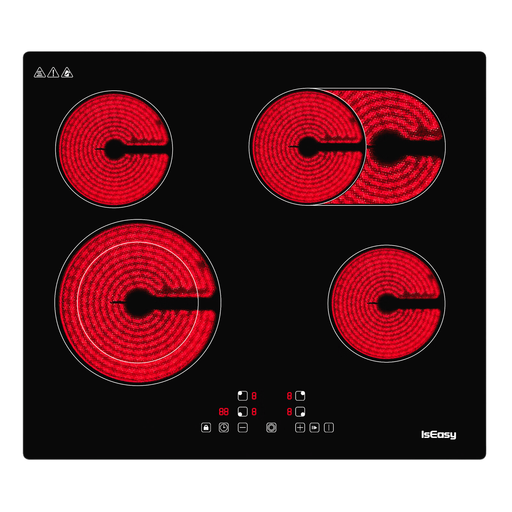 Image unavailable
Compare this model if four cooking zones and different zone shapes suit the cookware you use.
The product title lists a power rating of 6 600 W and touch controls. Check the heating technology and the cut-out dimensions listed for this model.
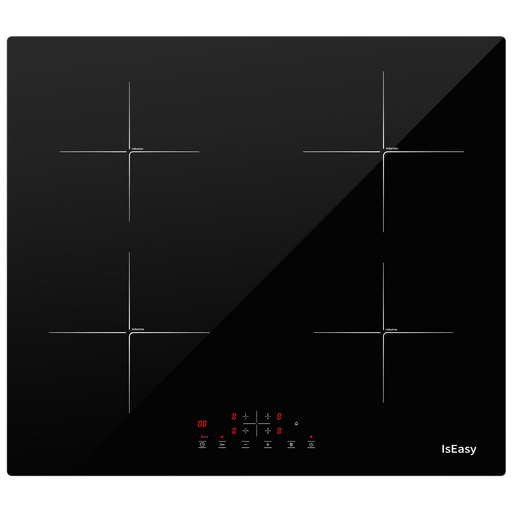 Image unavailable
Worth considering if you’re looking for a built-in induction hob with four cooking zones.
The product title lists a power rating of 6 800 W, nine power levels, a timer from 1 to 99 minutes and a Boost function.
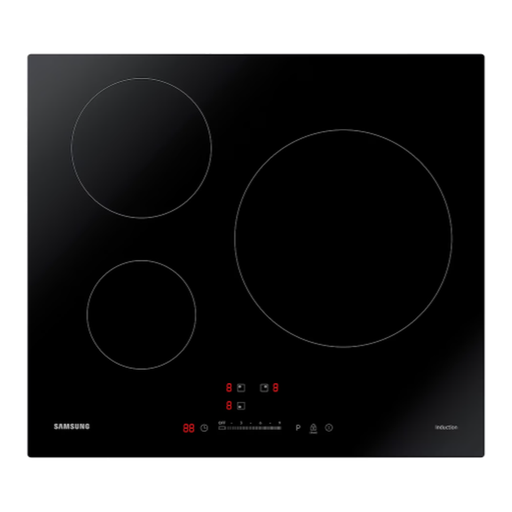 Image unavailable
Compare this model if three cooking zones are enough for the number of dishes you need to cook at once.
The product title lists a power rating of 7 200 W. The product details specify a fixed connection to a dedicated circuit protected by a 32 A circuit breaker, with installation by a qualified electrician.
Hold a magnet against the base of each item of cookware you want to keep. If it sticks, the base contains a ferromagnetic material. Then check the manual for the sizes accepted by the cooking zones. One compatible pan doesn’t mean that your entire cookware set will work.
Not necessarily. Enedis states that an induction hob needs its own circuit, protected by a 30 mA type A residual-current device and a circuit breaker rated at no more than 32 A. Have your existing installation checked against the requirements for your chosen model. This information isn’t a guide to connecting the hob.
Check the connections required for both technologies, as well as the positioning and ventilation requirements for the gas section. Cegibat, a GRDF service, explains that the rules on certificates of conformity depend on the exact nature of the work; some minor work is exempt.
This depends on the work involved, your tenancy agreement and the equipment concerned. Service Public states that some work may require the landlord’s permission; ADIL de Paris distinguishes between alterations and transformations depending on the project. In a furnished rental used as your main home, a hob is one of the minimum required appliances, but that doesn’t mean you can make any changes to the installation.
When a consumer buys from a professional seller, the legal guarantee of conformity covers faults that fall within its terms and appear within two years of the goods being delivered, according to Service Public. This is separate from any commercial extended warranty. Check the delivery and installation terms offered separately.