
Livraison le jour même ou le lendemain

Qualité garantie

Débloquez vos offres de bienvenue: Livraison GRATUITE | Jusqu'à -80 % | 30 jours d'essai gratuits à JoyPlus
Téléchargez l'application
An induction hob speeds up cooking, makes cleaning easier and lets you adjust the temperature precisely. But between a portable hob, a built-in hob and a model with several cooking zones, the differences go well beyond the power rating shown on the packaging.
To avoid buying the wrong appliance, take the time to check whether your pans are compatible, the installation dimensions and the required electrical setup. Here are the main criteria to consider before choosing an induction hob, whether for a family kitchen, studio flat, campervan or occasional-use kitchen.
A 2000 W portable induction hob is perfectly suitable for a saucepan or frying pan. However, it cannot be compared directly with a four-zone hob rated at 6000 or 7200 W. On a built-in model, the total power is shared between the zones when several pans are heating at the same time.
So remember to check:
Induction only works with cookware whose base is ferromagnetic. A simple magnet is enough to check whether a cast-iron, enamelled steel or suitable stainless-steel pan is compatible. Aluminium, copper, glass and ceramic cookware without a magnetic base will generally not be detected.
With a portable induction hob, also check the diameter of cookware it accepts. The IAGREEA model featured below is compatible with magnetic saucepans and frying pans measuring 12 to 26 cm. A pan that is too small or too large may heat unevenly or may not be recognised at all.
A powerful built-in induction hob does not necessarily come with a standard plug. Some models require a dedicated 220-240 V circuit or a two-phase connection. Always follow the instructions in the manual and use a qualified professional where recommended by the manufacturer.
Do not rely solely on the visible width of the hob. You must also check the worktop cut-out dimensions, the ventilation space beneath the appliance and any restrictions on installation above a dishwasher or refrigerator.
A portable induction hob can be placed on a stable surface and stored away after use. It is a practical solution for students, small homes, offices, temporary kitchens or as an additional cooking surface. Some two-zone models can also be suitable for a campervan or caravan, provided you follow the instructions concerning the power supply and ventilation.
A built-in induction hob is fitted directly into the worktop. A width of 60 cm is often suitable for the most common kitchen layouts, but it is the cut-out dimensions that really matter. For example, several 59 cm models require an opening of approximately 56 × 49 cm.
Zone-combination functions, such as the bridge system available on some models, are useful with a large plancha or fish kettle. However, they do not remove the need to check the dimensions of the zones and the power actually available.
An induction hob with a timer lets you programme a cooking zone or the entire appliance to switch off. The maximum duration varies by model: some switch off after 99 minutes, while others offer up to three hours. This function helps prevent you from forgetting about your cooking, but it is never a reason to leave food unattended, particularly when using oil or other fats.
Other features worth prioritising include:
The ceramic glass surface may remain hot after cooking, particularly because it absorbs some of the heat from the pan. Wait until it has cooled completely before cleaning it.
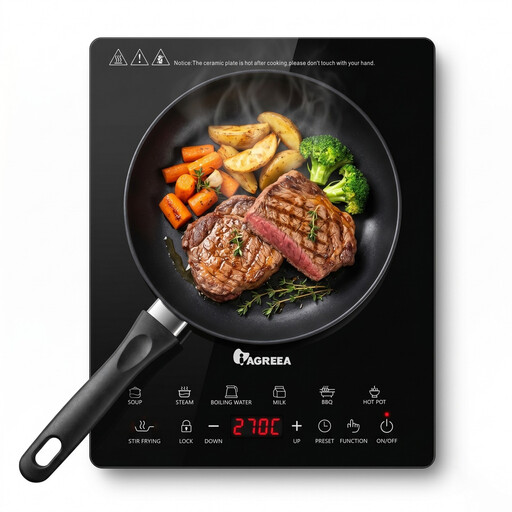
Why this choice suits this profile : Its portable design and stated thickness of 44.5 mm make it a suitable solution for a first installation, a studio flat or an additional cooking surface.
The power, temperature range and diameter of compatible cookware are clearly stated. This makes it easy to check that the hob meets your needs before buying.
2000 W, 8 power levels, 7 preset functions, a timer of up to 3 hours and a child lock.
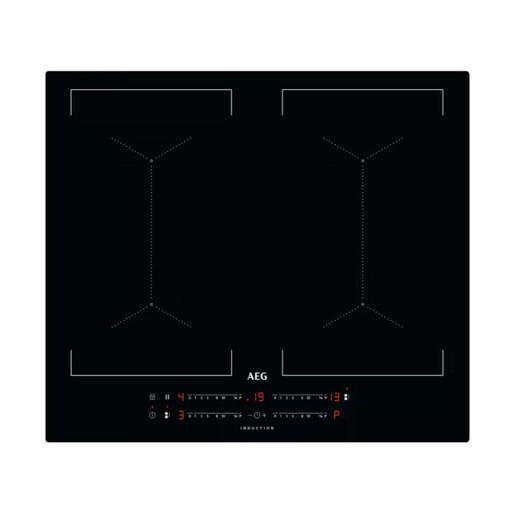
Why this choice suits this profile : This four-zone hob is designed for fitted kitchens that require advanced controls and a permanent installation.
The listing details the essential specifications: dimensions, 7.4 kW power, an independent timer for each zone and 60 cm built-in installation.
Four zones, two FlexiBridge zones, a colour TFT display, Stop&Go function and PerfectFry sensor, according to the product listing.
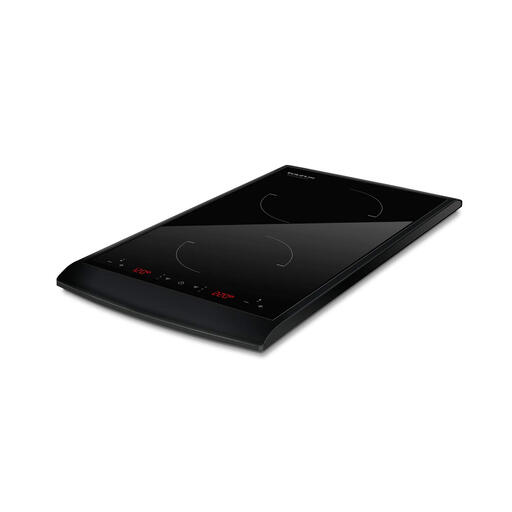
Why this choice suits this profile : With its two zones and 600 × 310 mm format, it meets the needs of a small kitchen, campervan or temporary installation.
The listing specifies the total power of 2900 W, the accepted diameter range — from 12 to 24 cm — and the need to keep ventilation unobstructed.
Two cooking zones, 10 power levels, a timer of up to 3 hours, child lock and overheating protection.
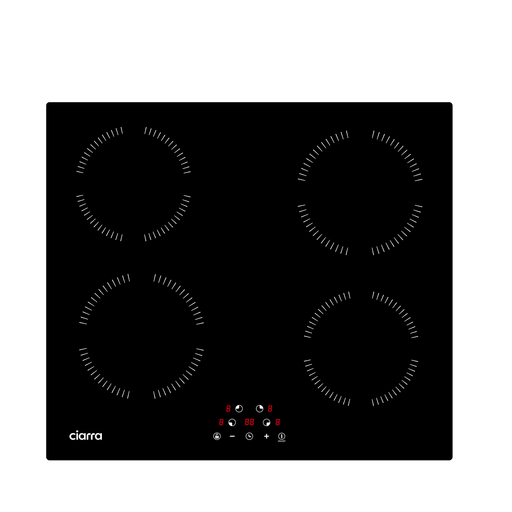
Why this choice suits this profile : Its 60 cm built-in format is suitable for a kitchen renovation requiring four independent cooking zones.
The external dimensions — 590 × 520 × 62 mm — and the 560 × 490 mm cut-out are provided to make worktop preparation easier.
9 power levels, an individual timer of up to 99 minutes, pan detection, child safety lock and residual heat indicator.
We have put together a complete, real-time selection of products that meet these demanding criteria and European safety standards.
The technology heats the compatible pan directly, reducing heat loss compared with a flame or heating element that would not transfer all its energy to the base of the pan. However, energy consumption depends on the selected power level, cooking time, number of zones in use and the quality of the pan’s insulation.
A 2000 W induction hob is generally suitable for preparing an everyday dish on a single cooking zone. If you plan to use two pans, check the total power and how it is shared between the zones. Portable two-zone models may automatically reduce the available power when both zones are operating at the same time.
Its lifespan depends on how often it is used, how well it is maintained and whether the installation instructions are followed. Do not block the air inlets, protect the glass from impacts and clean it with a soft cloth once it has cooled. For a built-in model, proper ventilation and a suitable connection also help preserve the appliance.