
Livraison le jour même ou le lendemain

Qualité garantie

Débloquez vos offres de bienvenue: Livraison GRATUITE | Jusqu'à -80 % | 30 jours d'essai gratuits à JoyPlus
Téléchargez l'application
An induction hob speeds up cooking, cleans in a flash and frees up space in your kitchen. But you still need to read the product specs carefully: cut-out dimensions, actual available power and compatibility with your pans can throw up a few surprises.
Before you place your order, three common pitfalls keep cropping up:
Here are the criteria to run through so you can compare models without making a mistake.
The right size depends above all on how many dishes you cook at the same time:
Measure the width, depth and thickness of your worktop, not forgetting the space available underneath the hob. For a built-in model, also consult the installation diagram and the required electrical power.
The booster temporarily increases the power of one zone to bring water to the boil quickly or heat a large pan. That doesn't mean all zones can run at maximum power permanently.
In particular, check:
For example, the TOPWISH 60 cm hob states a maximum power of 7,200 W and a cable connection with no plug supplied. You'll therefore need to arrange installation by a qualified professional. Meanwhile, the Ciarra three-zone hob has a total power of 5,600 W, with 2,600 W for its large zone.
A touch-control induction hob makes it easy to adjust the cooking, provided the controls remain legible and accessible when the worktop is wet or cluttered. In daily use, the timer, automatic shut-off, residual heat indicator and child lock are no mere gimmicks.
Induction only works with pans that have a magnetic base. A magnet will let you quickly check whether your existing pans are compatible before replacing your entire cookware set. Aluminium, copper, glass and ceramic are generally unsuitable, unless they have a suitable magnetic base.
The surface is usually ceramic glass. Even though the hob doesn't heat up directly, it can stay hot after cooking from heat transferred by the pan. Wait until it has completely cooled down before cleaning it. A soft cloth and a suitable cleaner are all you need; avoid abrasive sponges.
The models below meet different needs. The features shown correspond to the information available on the product pages.
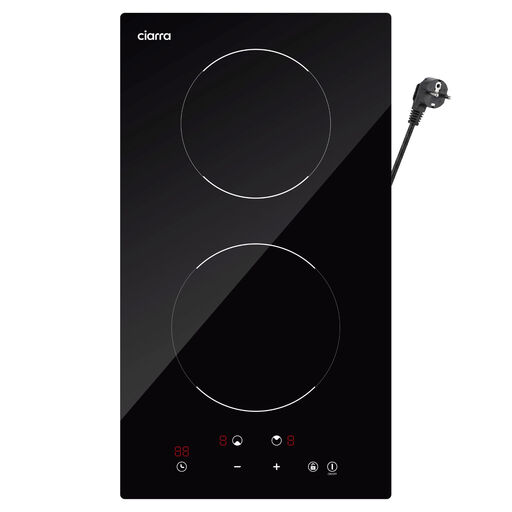
Why this model suits this profile: This 2-zone built-in induction hob is aimed at small kitchens looking for a fixed, discreet and space-saving installation.
Its stated dimensions of 290 × 520 × 62 mm and power of 3,000 W make it simple to check the available space and the required connection.
9 power levels, timer up to 99 minutes, pan detection, child lock and residual heat indicator.
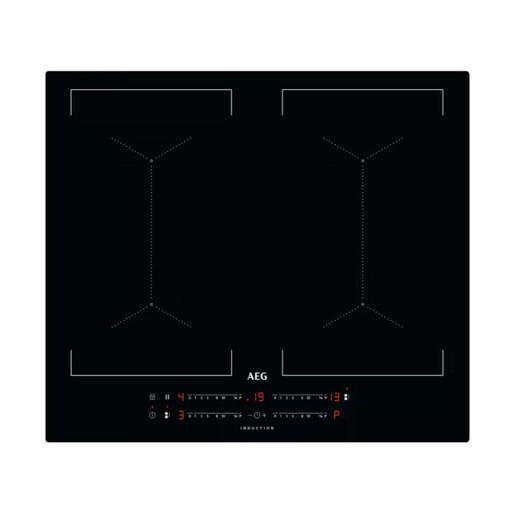
Why this model suits this profile: It's aimed at cooks who want a 60 cm induction hob with advanced controls and a flexible zone.
The FlexiBridge function combines two zones to accommodate large pans, rather than limiting you to separate circular zones.
4 zones, 4.8-inch colour TFT display, independent timer per zone, Stop&Go function and PerfectFry sensor as stated by the manufacturer.
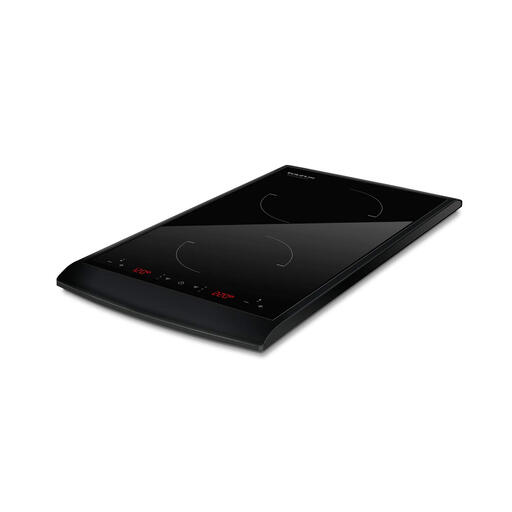
Why this model suits this profile: Its portable design meets the needs of campers, van users or homes where a fixed installation isn't possible.
Its dimensions of 600 × 310 × 71 mm and weight of 3.71 kg are clearly stated: storage and transport can be planned without any nasty surprises.
2 zones, total stated power of 2,900 W, 10 levels, timer up to 3 hours, child lock and overheat protection.
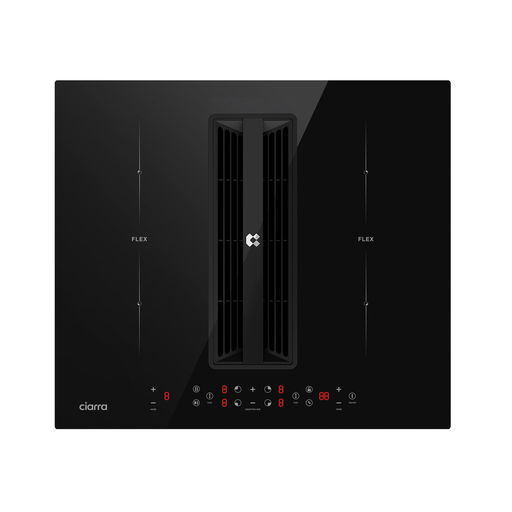
Why this model suits this profile: This induction hob with integrated cooker hood combines cooking and extraction in a single appliance. An interesting solution for an open-plan kitchen or a renovation with limited wall space.
The product page states that installation accessories are sold separately. Remember to factor them into your budget before ordering.
4 zones, including 2 flexible, stated cooking power of 7,000 W, 9 levels with booster and adjustable extraction up to 484 m³/h according to the product page.
We've selected a comprehensive, real-time updated list of products that meet these demanding criteria, while also taking European safety regulations into account.
It all depends on the number of zones and the total stated power. A four-zone model can exceed 7,000 W and require a suitable connection. Consult the manual, check the circuit rating and follow the manufacturer's recommendations. For a built-in appliance without a plug, it's best to call in a qualified professional.
It depends on the build quality, frequency of use, maintenance and adherence to the installation instructions. Avoid knocking the glass surface, don't place metal objects on the hob and only clean it when it's cold. If it cracks, stop using the appliance immediately.
Consumption varies depending on the power selected, cooking time and the number of zones in use. Induction heats a compatible pan directly, but several zones set to high power will naturally increase consumption. Use the timer and adjust the heat level for each dish.