
Livraison le jour même ou le lendemain

Qualité garantie

Débloquez vos offres de bienvenue: Livraison GRATUITE | Jusqu'à -80 % | 30 jours d'essai gratuits à JoyPlus
Téléchargez l'application
An induction hob can modernise your kitchen, but product specs don't always make it easy to spot what will really make a difference day to day. Whether you're looking at a built-in induction hob or a portable model, the installation requirements, available power and how you'll use it are all different.
Before you buy, there are three common pitfalls to watch out for:
For a full kitchen renovation, a built-in induction hob sits flush with your worktop. Models between 59 and 60 cm are common in UK kitchens, but you'll need to compare the exact width, depth, height and required cut-out dimensions.
A portable induction hob is better suited to a studio flat, student room, campervan, caravan or occasional use. It usually plugs into a compatible socket and can be stored away after use. Just make sure you place it on a stable, clear, heat-resistant surface.
A 2-zone induction hob is ideal for someone living alone or a compact kitchen. A 4-zone induction hob gives you more flexibility to cook a saucepan, frying pan and stockpot all at once.
A portable 2000 W induction hob is generally enough to boil water, simmer or sear food in a suitable pan. Two-zone models sometimes have a higher total power, for example 2,900 W, shared between the two zones.
On a built-in model, total power can reach 6,000 to 7,400 W. In the UK, installation must follow the manufacturer's instructions, the designated circuit and current electrical regulations. Some appliances need a dedicated circuit and appropriate protection – in that case, it's best to have a qualified professional handle the installation.
The booster function temporarily increases power to one zone, within the appliance's limits. It speeds up heating, but doesn't replace the need for a properly rated electrical supply.
A touch control induction hob should have clear, responsive controls. An independent timer for each zone makes it easier to cook several dishes at once, while the residual heat indicator reminds you that a zone may still be hot after you've removed the pan.
Here are the features to look for:
Don't scrub the black surface with an abrasive sponge. Wait until it has cooled completely, then use a soft cloth and a cleaner designed for ceramic glass.

Why this suits this profile: Its portable design and 2,000 W power output are ideal for a small kitchen, student accommodation or occasional use.
The spec lists 10 power levels, control lock and dry-run protection. You still need to use a magnetic pan and never leave the appliance unattended.
A slim design, glass surface, touch controls and six preset functions, according to the product description.
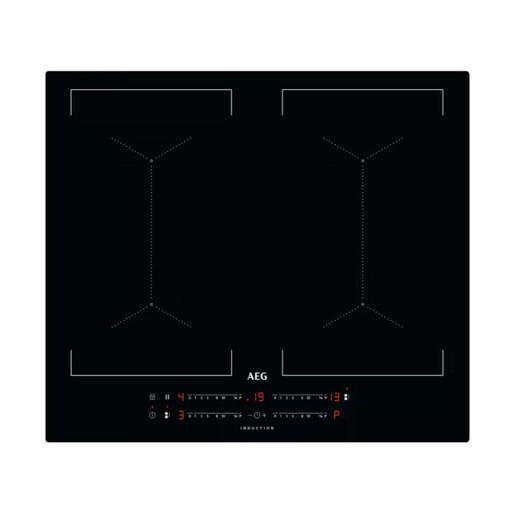
Why this suits this profile: This 60 cm built-in model is designed for fitted kitchens that want advanced controls and precise management of different zones.
The FlexiBridge function lets you combine two zones to accommodate larger cookware. You still need to check the cut-out dimensions and electrical connection before buying.
Four zones, colour TFT display, per-zone timer, Stop&Go function and PerfectFry sensor, according to the product spec.
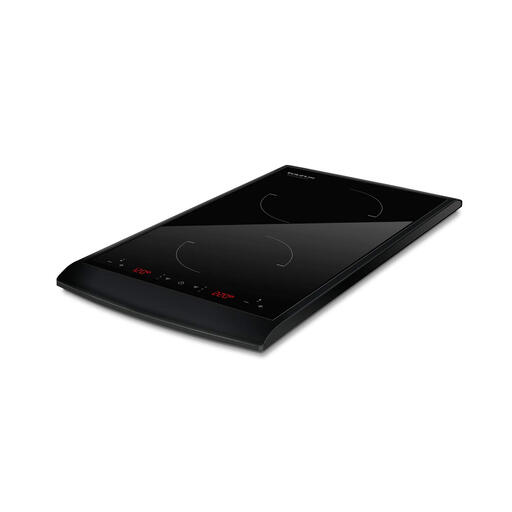
Why this suits this profile: Its two zones and 600 × 310 × 71 mm size are well suited to small kitchens, campervans, caravans and regular supplementary use.
The spec states it's compatible with pans from 12 to 24 cm, offers a timer up to 3 hours and includes overheat protection.
A total power output of 2,900 W, 10 power levels, touch controls, child lock and a black glass surface.
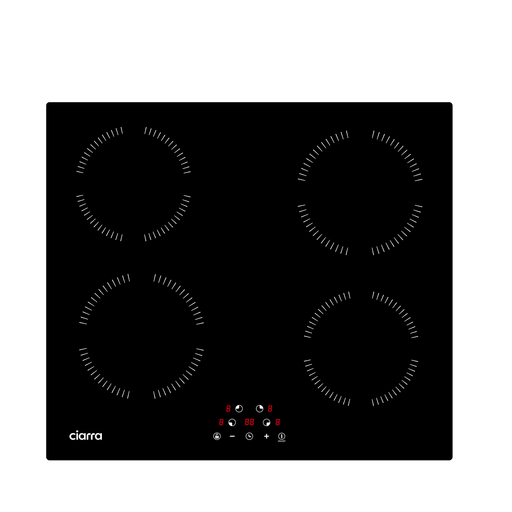
Why this suits this profile: Its 590 mm width and stated cut-out of 560 × 490 mm fit many standard built-in configurations – subject to your own measurements.
The spec details the cut-out dimensions, nine power levels, pan detection and automatic shut-off.
Four independent zones, a total power output of 6,000 W, individual timer and residual heat indicator.
We've put together a comprehensive, real-time selection of products that meet these strict criteria and European safety standards.
Start by checking the manual, the rated power, voltage, cable size and cut-out dimensions. High-power appliances are usually connected to a dedicated circuit. Installation and connection must comply with current electrical regulations and be carried out by a qualified professional if the manual requires it.
It depends on how often you use it, the quality of the installation, ventilation and maintenance. To extend its lifespan, avoid knocking the surface, don't block the ventilation openings and never place wet pans on the controls. If the glass cracks, switch off the appliance immediately and contact after-sales service.
Consumption varies depending on the power level selected, cooking time and how many zones you're using. A high power level heats up faster but also increases instant consumption. To keep daily usage under control, use the timer, adjust the power and choose pans with a base that matches the cooking zone.