
Livraison le jour même ou le lendemain

Qualité garantie

Débloquez vos offres de bienvenue: Livraison GRATUITE | Jusqu'à -80 % | 30 jours d'essai gratuits à JoyPlus
Téléchargez l'application
An induction frying pan should not be chosen solely for its diameter or appearance. To avoid unpleasant surprises, it is worth checking the magnetic base, coating quality, weight and compatibility with your cooking habits. A pan marked ‘all hob types’ may still have its limitations: a handle that gets hot, hand-wash-only care or a surface that is too small for a family.
Here are the criteria to consider before comparing a non-stick frying pan, an induction wok or a cookware set.
An induction frying pan must have a sufficiently even ferromagnetic base for the hob to detect it. The words ‘induction compatible’ confirm that the utensil can work on this type of hob, but they say nothing about how quickly or evenly it heats up.
An encapsulated or multi-layer base, combining stainless steel and aluminium for example, generally helps distribute heat more evenly. Also check that the base diameter matches your hob’s cooking zone.
A non-stick coating makes it easier to cook eggs, fish, vegetables or pancakes, but it does require a few precautions. Overheating an empty pan, abrasive sponges and metal utensils can damage it prematurely.
Claims such as ‘PFOA-free’, ‘mineral’ or ‘ceramic’ describe a composition or feature stated by the manufacturer. On their own, they do not predict how long the coating will last. Check the cleaning recommendations and use wooden, silicone or plastic utensils.
A 28 cm frying pan is suitable for many family meals, but it can quickly take up a lot of room in a small cupboard. Conversely, a 16 or 20 cm model is handy for one portion, a sauce or breakfast, but soon reaches its limits when cooking for several people.
A 30 to 32 cm induction wok provides more space for stir-fried vegetables and Asian-inspired dishes. However, it requires a sufficiently large hob and suitable storage space.
If you want to use your frying pan on induction, gas, electric and ceramic hobs, look for a clear indication that it is compatible with all hob types. An all-hob pan can be particularly practical if you move home or your property has several types of cooking equipment.
Stainless steel models are generally uncoated and require a little practice. Preheat them at a moderate temperature, add the oil, then wait a few moments before adding the food. This category is suitable for people looking for a scratch-resistant surface and who are happy to accept more demanding care.
Do not confuse an induction saucepan with a frying pan: the former is designed for liquids, sauces and small quantities, while the latter provides a larger surface for searing or frying food.
For two to four people, a diameter of 26 to 28 cm is a good compromise. A model measuring 30 cm or more may suit a larger family, provided you check its weight when full.
A frying pan with lid is useful for slow cooking, vegetables and dishes with sauce. For family meals or entertaining, a 5 to 7-litre induction stockpot or a pot with a divider can complement a traditional cookware set.
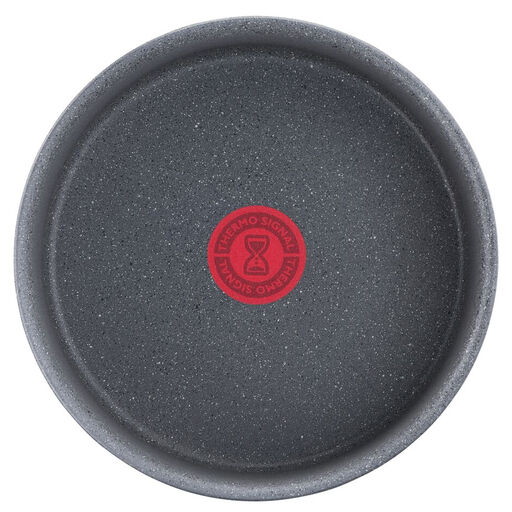
Why this choice suits this profile: Its compact size is ideal for individual portions, sauces and smaller kitchens. The removable handle is sold separately, but the system makes it easy to stack your cookware.
Compatibility with induction, gas, electric, ceramic and halogen hobs is clearly stated. The stackable design reduces clutter, but remember to factor in the cost of buying the separate handle.
16 cm size, Mineralia+ non-stick coating, Thermo-Signal indicator and Thermo-Fusion base compatible with induction.
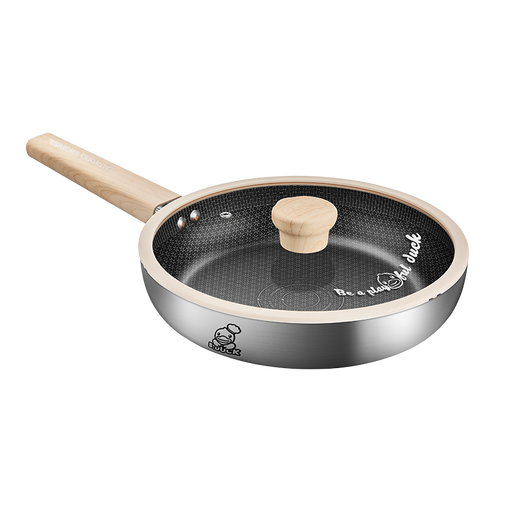
Why this choice suits this profile: This 316 stainless steel frying pan is designed for cooks who prefer an uncoated surface and want to use it on induction or gas hobs.
The product details specify the material and compatibility with induction and gas hobs. As with any uncoated stainless steel pan, controlled heating is essential to minimise sticking.
316 stainless steel and a 26 cm diameter, suitable for everyday cooking as well as high-heat cooking.
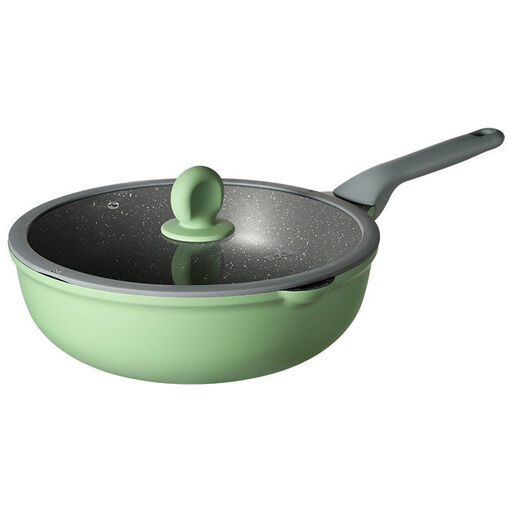
Why this choice suits this profile: With its 32 cm diameter, it offers plenty of space for stir-fried vegetables, noodles, rice and family meals. It works on induction, gas, electric and ceramic hobs.
The product details list the compatible hob types and recommend hand washing, avoiding overheating when empty and metal utensils. Keep these requirements in mind before placing your order.
32 cm size, maifanite coating and compatibility with several hob types.
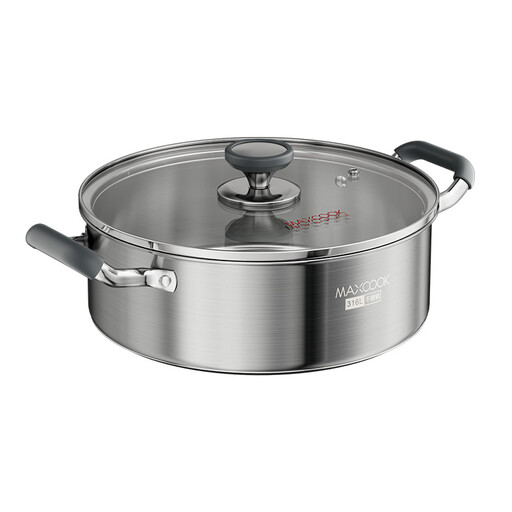
Why this choice suits this profile: Its stated 6.5-litre capacity and glass lid are ideal for soups, slow-cooked dishes and meals for several people. The silicone handles make it easier to handle, but take care when the pot is hot.
The composite base is stated to be compatible with induction, gas, electric, ceramic and halogen hobs. Hand washing is recommended to preserve the whole set.
6.5-litre capacity, transparent lid and compatibility with several heat sources.
We have put together a complete, real-time updated selection of products that meet these demanding criteria and European safety regulations.
To preserve a non-stick frying pan, let it cool before washing it, use a soft sponge and avoid abrasive products. Cooking over a medium heat is generally preferable to raising the temperature too rapidly. If the coating is damaged, blistered or starting to peel away, it is time to replace the utensil.
On an uncoated stainless steel frying pan or wok, white or iridescent marks are often caused by mineral deposits or overheating. A little food-grade vinegar, followed by rinsing and careful drying, can help remove them. Always follow the care instructions for your particular model.
Look for the induction symbol or an explicit statement listing the compatible hobs. A magnet may stick to the base, but this test does not replace the information provided by the manufacturer. The base diameter should also match the cooking zone.
A 20 cm frying pan is suitable for one or two portions. A 26 to 28 cm model offers greater versatility for a household of two to four people. Above 30 cm, check the size of the hob, the weight of the frying pan and the available cupboard space.
Consumption depends on the hob’s power, cooking time, cookware used and recipe. A suitable base, centred correctly on the induction zone, helps transfer heat efficiently. Cover dishes when appropriate and avoid leaving an empty pan heating for longer than necessary.