
Livraison le jour même ou le lendemain

Qualité garantie

Débloquez vos offres de bienvenue: Livraison GRATUITE | Jusqu'à -80 % | 30 jours d'essai gratuits à JoyPlus
Téléchargez l'application
An induction frying pan needs to tick several boxes: it must be genuinely compatible with your hob, heat evenly, stay easy to handle, and keep up with your cooking demands. The trouble is, product listings often blur marketing claims, durability promises and technical specs, making it hard to compare like with like.
Before you choose a non-stick pan, a ceramic model or a stainless steel frying pan, take a moment to steer clear of these three pitfalls.
The label all-hob pan usually means the utensil works on gas, electric, ceramic and induction hobs. However, it says nothing about the quality of its magnetic base. A base that is too thin can heat unevenly or respond slowly to your hob’s settings.
So, check for an induction-compatible base and, if the manufacturer provides it, the base diameter. A 28 cm pan may have a much smaller actual heating surface than its outer diameter suggests.
A non-stick coating makes cooking eggs, fish or pancakes a breeze, but it isn’t indestructible. Metal utensils, heating the pan when empty and abrasive sponges can damage it quickly.
The terms PFAS-free, PTFE-free and PFOA-free don’t all mean the same thing. Look at the composition stated by the manufacturer and the care instructions. A ceramic pan may suit certain preferences, while a reinforced standard non-stick coating will offer a different everyday experience.
A thick pan holds heat better, but it quickly becomes heavy once filled. Conversely, a lightweight model is easier to handle, but its stability and heat distribution are worth checking.
Also think about storage: a fixed handle can take up a lot of room in some cupboards. The removable handle system of a Tefal Ingenio pan is handy in a small kitchen, provided you budget for buying the handle separately if it isn’t included.
An induction-compatible pan has a ferromagnetic base that reacts to the hob’s magnetic field. To avoid nasty surprises, look for an explicit mention such as induction, IH or "compatible with induction hobs". The fact that it works on gas or a ceramic hob alone is not enough.
If you use several cooking methods, choose a model advertised as compatible with gas, electric, ceramic and induction. For oven use, check the maximum temperature it can withstand and the handle’s heat resistance separately.
A 28 cm pan is generally suitable for family meals, stir-fried vegetables and generous portions. However, it needs a hob large enough to heat the whole base properly. A 24 to 26 cm model will be more manageable and often sufficient for two or three people.
Depth also matters: a deeper pan can hold more ingredients and reduce splattering, while a shallower one makes flipping food easier.
The dishwasher can be convenient, but hand washing with a soft sponge generally helps preserve the coatings. The product page remains the best source for maximum temperatures and care instructions.
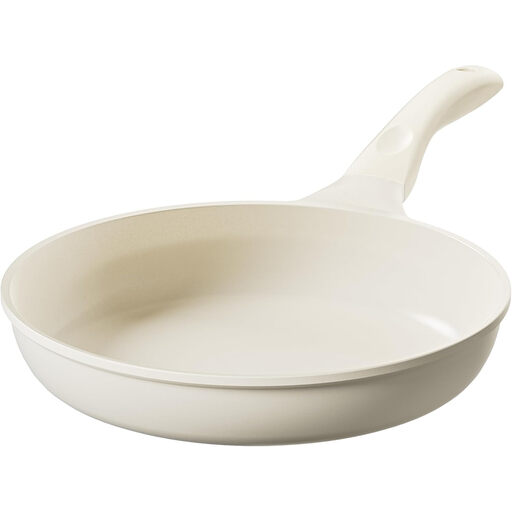
Why this suits this profile: Its 28 cm diameter works well for family meals. Its advertised compatibility with induction, gas and electric hobs also means you don’t need to buy multiple pans.
The listing mentions a base compatible with several hob types and a ceramic coating advertised as PTFE, PFOA and PFAS-free. Still, it’s best to use non-metal utensils.
28 cm diameter, bakelite handle and advertised as dishwasher-safe.
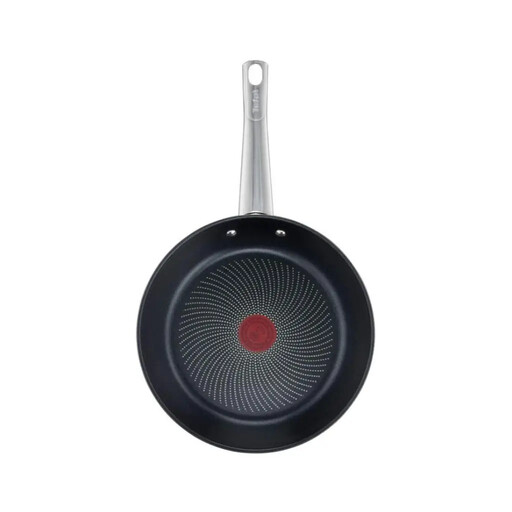
Why this suits this profile: This stainless steel model combines a family-friendly diameter, a riveted handle and a handy temperature indicator for varied everyday cooking.
The listing confirms compatibility with induction, gas, electric and ceramic hobs, plus oven use up to 250 °C.
Titanium-reinforced non-stick coating, Thermo-Signal indicator and advertised as dishwasher-safe.
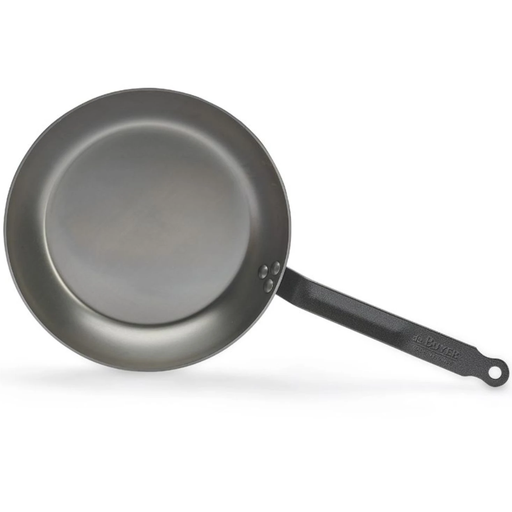
Why this suits this profile: With its 3 mm carbon steel construction and 2.15 kg weight, it’s aimed at cooks who prioritise searing and excellent heat retention.
Induction compatibility is clearly stated. The manufacturer notes that seasoning and thorough drying are essential to prevent rust.
Advertised as made in France, 3 mm thickness and 28 cm diameter suitable for high-temperature cooking.
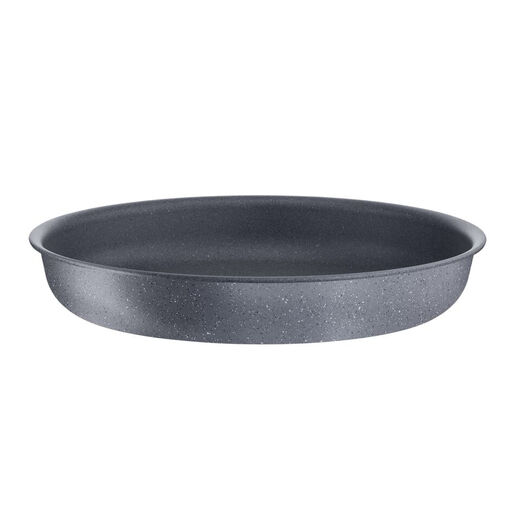
Why this suits this profile: Its 26 cm diameter and removable handle (sold separately) make storage simple in a flat or a kitchen with limited space.
The removable system reduces bulk. The listing also states compatibility with induction, gas, electric, ceramic and halogen hobs.
Thermo-Fusion base, Thermo-Signal indicator and stackable design. The handle must be properly locked before each use.
We’ve put together a comprehensive, real-time updated selection of products that meet these exacting criteria, while complying with European safety regulations.
Look for the words "induction" or "IH" in the technical specifications. You can also hold a magnet to the base: if it sticks, the pan is likely compatible. However, this test doesn’t tell you anything about the quality of heat distribution. The diameter of the heating base is still a factor to compare with your hob.
It depends on how often you use it, the cooking temperature and how you care for it. Avoid heating the pan when empty, using metal utensils and abrasive products. If the coating peels, cracks or food starts sticking badly despite normal use, it’s time to replace the pan.
Yes, provided you’re willing to go through a short learning curve. Preheat it gradually, add the oil at the right moment and wait before moving the food. If you prefer simplicity, a non-stick or ceramic pan will often be more practical for eggs, fish and delicate dishes.