
Livraison le jour même ou le lendemain

Qualité garantie

Débloquez vos offres de bienvenue: Livraison GRATUITE | Jusqu'à -80 % | 30 jours d'essai gratuits à JoyPlus
Téléchargez l'application
Switching to an induction hob is a major step in modernising your kitchen. But this transition comes with a real challenge: which induction cookware set should you choose? Faced with a jungle of options, it's easy to fall into the usual traps and regret your purchase. As the Head of Product Recommendations at Joybuy, my mission is to guide you and break down the features that truly make a difference.
Before you dive in, let's identify the most common mistakes together:
To avoid these disappointments, let's focus on the key technical criteria that signify the quality and longevity of your future cookware.
The secret to successful induction cooking lies in the base of the utensil. It must be perfectly flat and ferromagnetic (a magnet should stick to it without hesitation). A thick base, often a "sandwich" or multi-ply construction (stainless steel-aluminium-stainless steel), is a true hallmark of quality. This structure ensures:
The choice of material has a direct impact on cooking and maintenance.
For delicate foods like eggs or fish, a coating is often appreciated.
Rather than an endless list, here is a curated selection to meet the needs of specific user profiles.
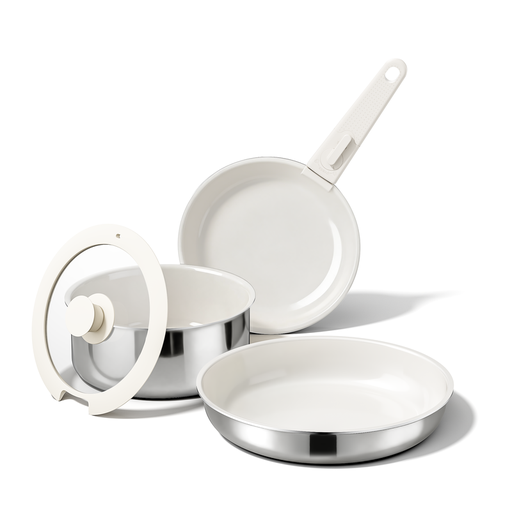
Why we love it: Perfect for those living in apartments, camper vans, or anyone who simply wants to declutter their cupboards. The cookware with a detachable handle system allows for perfect stacking, freeing up precious space.
This compact set avoids the "oversized set" trap. It focuses on the daily essentials without cluttering your kitchen.
Space-saving is its main advantage. The handle clips on and off in one motion, ensuring a stable grip during cooking and ultra-compact storage.
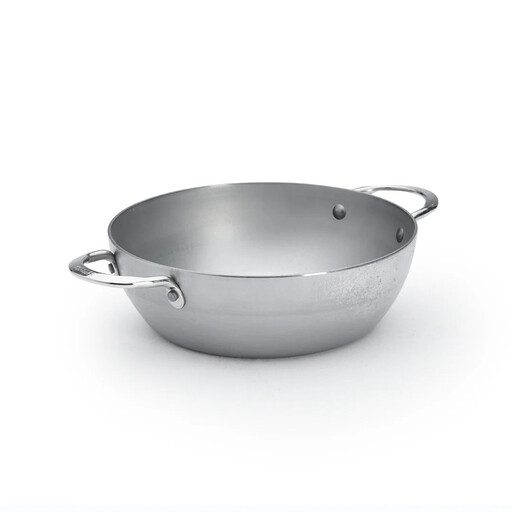
Why we love it: For those who put performance above all else. This carbon steel pan is designed to heat up quickly and retain that heat, achieving a perfect caramelisation (the famous Maillard reaction) on meats, fish, and vegetables.
It bypasses the trap of fragile non-stick coatings. Its surface develops a natural patina that improves over time, offering virtually unlimited durability with proper care.
Unmatched cooking performance for searing food. Highly responsive, carbon steel offers precise temperature control—a must-have for demanding cooks.
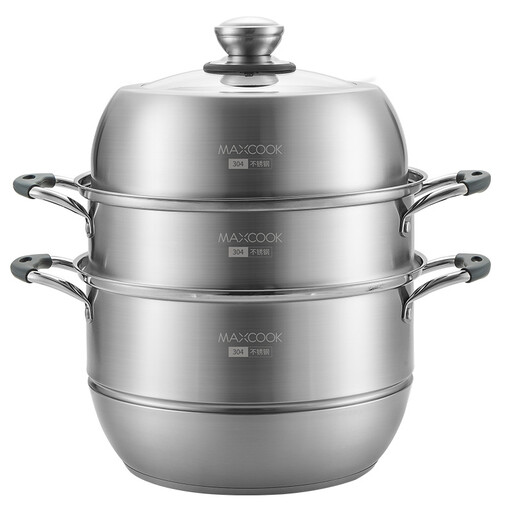
Why we love it: This set is the champion of versatility. It combines a large-capacity stockpot with two steamer baskets, allowing you to prepare an entire meal at once. It's an all-stovetop steamer, perfect for healthy, everyday cooking.
It avoids the "compatible but not high-performing" trap. Its thick, encapsulated base ensures an efficient and even heat-up, which is crucial for both steaming and for simmering dishes in the stockpot alone.
Its modularity. Use the stockpot alone for soups and stews, or add the baskets to steam vegetables, fish, or dumplings. A real time and energy saver.
We have put together a complete, up-to-date selection of products that meet our strict selection criteria and current safety standards.
The trick is simple: take a magnet (a fridge magnet will do) and place it on the bottom of your pot or pan. If it sticks firmly to the base, it's compatible! If it doesn't stick, or only weakly, your utensil won't work on an induction hob.
Not at all. It all depends on your cooking habits. For delicate foods, a good non-stick pan set can make your life easier. That said, a well-preheated stainless steel induction pan with a little fat, or a well-seasoned carbon steel pan, delivers excellent results without any chemical coating.
A slight humming or clicking is often normal. This noise is caused by the vibrations of the magnetic field, especially at full power. If the noise is very loud or the pan starts to vibrate, it could mean its base isn't perfectly flat, or that the different layers of material are expanding unevenly. This is a classic symptom of entry-level cookware.