
Livraison le jour même ou le lendemain

Qualité garantie

Débloquez vos offres de bienvenue: Livraison GRATUITE | Jusqu'à -80 % | 30 jours d'essai gratuits à JoyPlus
Téléchargez l'application
Switching to induction means choosing faster, more precise, and energy-efficient cooking. But this transition comes with a prerequisite: equipping your kitchen with induction-compatible cookware. The market is saturated with promises, but not all pots and pans are created equal. As a product expert at Joybuy, my mission is to demystify the market for you, guiding you toward an informed choice that steers clear of marketing traps.
To avoid throwing your money away, let's start with the most common disappointments.
To avoid these setbacks, focus on two non-negotiable technical points.
The secret to a high-performing induction-compatible pan is its base. It must be ferromagnetic for the hob's magnetic field to generate heat.
The material has a direct impact on the lifespan of your cookware and the quality of your cooking.
Instead of an endless list, here are targeted picks that meet specific needs while sidestepping common pitfalls.
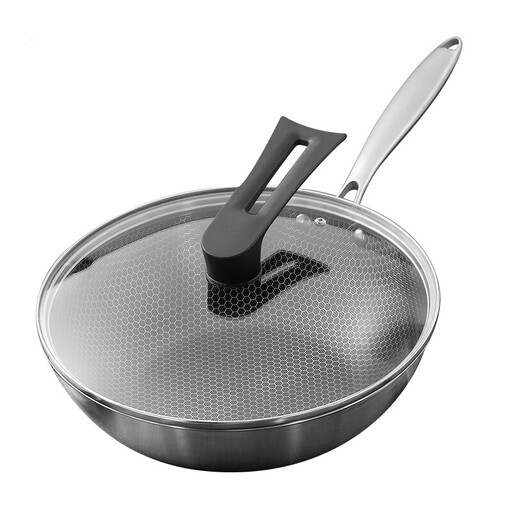
Why it's a great choice: Perfect for those who love to juggle different recipes, this 30 cm stainless steel wok lets you stir-fry vegetables, simmer a sauce, or even deep-fry. Its large 4.7L capacity is ideal for families.
Its multi-layer composite base ensures fast, even heating, avoiding the "false compatibility" trap. The honeycomb coating is far more scratch-resistant than a conventional non-stick surface.
Versatility (fry, sauté, simmer). Durable coating that allows for metal utensils. Comes with a practical glass lid.
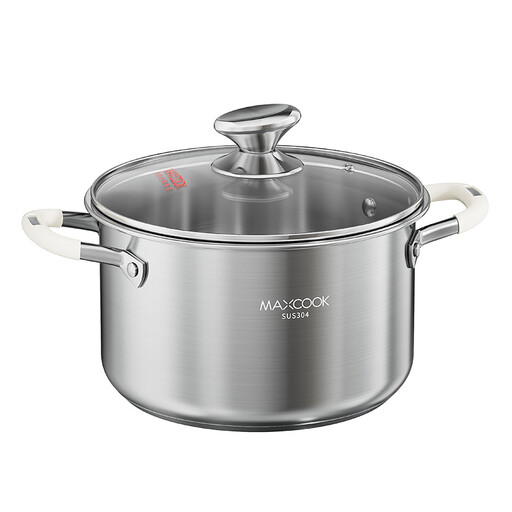
Why it's a great choice: For fans of pure materials and cookware that stands the test of time. This 304 stainless steelstockpot is a foolproof staple for making soups, stews, or boiling pasta, with no chemical coatings.
Its solid, high-quality stainless steel construction prevents any risk of warping or rust. With no coating, there's no risk of degradation or particles leaching into your food.
Healthy, robust, and easy-to-clean material. Large 4.3L capacity and anti-scald silicone handles for safe handling.
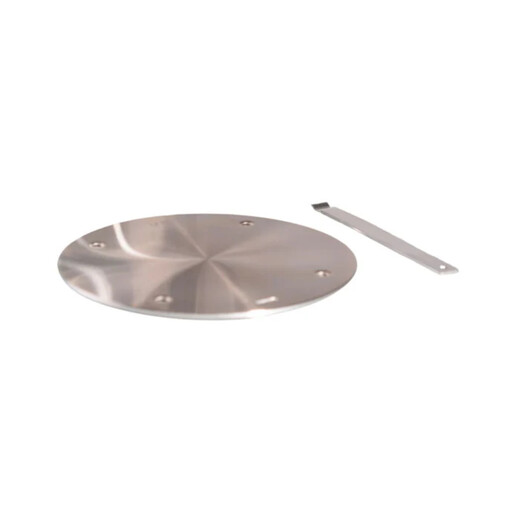
Why it's a great choice: Just switched to induction but don't want to throw out your old aluminium, copper, or glass pots? This adapter is the smartest solution.
It solves the incompatibility problem at its source, without forcing you to buy a whole new cookware set. It's a budget-friendly solution that gives your favourite cookware a second life.
Economical and universal. Its removable handle allows for safe handling, and its feet ensure good ventilation to protect the induction hob.
Discover our full selection of products that meet our quality criteria and French safety standards.
The foolproof trick: the magnet test. Take a magnet (a simple fridge magnet will do) and place it on the bottom of your pot or pan. If it sticks firmly, your cookware is ferromagnetic and therefore compatible. If it doesn't stick, or only weakly, it won't work on an induction hob.
It all depends on the quality of the coating and how you care for it. A standard non-stick coating, even a good one, will show signs of wear after 2 to 3 years of regular use. Structures like the honeycomb coating are designed to last much longer because the steel matrix protects the non-stick surface. To maximise its lifespan, avoid overheating it while empty and opt for hand washing with a soft sponge.
Stainless steel is not naturally non-stick like a Teflon (PTFE) coating. Using it requires a bit of technique: you need to preheat the pan or pot well over medium heat before adding fat, then the food. Once the right temperature is reached, a reaction occurs (the Leidenfrost effect) and the food will release on its own after searing. It's a knack to learn, but in return, it guarantees perfect cooking and virtually unlimited durability.