
Livraison le jour même ou le lendemain

Qualité garantie

Débloquez vos offres de bienvenue: Livraison GRATUITE | Jusqu'à -80 % | 30 jours d'essai gratuits à JoyPlus
Téléchargez l'application
Upgraded to an induction hob? An excellent choice for faster, more precise, and energy-efficient cooking. But this change raises a crucial question: which pots and pans should you choose? In a saturated market, it's easy to fall for a bad deal and bitterly regret it.
As product experts for this publication, our mission is to bring you clarity. We're cutting through the marketing jargon to give you the facts, helping you equip your kitchen with high-performance gear that's built to last.
To avoid throwing your money away, here are the three most common disappointments to be aware of before you check out:
For a successful purchase, three parameters are non-negotiable.
The material of your cookware determines its ability to store and distribute heat.
On an induction hob, heat is generated directly in the base of the pan by a magnetic field. For this to work perfectly, the base must be:
The choice of a non-stick pan depends on your cooking habits.
Rather than an endless list, we've selected products that meet specific needs and sidestep the common pitfalls.

Why we chose it: The all-hob wok is the Swiss Army knife of the kitchen. At 30cm, it's perfect for stir-frying vegetables, simmering a dish, deep-frying, or even steaming for the whole family. A true essential.
It bypasses the fragile coating trap with its honeycomb interior, which protects the ceramic non-stick layer from scratches, even from metal utensils.
Its 3-ply composite structure ensures rapid heating and uniform heat distribution, preventing the hot spots typical of low-quality bases.
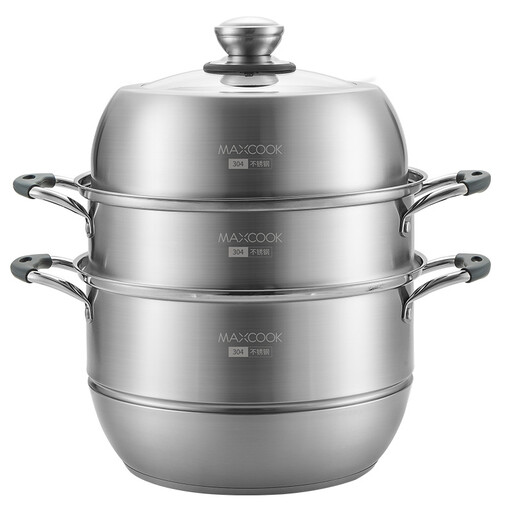
Why we chose it: This is the champion of healthy, oil-free cooking. This stainless steel steamer lets you prepare a complete meal in one go thanks to its three tiers: vegetables, fish, rice... Bonus: the base can also be used on its own as a standard stockpot.
It completely eliminates the risk associated with coatings by using food-grade 304 stainless steel, a stable, durable material that does not react with food.
Its thick composite base guarantees optimal compatibility and efficiency on induction, unlike low-end models that heat poorly. The silicone handles provide heat insulation.
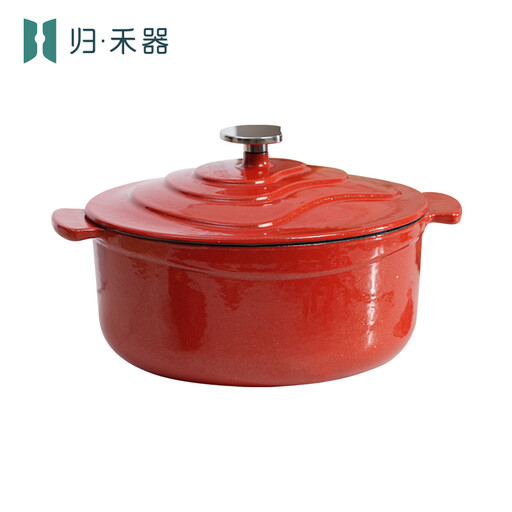
Why we chose it: For lovers of beef bourguignon, stews, and any dish that requires hours of simmering. This enamelled cast iron Dutch oven is the king of slow, gentle cooking, thanks to its unique ability to retain and distribute heat.
Cast iron is naturally and massively ferromagnetic. It avoids the "false compatibility" trap by delivering powerful and even heating performance on induction, with no weak spots.
Its thermal inertia is unparalleled: once hot, the pot maintains a stable temperature, ideal for simmering for hours on low heat, even after turning down the hob's power.
Discover our full selection of products that meet our quality criteria and current safety standards.
The magnet test is foolproof. Take a fridge magnet and place it against the outer bottom of your pan. If it sticks firmly, it's compatible! If it doesn't stick, or only weakly, you'll need to replace it.
Durability depends on the quality of the coating and how you care for it. Ceramic options or those with a protective structure (like a honeycomb pattern) tend to be more resilient. To extend their life, avoid thermal shock (going from hot to cold), use wooden or silicone utensils, and opt for hand washing, even if the label says it's dishwasher-safe. That's the secret to making it last longer.
Buying individual pieces is often smarter. It allows you to choose the exact size and material for each task: a good non-stick pan for eggs, an enamelled cast iron Dutch oven for stews, and a stainless steel stockpot for pasta. This way, you build a tailor-made cookware set of much higher quality, without the useless items that just clutter up your cupboards.