
Livraison le jour même ou le lendemain

Qualité garantie

Débloquez vos offres de bienvenue: Livraison GRATUITE | Jusqu'à -80 % | 30 jours d'essai gratuits à JoyPlus
Téléchargez l'application
An induction hob doesn’t heat every pan. Yet some product descriptions blur the lines between “all hob types”, “induction-compatible” and simply having a metal base. The result? A pan that isn’t detected, uneven heating, or a coating that deteriorates quickly.
Before you buy induction-compatible cookware, there are three pitfalls to watch out for.
For an induction-compatible saucepan, the base needs to be sufficiently flat and magnetic. Models with an encapsulated or composite base generally distribute heat better than a very thin pan. Also check the diameter of the cooking zone: depending on your hob, a small pan placed on a large zone may not be detected as well.
If you use several different appliances, look for a clear indication of all hob types: induction, gas, electric and ceramic glass. This versatility can come in handy if you move house or replace your hob.
304 stainless steel is common on stainless steel cookware intended for everyday use. 316L stainless steel also appears on some models, particularly larger stockpots. These names describe the stated composition of the material; they don’t replace the manufacturer’s usage instructions.
Depending on your habits, several options are available:
A suitable capacity stops you paying for a size that’s too big or cooking in a pan that’s too small. For one person, a small 1.3-litre saucepan may be enough for soup or a single portion. A family might prefer an induction-compatible casserole dish of 4 to 6.5 litres.
A glass lid lets you keep an eye on cooking without lifting it. However, check the material of the handles, whether it’s oven-safe and how it should be cleaned. Some items are dishwasher-safe, while others must be washed by hand only.
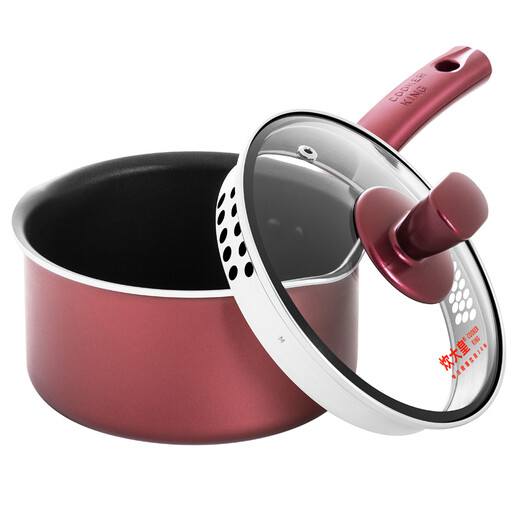
Why this choice suits this profile: This saucepan with a glass lid is ideal for small everyday meals and is stated as induction-compatible. Its non-stick finish works well for sauces, reheating milk and single portions.
The product page states induction compatibility and a PFOA-free coating. Even so, use a moderate heat and wooden or silicone utensils to protect the surface.
Glass lid and design stated as induction-compatible. Check the dimensions before ordering.
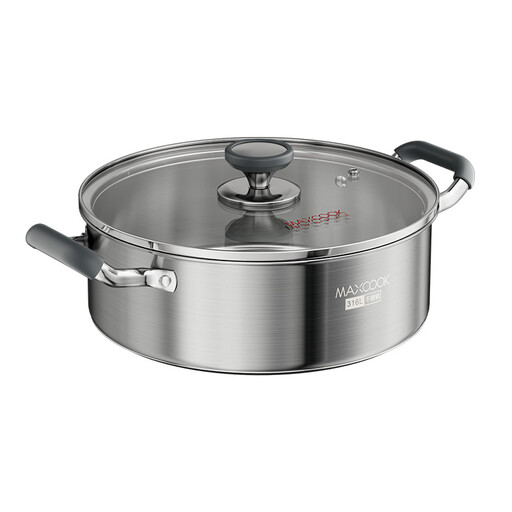
Why this choice suits this profile: This large pot is designed for households that regularly make soups, stews or meals for several people.
Its composite base is stated as compatible with induction, gas, electric, ceramic glass and halogen hobs. The 6.5 L capacity means you won’t need to cook in batches.
Stated 316L stainless steel, glass lid and silicone-protected handles.
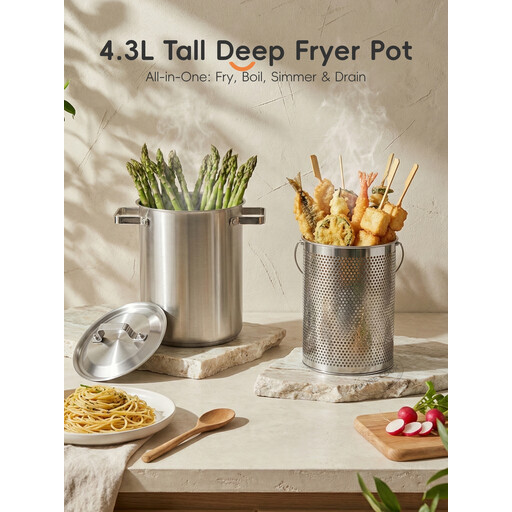
Why this choice suits this profile: Its deep shape and perforated basket are designed for deep frying, but it also works well for pasta, soups, blanched vegetables and oil-based preparations.
The product page specifies a multi-layer magnetic base and compatibility with gas, induction and ceramic glass hobs. Respect the maximum oil level and never leave deep frying unattended.
Stated uncoated 304 stainless steel, removable basket and 4.3 L capacity.
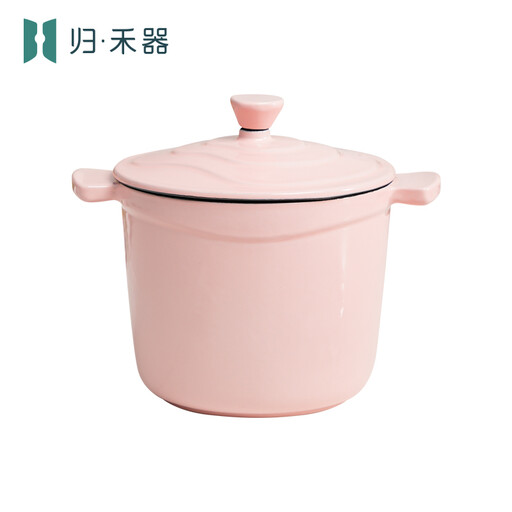
Why this choice suits this profile: This small enamelled cast iron pot is ideal for single portions, soups and porridge. It can also serve as a mini casserole dish for one person.
With its 14 cm diameter, it stops you choosing a pan that’s too big for a small hob. Do bear in mind the weight of cast iron and handle it with care.
1.3 L capacity and stated induction compatibility for small-quantity cooking.
We’ve put together a comprehensive, real-time updated list of products that fully meet these strict selection criteria and European safety regulations.
How long your cookware lasts depends as much on its design as on your cooking habits. To keep your induction-compatible cookware in good condition:
Check that the product page explicitly states “induction” or “all hob types” including induction. A magnet may stick to the base, but this test doesn’t replace the manufacturer’s information or checking the diameter.
Look for a specific mention on the product page, such as “PFAS-free” or “uncoated”. Uncoated stainless steel and borosilicate glass are options to consider. For a non-stick coating, check its stated composition and the care instructions.
Energy consumption depends mainly on cooking time, the power setting, the diameter of the base and the amount you’re heating. A pot that matches the cooking zone and has a lid can help reduce heat loss, but it’s impossible to guarantee a specific saving for every household.