
Livraison le jour même ou le lendemain

Qualité garantie

Débloquez vos offres de bienvenue: Livraison GRATUITE | Jusqu'à -80 % | 30 jours d'essai gratuits à JoyPlus
Téléchargez l'application
Choosing a new frying pan can quickly become a daunting task. Between promises of healthy cooking, technical compatibilities, and coatings that wear out prematurely, it's easy to make a mistake you'll regret. As a product expert at Joybuy, my mission is simple?: to guide you in making the right choice by helping you avoid common marketing traps.
Before you start, watch out for these 3 common pitfalls that end up costing consumers dearly?:
To avoid falling into these traps, focus on objective technical criteria. They are the true guarantors of the quality and lifespan of your future induction ceramic pan.
The main reason people turn to ceramic is to ensure healthy cooking. Unlike some traditional non-stick coatings, quality ceramic coatings are made without controversial substances.
Always check for the PFAS-free label (per- and polyfluoroalkyl substances), which includes PFOA and PTFE. A certified ceramic coating without these compounds won't risk emitting potentially harmful fumes, even in case of accidental overheating. This is a non-negotiable point for peace of mind in your daily cooking.
For a non-stick induction pan that truly performs, it all comes down to the base. It must consist of a thick ferromagnetic disc that covers the entire bottom surface.
All hobs including induction compatibility?: A quality base ensures optimal responsiveness on induction hobs, as well as great versatility on gas, electric, and vitroceramic cooktops.Think about how you cook. Do you need to finish a dish in the oven? Do you live in a small space?
To move from theory to practice, here is our selection of models that tick all the boxes, each meeting a specific need.
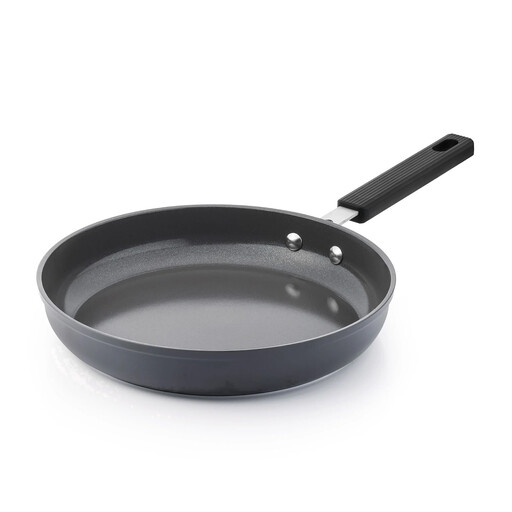
Why we love it : Ideal for daily use. Its 24cm size is perfect for omelettes, fried eggs, or sautéing vegetables for one or two people. It's designed to be simple, efficient, and reliable.
Its coating is explicitly guaranteed PFAS, lead, and cadmium-free, meeting the safety criterion. Its base is designed for effective induction compatibility, avoiding the trap of uneven heating.
Ultra-easy cleaning : a simple wipe with a sponge or a quick rinse is all it takes, which preserves the longevity of the non-stick coating in the long run.
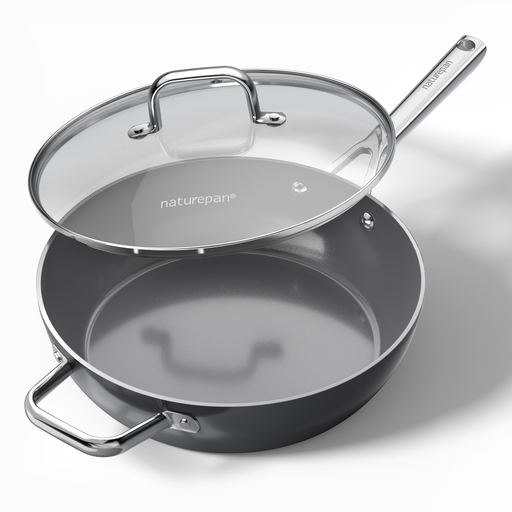
Why we love it : With its large 28cm diameter, high sides, and lid, this ceramic sauté pan is perfect for saucy dishes, family recipes, or slow-cooked meats. Its versatility makes it a great tool for more elaborate cooking.
The ceramic coating is reinforced with diamond and titanium particles for enhanced durability, countering the pitfall of short-lived non-stick performance. Plus, it is oven-safe up to 260°C (500°F), offering true versatility.
Its high sides and lid make it a 2-in-1 tool, halfway between a sauté pan and a Dutch oven, reducing splatters and retaining moisture in food.
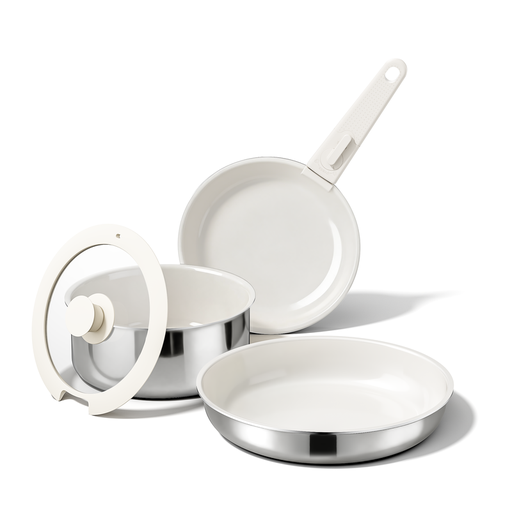
Why we love it : This set is the master of space-saving. The removable handle system allows for ultra-compact storage by stacking the items. It's the dream solution for studio apartments, small kitchens, or outfitting a van.
This set ticks all the boxes : a durable PFOA-free coating, a triple-layer construction for perfect induction compatibility, and maximum versatility (oven-safe, fridge-safe, table service).
The secure removable handle system allows you to go from the hob to the oven, and then serve directly at the table, saving up to 70% of space in your cupboards.
Discover our full selection of pans and sauté pans that meet our quality charter and the strictest safety standards.
The lifespan of an induction ceramic pan greatly depends on its manufacturing quality and how it's maintained. An entry-level model may lose its effectiveness in less than a year, while a high-quality, well-maintained pan can last for several years. The key is to follow the usage instructions.
To extend the life of your pan, a few simple steps are all it takes?:
Yes, provided you choose the right one. Quality ceramic coatings are an excellent option for healthy cooking because they are made without PFAS, PFOA, or PTFE. This means that under normal use, and even in case of overheating, they do not release the same types of chemical compounds as some older non-stick coatings. The key is to check that the "PFAS-free" (or "PFOA/PTFE-free") label is clearly stated on the packaging or product description.