
Livraison le jour même ou le lendemain

Qualité garantie

Débloquez vos offres de bienvenue: Livraison GRATUITE | Jusqu'à -80 % | 30 jours d'essai gratuits à JoyPlus
Téléchargez l'application
Choosing a new frying pan can often be a headache. Between promises of perfect cooking and concerns about materials, it's hard to know what to choose. Are you looking for a ceramic induction pan that is high-performing, durable, and healthy, but worried about falling for marketing traps?
As a Product Expert at Joybuy, my role is to help you see things more clearly. Let's break down the key points to watch out for and the essential criteria for making an informed choice, far from sometimes misleading advertising claims.
The market is saturated with products that all look the same. However, many models have hidden flaws that only become apparent with use. Here are the most common pitfalls.
To make the right choice, rely on objective features. Here are the 3 key points to check before you buy.
A healthy pan starts with its coating. The main advantage of a good ceramic coating is its absence of controversial substances.
This is the crucial element for an all-hob, including induction, pan. The base must be perfectly flat and thick enough (usually at least 4?mm) to prevent warping. For induction, it must include a ferromagnetic stainless steel base that ensures perfect contact with the hob, rapid heating, and even heat distribution. No more "hot spots" that burn food in the centre while the edges remain uncooked!
A pan is an everyday tool, so consider its versatility.
Rather than overwhelming you with a long list of products, we've matched each model to a specific use case, based on the quality and safety criteria we've just discussed.
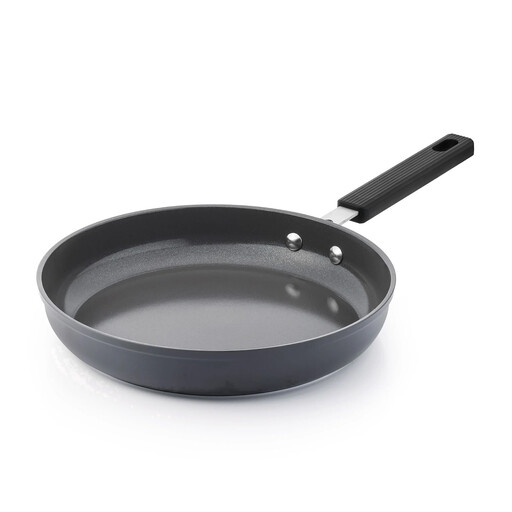
Why this model? With its versatile 24 cm diameter, this pan is perfectly sized for daily use, from morning omelettes to evening stir-fries. It offers an excellent balance of functionality, safety, and an accessible price.
Its coating is clearly advertised as PFAS, lead, and cadmium-free. Its base is designed for efficient heating on induction hobs, avoiding the pitfall of uneven cooking.
The stay-cool handle is a welcome safety feature for daily use. As for maintenance, a simple wipe with a sponge is all it takes, helping to preserve the coating over the long term.
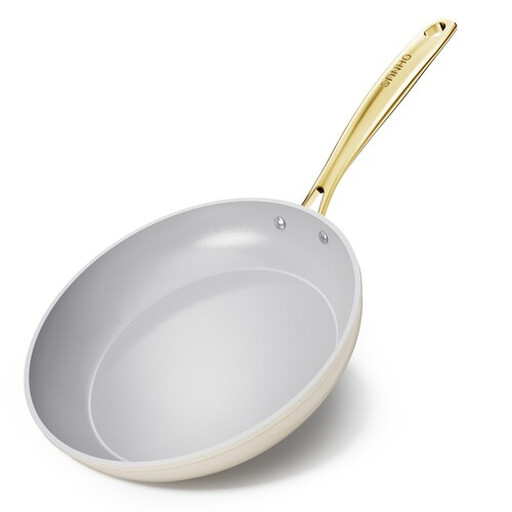
Why this model? For those who cook intensively and demand unbeatable durability. It's a wise investment for anyone looking for a reliable and high-performing tool that will last.
The patented diamond-titanium coating directly tackles the problem of premature wear. Its oven-safe compatibility up to 260°C and robust construction are a guarantee of exceptional longevity.
Its extreme versatility: it transitions seamlessly from hob to oven, perfect for searing meat and then slow-cooking it. Its robustness is undoubtedly its greatest asset.
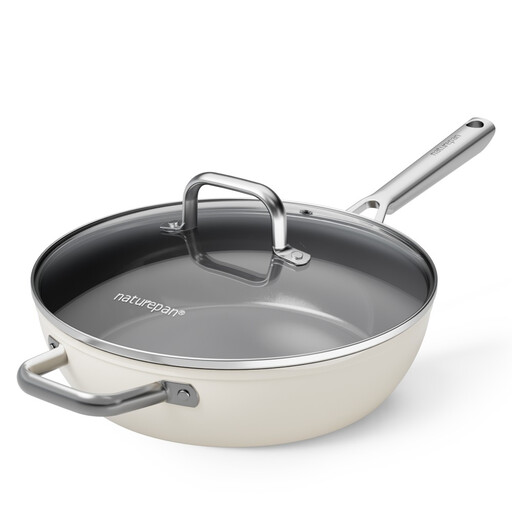
Why this model? The perfect partner for preparing saucy dishes, stews, or complete meals in a single pan. Its large capacity, high sides, and lid make it the ideal tool for families or for batch cooking.
Its specific design (high sides, lid) meets a precise need—it's not just an oversized pan. The reinforced diamond-titanium coating ensures excellent resistance to long cooking times and repeated use.
Its large volume and lid allow for splash-free cooking and simmering, making it similar to a sauté pan or a small Dutch oven.
We have selected other products for you that meet our strict specifications for quality and safety.
Its longevity depends primarily on its care. A few golden rules to preserve the coating: avoid metal utensils (opt for wood or silicone), don't overheat it when empty, and avoid thermal shock (never run it under cold water when it's still hot). With proper care, a quality pan will serve you reliably for several years.
Check for the coil-shaped pictogram on the packaging or under the pan. The foolproof trick? Hold a magnet to the bottom of the pan: if it sticks firmly, you're good to go! A thick, heavy base is also a good indicator of quality for use on an induction hob.
The advantage of a quality ceramic coating lies mainly in what it does NOT contain: it is made without PFAS (including PFOA and PTFE). This provides peace of mind regarding the release of harmful compounds at high temperatures. As a bonus, its exceptional non-stick properties allow you to cook with minimal fat, a real plus for healthy everyday cooking.