Choose induction if your cookware is compatible and the existing cut-out, ventilation and connection are suitable for the model you have in mind. A ceramic hob lets you keep non-magnetic cookware, while a mixed induction and gas hob is a better fit if you want to retain a gas burner, provided your kitchen can accommodate its installation.
Who is this choice for?
Households that want to keep their cookware
If you’re replacing your hob but don’t want to replace all your pans, first check the base of every pan you plan to use on induction. UFC-Que Choisir points out that it must be ferromagnetic: the features of a new hob won’t make incompatible cookware work.
Households that cook several dishes at once
If you use several pans at the same time, count the cooking zones you need and compare their dimensions. If you use a fish kettle, casserole dish or griddle, also check the shape of the zones and whether they can be combined.
Households limited by their existing kitchen
A hob with a similar overall width won’t necessarily fit the same cut-out. Before choosing a model, compare its installation instructions with your worktop cut-out, the required clearances and the available connection.
What sets hobs apart?
Start with the cookware you want to keep and whether replacing the hob is practical. Then narrow down your choice by considering the number and shape of the cooking zones.
| Criterion |
What to check |
Consumers concerned |
| Cookware compatibility |
Test the base with a magnet or check for the induction symbol on each item you want to keep. Identify anything you might need to replace. |
If I want to keep my saucepans and frying pans, their compatibility could determine which hob I choose; around 36% of consumers rank keeping their cookware as their top priority. |
| Cooking zones and sizes |
Compare the number of zones you can use at once and their dimensions with your cookware. Consider a flexible zone if you use larger pans. |
If I often cook several dishes at once or regularly use a large pan, the available space becomes essential; this is the top priority for around 29% of consumers. |
| Fitting and connection |
Compare the cut-out and clearances with the model’s instructions. Have the connection and capacity of your installation checked if necessary. |
When replacing a hob in an existing kitchen, I want to avoid choosing a model that can’t be installed there; around 21% of consumers prioritise whether installation is feasible. |
| Keeping a gas burner |
Decide whether you’ll really use gas and check that your installation and ventilation are suitable for the mixed hob you’re considering. |
If I want to keep cooking with gas while adding induction, I need to be able to use both in my kitchen; this comes ahead of other needs for around 14% of consumers. |
UFC-Que Choisir highlights the cookware needed for induction, while ENGIE notes that the choice of technology also depends on installation requirements. A ceramic hob doesn’t require cookware with a ferromagnetic base. A mixed hob still requires compatible cookware for its induction zones, as well as checks relating to the gas connection.
What mistakes should you avoid?
-
Relying on the overall width alone
Two hobs with a similar overall width may need different-sized cut-outs in the worktop. UFC-Que Choisir recommends checking the fitting dimensions and installation requirements.
Measure the width and depth of the existing cut-out, then compare them with the installation diagram for the exact model before ordering.
An unsuitable cut-out may mean altering the worktop.
-
Assuming all pans work on induction
According to UFC-Que Choisir, cookware for induction must have a ferromagnetic base. An incompatible pan won’t become suitable just because the hob has more features.
Test the cookware you use regularly and decide what you’ll keep, add to your collection or replace.
-
Choosing a flexible zone without a clear need
Features such as Bridge on some Electrolux models and FlexiCook on some Whirlpool models let you combine cooking zones. Their usefulness depends on the size and shape of the pans you actually use.
Compare the zones listed in the model specifications with your largest casserole dish, fish kettle or griddle rather than looking only at the hob’s overall width.
-
Treating a mixed hob like a standard induction hob
The induction section still requires compatible cookware, while the gas burner needs a suitable installation. ENGIE points out that installation and safety requirements matter when choosing a cooking appliance.
Only choose this configuration if you genuinely want to use gas and can get confirmation that installation and ventilation are suitable.
Brands to consider
These range examples can help you identify different cooking-zone configurations. Whether a hob suits your kitchen will always depend on the exact model.
Bosch
The induction range includes models with several cooking zones, and some models have larger zones.
- Bosch says the PIE861BB5E has four cooking zones, including a 28 cm zone. It’s worth considering if you use pans in different sizes.
- This configuration doesn’t confirm whether the hob will fit your cut-out and connection, or whether your cookware is compatible with induction.
Electrolux
Some induction hobs in the Bridge range let you combine two cooking zones.
- Electrolux describes this feature on the EIV734; it’s worth considering if you use large pans.
- Check the usable dimensions of the zones, the fitting requirements and the connection for the model you’re considering.
Whirlpool
The induction range includes models with a FlexiCook zone.
- Whirlpool lists the WLS3160BF as having a feature that combines two cooking zones. Compare it with the dimensions of your larger pans.
- This feature doesn’t remove the need to check your cookware bases, the cut-out and the installation requirements.
A ceramic hob on Joybuy
This hob is an option if you want to keep non-ferromagnetic cookware when replacing your current model. If you’re looking for induction or want to keep a gas burner, check the requirements for those options instead.
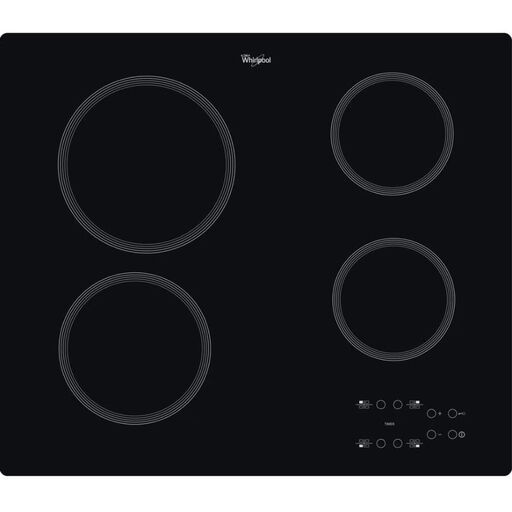 Image unavailable
Whirlpool AKT 801-NE, 4-zone ceramic hob
Worth considering if you want to replace your hob and keep using non-ferromagnetic cookware. This ceramic hob has four cooking zones; it isn’t an induction hob. Before buying, check the fitting, connection and ventilation requirements in the model’s instructions.
View on Joybuy
Frequently asked questions
Can I keep my pans when switching to induction?
Yes, as long as their bases are compatible with induction. UFC-Que Choisir recommends checking that they’re ferromagnetic: a magnet sticking to the base is a practical test. Check each saucepan or frying pan that’s important to your everyday cooking.
Should I check my electrical installation before choosing induction?
Yes. Your existing connection and electrical capacity must be suitable for the model you choose; don’t assume they’re compatible just because you already have a hob. If changes are needed or you’re unsure, ask a qualified professional to assess the installation.
Will a hob with the same width definitely replace my old one?
No. The overall dimensions alone don’t tell you how large the cut-out needs to be. Measure the existing cut-out and check the instructions for the fitting dimensions, clearances and ventilation requirements for your chosen model.
Can a mixed hob keep my gas supply without any further checks?
No. It may suit you if you want to keep a gas burner, but the induction section needs compatible cookware and the gas section needs a suitable installation and ventilation. Check both for the specific hob you’re considering.


