Households replacing a built-in hob
Measure the worktop cut-out, available depth, required wattage and voltage before choosing a model.


Choose induction if your cookware is compatible and the model’s cut-out, power supply and wattage are suitable for your kitchen. A ceramic hob lets you keep using cookware that is not induction-compatible, while a mixed induction-gas hob also requires you to check that your home’s gas installation meets the necessary requirements.
Measure the worktop cut-out, available depth, required wattage and voltage before choosing a model.
Induction requires a compatible ferromagnetic base. A ceramic hob is worth considering if you want to keep using saucepans or frying pans that do not meet this requirement.
A mixed hob may be suitable if the positioning, ventilation and gas connection are appropriate for your home.
Choose it if: you want the pan itself to heat directly and your saucepans and frying pans are compatible.
Bear in mind: non-ferromagnetic cookware will not work; Que Choisir also states that induction is generally more expensive to buy than ceramic.
Choose it if: keeping your existing cookware matters more than switching to induction.
Bear in mind: the cooking zone and surface may remain hot after cooking.
Choose it if: you want induction zones and gas burners in the same built-in installation.
Bear in mind: gas-related checks are in addition to those for the induction zones.
| Priority | What to check | Your needs |
|---|---|---|
| Cookware compatibility | Test your most important saucepans and frying pans with a magnet or look for the induction symbol. Check which heating technology you have chosen. | I want to continue using my current cookware. If several items are not induction-compatible, ceramic avoids having to replace them. |
| Cut-out and power supply | Compare the built-in dimensions, available depth, voltage and total wattage with the instructions for the exact model. | I want to replace my hob without altering the worktop or discovering an electrical incompatibility during installation. |
| Heat and everyday use | Compare induction’s direct heating with the radiant or halogen heat of a ceramic hob. Take the residual heat indicator into account. | I am looking for responsive cooking, while bearing in mind that a ceramic hob’s surface may remain hot after the cookware is removed. |
| Gas option | For a mixed hob, check that the positioning, ventilation, tap and gas connection planned for the home are suitable. | I want to keep gas burners while adding an induction zone. Légifrance and Cegibat GRDF remind us that the conditions of the room and installation must be met. |
Two hobs advertised as 60 cm wide may have different built-in dimensions. A wider hob may also require a completely different cut-out.
Measure the existing cut-out, available depth and worktop thickness, then compare them with the instructions for the specific model before ordering.
An incompatible cut-out may require the worktop to be adapted or make replacement more complicated.
A saucepan without a compatible ferromagnetic base will not activate the heating on an induction hob.
Test your most frequently used cookware with a magnet or check for the relevant symbol. If several items are incompatible, compare the cost and inconvenience of replacing them with the ceramic option.
Replacing saucepans, frying pans or casserole dishes may affect your choice of technology.
Gas burners also require suitable positioning, ventilation, taps and pipework for the home.
Before choosing a mixed hob, have the existing gas installation and the room’s conditions checked by a suitably qualified professional.
The installation may require a new connection, inspection or adaptation.
The NF C 15-100 standard specifies dedicated circuits for hobs, while wattages and voltages vary between models.
Check the electrical details in the instructions for your chosen model. If you are unsure about the circuit, protection or power supply, seek advice from a qualified professional.
The electrical installation may need adapting if the existing power supply is not suitable.
Bosch offers built-in induction and ceramic hobs, with guides that distinguish between the two technologies.
Electrolux offers induction hobs as well as mixed induction-gas models, allowing you to compare a complete switch to electric cooking with keeping gas burners.
Whirlpool offers induction hobs with flexible zones, worth considering if large cookware is part of your usual cooking routine.
Joybuy options for replacing a built-in hob, including induction and ceramic models to compare according to your cookware, cut-out and power supply.
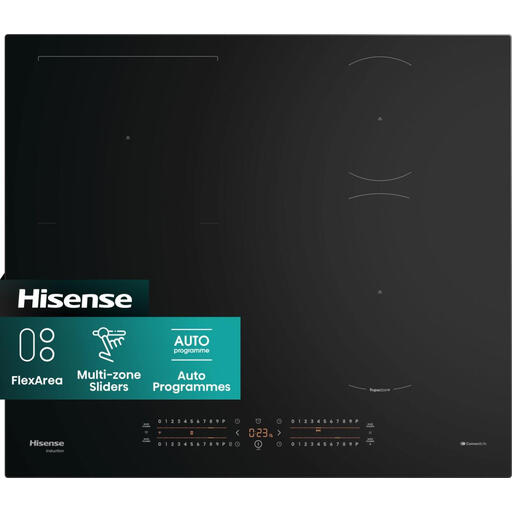 Image unavailable
Worth considering for a fitted kitchen using induction-compatible cookware, particularly if a joined zone for large pans would be useful.
Four induction zones, Bridge Zone, 220–240 V / 380–415 V power supply, 7.36 kW connected load and a 56–56.2 × 49 cm niche are specified.
Check the available 7 cm height, circuit compatibility and cookware suitability. The ConnectLife and hood-linking features require a compatible Hisense hood.
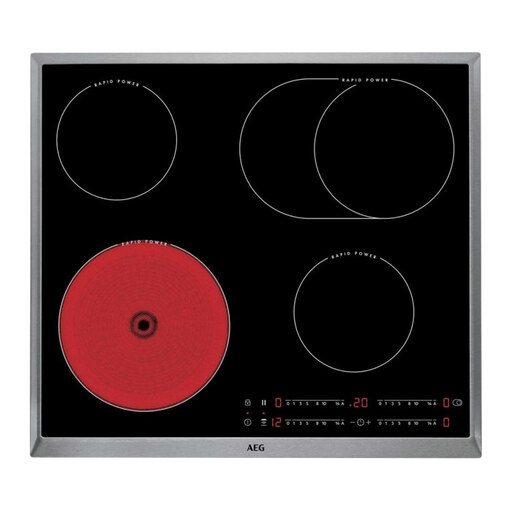 Image unavailable
This ceramic option is suitable if you want to keep using cookware that is not induction-compatible.
Four zones, including one extendable zone, a 56 × 49 cm cut-out, a maximum power of 6 400 W and a 220–240 V / 400 V 2N power supply are specified.
The surface and cooking zones remain hot after use. The Hob2Hood function depends on a compatible hood.
 Image unavailable
Worth considering for everyday cooking involving several dishes, with induction-compatible cookware.
Four zones, nine power levels, Booster function, a 56.5 × 49.5 cm cut-out, 220–240 V power supply and a maximum power of 7 200 W are specified.
No plug is supplied: a hard-wired connection is required. Also check the cut-out and cookware compatibility before buying.
No. An induction hob requires a ferromagnetic base; without this compatibility, the cookware will not activate the heating. Test important cookware with a magnet or check for the relevant symbol before choosing this technology.
Sometimes, but the nominal width is not enough. Compare the cut-out, available depth, required ventilation, voltage and wattage of the chosen model with the instructions and existing installation.
It is advisable when the circuit, protection, power supply or available wattage does not clearly match the model’s requirements. The NF C 15-100 standard governs low-voltage electrical installations and specifies dedicated circuits for hobs; Bosch recommends professional installation for its induction hobs.
No. Légifrance specifies that a gas cooking appliance must be installed in a kitchen, a space intended for cooking or an outbuilding, with a room suitable for safe operation. Also check the ventilation, positioning, tap and pipework of the relevant home.
Yes, because it heats through radiant or halogen zones rather than a magnetic field. It can therefore be suitable if you do not want to replace non-ferromagnetic cookware, while bearing in mind that heat remains in the surface after cooking.