If you cook regularly, induction is worth considering if your cookware is compatible and your kitchen can accommodate the model. It heats quickly and may use less electricity for cooking, although results will vary from one home to another. A radiant ceramic glass hob may suit you better if you want to keep your existing cookware or prefer slow cooking, bearing in mind that its surface stays hot after it is switched off. If you also need to replace your oven, compare a freestanding cooker with separate appliances, checking the space and connection requirements.
Which option is right for you?
Regular cooks who are mindful of energy use
You’re replacing your hob and want to weigh energy consumption against the responsiveness and requirements of induction. ADEME provides consumption guidance by technology, while UFC-Que Choisir outlines the trade-offs of induction.
Households that want to keep their pans
You’re unsure about switching technology because some of your cookware may not work with induction. Electrolux notes that compatible cookware diameters vary by model.
Households redesigning their cooking space
You need to check there’s enough room for a new hob, or decide whether a freestanding cooker could replace your separate oven and hob. Whirlpool recommends taking the available space and the dimensions of the appliance you’re considering into account.
What should you consider?
Induction
Worth considering: if you cook often, want quick responses to changes in settings and have compatible cookware.
Check: the base and diameter of your cookware, as well as the installation requirements for the model.
Radiant ceramic glass hob
Worth considering: if you want to keep your existing cookware or prefer certain types of slow cooking and simmering.
Bear in mind: the surface may stay hot after the hob is switched off. ‘Ceramic glass’ describes the surface, not the heating method itself.
Freestanding electric cooker
Worth considering: if you need to replace both your oven and hob and have a suitable space for a cooker.
Check: the type of hob, the dimensions and the connection requirements for the specific model.
To compare your options, first identify the actual heating technology, then check your cookware, available space and installation requirements before choosing a model.
| What matters to you |
What to check |
Who it matters most to |
| Electricity consumption |
Compare consumption figures based on similar usage; don’t assume one figure will predict your personal savings. |
I cook often and want to reduce the electricity used for cooking, but wouldn’t replace a hob based on a general promise alone; around 33% of consumers prioritise consumption and usage. |
| Cookware compatibility |
For induction, check the base of the cookware you rely on and the diameters accepted by the hob’s cooking zones. |
I want to keep using my usual frying pans and saucepans; around 27% of consumers prioritise keeping their existing cookware. |
| Fitting and connection |
For a built-in hob, measure the cut-out and clearances specified in the instructions; ask a professional to check the connection. |
I’m replacing a hob or reorganising my kitchen and need to account for the existing space and installation; around 20% of consumers prioritise how well an appliance fits their home. |
| Cooking habits |
Think about the types of cooking you do most often, and check the layout of the cooking zones and the model’s controls. |
I want to choose between quick responses to changes in settings and slow cooking or simmering; around 20% of consumers put their cooking habits first. |
Mistakes to avoid
-
Assuming a difference in consumption guarantees savings
In ADEME’s guidance, 200 kWh/year is the average consumption for a ceramic glass hob, while 115 kWh/year applies to the most efficient new induction hobs, based on 409 cycles a year. These figures are not two directly comparable averages and can’t predict the outcome of replacing a hob in an individual home.
Compare appliances used in similar ways. If your hob is still working, don’t base your decision solely on the difference between these two figures.
-
Confusing a ceramic glass surface with its heating method
A ceramic glass hob may have radiant cooking zones, so the surface material alone doesn’t tell you how it heats. Radiant zones can suit slow cooking, but the surface stays hot after the hob is switched off.
Check the type of cooking zone in the product details and instructions before comparing appliances.
-
Choosing based on the stated width or an existing socket
The advertised width doesn’t confirm that the cut-out and clearances are suitable, or that the existing connection meets the model’s requirements.
Read the installation instructions and ask a professional to check the connection before buying. Don’t alter the circuit yourself.
Brands to use as a guide
These brands provide examples of documented technologies and configurations. Their inclusion isn’t a general comparison of their ranges or an indication of availability.
Bosch
In France, Bosch offers induction hobs and electric ceramic glass hobs.
- Its guide explains the difference between induction and radiant heat.
- Check the dimensions and installation requirements for the model you choose.
Electrolux
Electrolux offers induction and electric ceramic glass hobs on its French website.
- Its support information states that the diameter of compatible cookware depends on the model.
- Check whether a particular pan is compatible by looking at its base and the hob’s instructions.
Whirlpool
Whirlpool provides information about hobs and electric cookers, including an example of a cooker with a radiant ceramic glass hob.
- Its documentation helps distinguish a standalone hob from an appliance that also includes an oven.
- Check the dimensions and connection for the appliance in question; this example doesn’t represent the whole range.
Joybuy products to consider
This selection includes freestanding and built-in electric hobs, including induction models and a ceramic glass hob.
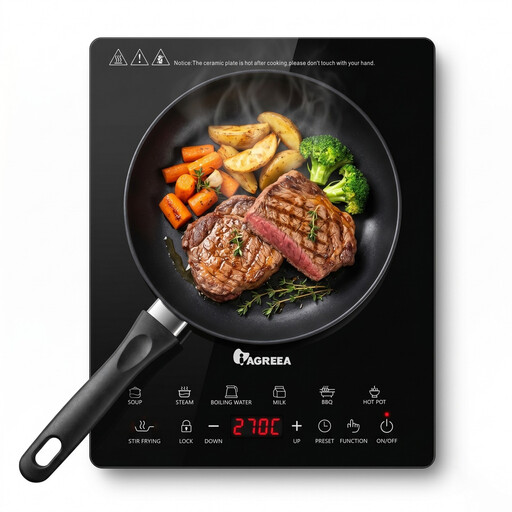 Image unavailable
IAGREEA DF200-14V10, portable induction hob
Worth considering for extra cooking capacity or a compact space, provided you have compatible cookware.
Power: 2000 W; 8 power levels; temperature control from 60 to 270 °C; 7 preset programmes; 3 h timer; cookware listed as 12 to 26 cm.
View product on Joybuy
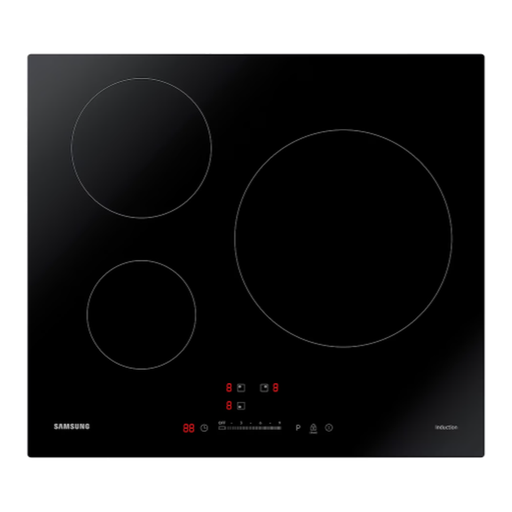 Image unavailable
Samsung NZ63M3707AK, 3-zone induction hob
Worth considering if you want to cook on several zones with a built-in hob.
3 zones; stated power: 7200 W. The product details specify built-in installation and a connection without a plug, to be carried out by a qualified electrician. Only ferromagnetic cookware is suitable.
View product on Joybuy
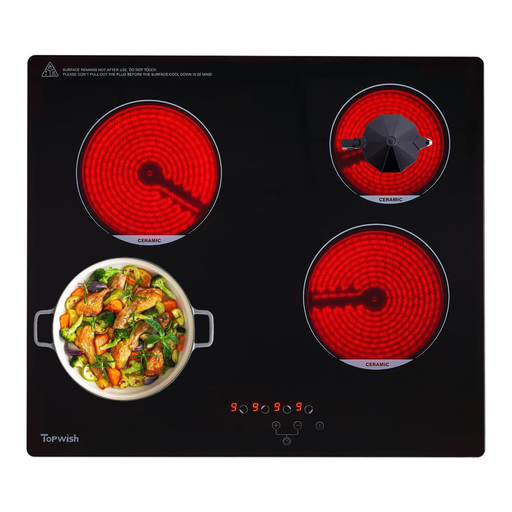 Image unavailable
TOPWISH, ceramic glass electric hob, 4 zones, 60 cm
Worth comparing for a built-in installation with several cooking zones.
4 zones; stated width: 60 cm; stated power: 6600 W; touch controls, child lock, overheat protection and residual heat indicator.
View product on Joybuy
 Image unavailable
TOPWISH, built-in induction hob, 4 zones, 60 cm
Worth comparing for a built-in installation; check the technology and connection requirements in the instructions for the model you’re considering.
4 zones; stated width: 60 cm; stated power: 6600 W; touch controls, child lock and residual heat indicator. The product details specify a hardwired connection without a plug.
View product on Joybuy
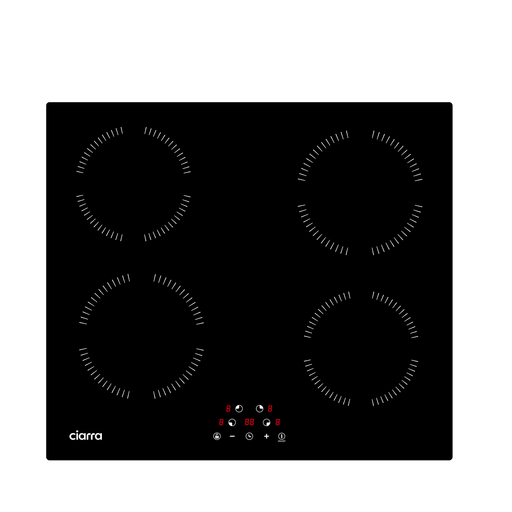 Image unavailable
CIARRA CABBIH4-A, 4-zone induction hob
Worth considering if you want to cook on several zones at once and adjust the power to suit your needs.
4 zones and 9 power levels. The product details specify magnetic cookware, different recommended diameters for each zone and built-in installation to be carried out by a professional electrician.
View product on Joybuy
Frequently asked questions
Do you need to replace all your pans to switch to induction?
No. Keep any cookware with a base that works with induction, then check that its diameter is suitable for the cooking zones on the model you choose. Electrolux states that the minimum and maximum diameters depend on the hob.
Can an induction hob of the same width directly replace a ceramic glass hob?
Not without checking the cut-out, required clearances and connection. The external width alone doesn’t confirm compatibility: read the model’s instructions and ask a professional to check the installation.
Will a home necessarily already have a dedicated 32 A circuit with 6 mm² conductors?
No. You can’t assume one is present just because the home is in France. Promotelec refers to this circuit as a guide for installing a hob. Ask a professional to identify the actual circuit and check the model’s requirements; don’t alter the installation yourself.
How should you clean a cooking surface after use?
Wait until it’s safe to clean without risk of burns, and follow the appliance instructions. A radiant hob may stay hot after it’s switched off; with induction, a hot pan can also transfer heat to the surface.
What guarantees and options are available when replacing a hob?
When you buy from a professional trader in France, the statutory guarantee of conformity applies under its terms. The DGCCRF states that claims must be brought within two years of the goods being delivered, whether new or second-hand; any commercial guarantee is separate. For your old appliance, the Ministry for Ecological Transition describes the ‘one-for-one’ take-back scheme when you buy a product of the same type. Check the arrangements on offer.


