Households replacing a built-in hob
If you’re keeping your worktop, measure the cut-out and the space underneath. A similar advertised width doesn’t guarantee that the new model will fit the cut-out or work with your existing electrical supply.


Choose induction if your cookware is compatible and the model’s instructions confirm that it will fit your cut-out and meet your kitchen’s electrical requirements. Ceramic hobs are worth considering if you want to keep cookware that isn’t suitable for induction. For gas, check the existing installation and the requirements of the hob you’re considering separately.
If you’re keeping your worktop, measure the cut-out and the space underneath. A similar advertised width doesn’t guarantee that the new model will fit the cut-out or work with your existing electrical supply.
Before switching to induction, check the saucepans and frying pans you use regularly. Que Choisir points out that this technology requires compatible cookware.
Compare the number and size of the cooking zones with your usual cookware. If you use a large pan or rectangular griddle, check whether the model has a flexible zone and what size cookware it can accommodate.
Start with your kitchen’s layout and your cookware, then compare the zones and heating technology to suit the way you cook.
| Priority | What to check | Your needs |
|---|---|---|
| Cookware | Check the base of the cookware you use often. For induction, make sure it’s compatible, especially if you use large pans. | I want to keep using my usual saucepans and frying pans, or know which ones I’ll need to replace before choosing induction. |
| Fitting and electrical supply | Measure the cut-out and the space beneath the worktop. Compare these with the dimensions, clearances and connection requirements in the instructions for the exact model. | My new hob needs to fit my existing kitchen: an advertised width of 60 cm isn’t enough to confirm that it will. |
| Cooking zones and cookware | Compare the number of zones, their usable dimensions and, if needed, the size of any flexible zone. Check the instructions for usage requirements. | If I’m cooking several dishes or using a large pan, I want enough room on the zones I’ll actually use. |
| Heating technology | Although they both have a glass surface, induction and ceramic hobs use different technologies. Que Choisir describes induction as generally more energy-efficient than ceramic; also check the model-specific features, including the residual heat indicator. | I want to choose a technology that works with my cookware and compare how it needs to be used, not just how the hob looks. |
The overall dimensions and the cut-out dimensions aren’t interchangeable. For example, Electrolux lists the LIT60342CW hob as 590 × 520 mm, but gives a cut-out size of 560 × 490 mm.
Measure the opening and the space beneath the worktop, then compare your measurements with the installation instructions for the model you’ve chosen.
Que Choisir explains that induction requires compatible saucepans and frying pans: a pan without a suitable base won’t work on the zone.
Check the cookware you use most, including large pans, before deciding which pieces you can keep.
This feature varies by model. Whirlpool calls it FlexiCook on the WLB2977NE, while Bosch advertises a CombiZone on the PVS631HC1M.
If you cook with a griddle or a large pan, check that the model you’re considering has this zone and find out its usable dimensions.
Their surfaces may look similar, but cookware compatibility is essential for induction. Features also vary by model: for example, Whirlpool lists a residual heat indicator on its AKT8090LX ceramic hob.
Compare the technology, the cookware you’ll need and the installation instructions before choosing based on the finish or number of zones.
The LIT60342CW is an example of an induction hob for which Electrolux France publishes both the overall dimensions and the built-in cut-out size.
Whirlpool France’s product details let you compare models with different technologies, including the WLB2977NE induction hob and the AKT8090LX ceramic hob.
The PVS631HC1M induction hob is worth considering if a flexible zone is important for your larger cookware.
These induction hobs are options to consider if you’re thinking of switching to induction. Before choosing one, compare its specifications with your cookware, cut-out and kitchen’s electrical supply.
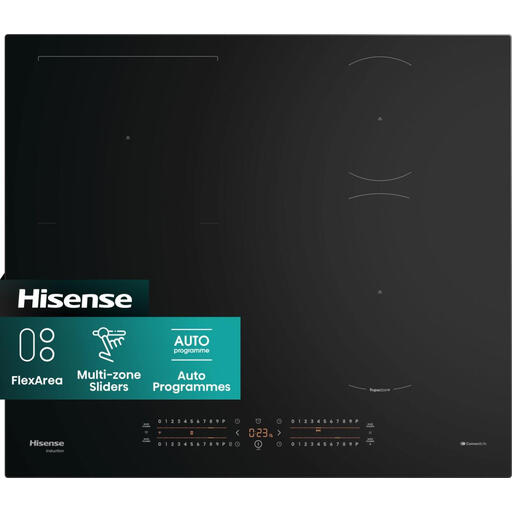 Image unavailable
If you’re replacing a built-in hob, compare the installation dimensions of this 60 cm induction model with your existing cut-out. Check the instructions for clearances, electrical requirements and the dimensions of the zones you need; your cookware must also be induction-compatible.
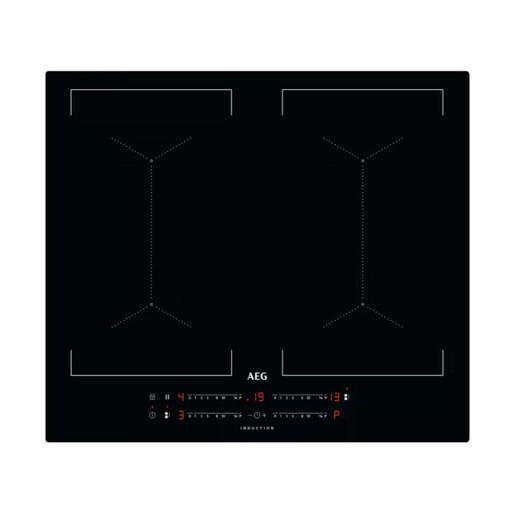 Image unavailable
The four zones and Bridge function mentioned in the product title are worth considering if you use several saucepans or a large pan. Check the usable dimensions of the combined zone, the built-in cut-out and the installation requirements in the instructions; also make sure your cookware is compatible.
 Image unavailable
Its four advertised zones could suit you if you cook several dishes at once; the product title also mentions a timer and a Boost function. Before replacing your hob, compare the cut-out, clearances and connection requirements in the instructions with your kitchen, then check your cookware.
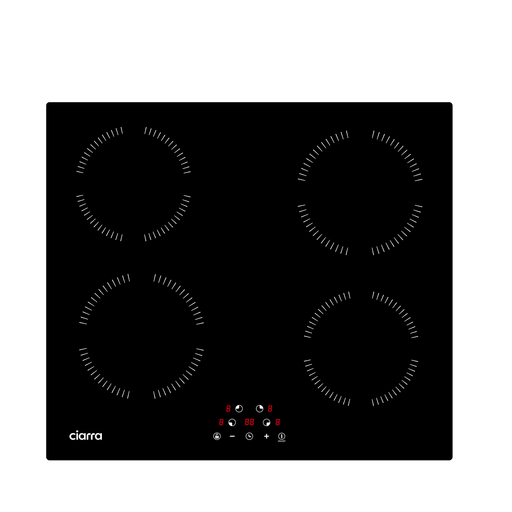 Image unavailable
Compare this four-zone model with nine settings against your cooking habits and the size of your cookware. Before deciding on installation, check the instructions for the total power and connection requirements; also check the cut-out and make sure your cookware is compatible.
They need to have an induction-compatible base. Que Choisir explains that a pan without a ferromagnetic base won’t work on the zone, so check the saucepans and frying pans you use most often in particular.
No. The overall width alone isn’t enough to confirm compatibility. Measure the cut-out and check the instructions for depth, clearances and installation requirements. For example, Electrolux lists the LIT60342CW as 590 × 520 mm overall, but gives a cut-out size of 560 × 490 mm.
Bosch recommends having an induction hob installed by a professional because of the risks to people and property. Before connecting the model you’re considering, have its instructions and the details of your existing installation checked.
A ferromagnetic base is required for induction, so a ceramic hob may be worth considering if your cookware isn’t suitable for induction. However, check the hob’s instructions and the guidance for each piece of cookware before deciding to keep it.