Households that cook often
If you prepare meals almost every day, compare energy use in everyday cooking and how quickly the hob responds. Induction is worth considering if your cookware is suitable and your installation can support it.


If you cook often, start by considering induction, provided your cookware and electrical installation are compatible. For 409 cycles a year, ADEME gives a benchmark of 115 kWh for induction, compared with 200 kWh for ceramic hobs; this is not a prediction of your household’s consumption. For a standard electric hob, check exactly how the model heats. A cooker is a different choice, for when you need to replace the oven as well.
If you prepare meals almost every day, compare energy use in everyday cooking and how quickly the hob responds. Induction is worth considering if your cookware is suitable and your installation can support it.
Before switching to induction, check the saucepans and frying pans you actually use: according to UFC-Que Choisir, they need to have a ferromagnetic base. If some of yours are unsuitable, a ceramic hob could be an option to consider.
If you need to replace both the oven and the cooking surface, consider a cooker as an appliance that combines the two, rather than as a hob on its own.
Consider it: if you cook frequently and your cookware has a compatible ferromagnetic base.
Bear in mind: you may need to replace some of your existing cookware.
Consider it: if keeping cookware that is not induction-compatible is more important in your decision.
Compare: ADEME gives a figure of 200 kWh a year for ceramic hobs, compared with 115 kWh for induction, based on the same 409 cycles.
Consider it: if you are replacing an existing hob, once you have identified how the model you are considering heats.
Check: ADEME’s consumption benchmark for ceramic hobs does not automatically apply to a hob with cast-iron hotplates.
Consider it: if you are replacing both the oven and the cooking surface, or want a freestanding appliance.
Bear in mind: you will also need to consider the space it takes up and the oven’s features.
| Criterion | What to check | Who it matters to |
|---|---|---|
| Everyday energy use | Compare heating technologies and energy-use figures on a like-for-like basis; don’t use the maximum power rating alone to estimate annual consumption. | I cook almost every day and want to keep electricity use down without compromising on responsiveness. Around 36% of consumers would prioritise this need. |
| Existing cookware | For induction, check the base of the cookware you use regularly and the accepted diameters in the instruction manual. | I want to keep using my saucepans and frying pans rather than replace them for a new hob. Keeping existing cookware would be a priority for around 29% of consumers. |
| Number and size of cooking zones | Compare the size of the cooking zones with the cookware you use at the same time; consider a flexible zone if you use larger pans. | I cook several things at once, sometimes in a large casserole or on a griddle. For around 21% of consumers, capacity and zone sizes would come before other criteria. |
| Hob only or cooker | Decide whether the oven also needs replacing, then check the dimensions and installation instructions for the appliance you are considering. | My oven needs replacing at the same time as my hob, so I want to choose both together. Replacing both at once would be a priority for around 14% of consumers. |
ADEME’s figures are based on 409 cycles a year; the size of the appliance and the way you cook can affect actual consumption.
Use this as a basis for comparing induction and ceramic hobs, then factor in how often you cook and which zones you will use.
Cookware without a ferromagnetic base will not work on an induction zone, as UFC-Que Choisir points out.
Check the cookware you use most often and the diameter limits given in the model’s instruction manual.
Switching to induction may mean replacing some of your cookware.
An induction hob can also have a ceramic glass surface; the material alone does not tell you how the hob heats.
Check the technology listed for the exact model before comparing cookware compatibility and energy-use benchmarks.
A cooker combines a hob and an oven, so it is a broader choice than simply replacing a built-in hob.
First decide whether you are keeping your oven, then compare the dimensions of only the appliance types that suit your kitchen.
A cooker takes up space that you will need to allow for, and adds oven features to consider.
Bosch offers induction hobs, electric hobs and freestanding cookers.
The brand’s FlexiBridge and Bridge induction hobs are designed in particular for kitchens where cookware comes in different sizes.
Brandt offers ceramic hobs and cookers to compare, depending on whether you are replacing just the hob or the oven as well.
These built-in induction and ceramic hobs let you compare heating technologies and zone layouts. Before choosing, also check your cookware, the cut-out dimensions and your electrical installation.
 Image unavailable
Worth considering if you use several zones to prepare meals and have cookware that is compatible with induction.
The product name lists a Boost function, a timer and a residual heat indicator. Check the cut-out dimensions and have the electrical compatibility confirmed before installation.
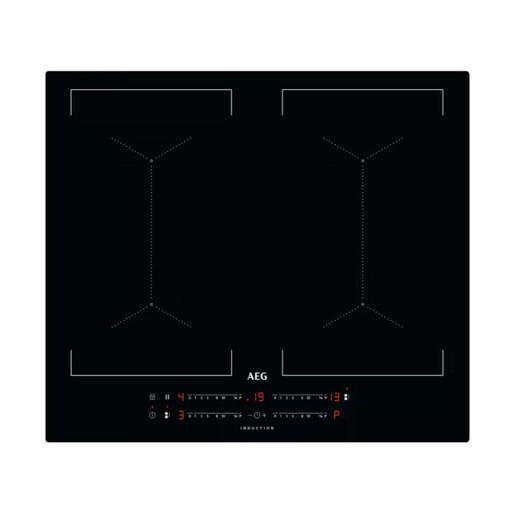 Image unavailable
Worth considering if you want to combine zones for larger cookware, after checking that your pans are compatible with induction.
The product name lists a Bridge function. Confirm the exact appliance and cut-out dimensions before planning the installation, and have the electrical connection checked too.
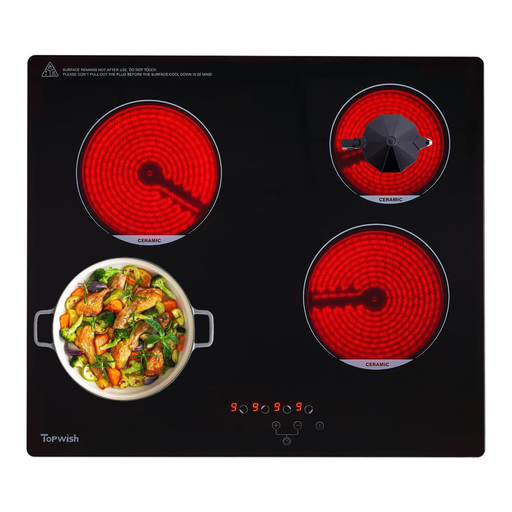 Image unavailable
Worth considering if you want four zones but are not choosing induction, particularly if you want to keep using cookware that is not suitable for it.
The product name lists touch controls and a residual heat indicator. Confirm the power requirements for this model, then check the cut-out dimensions and electrical connection before buying.
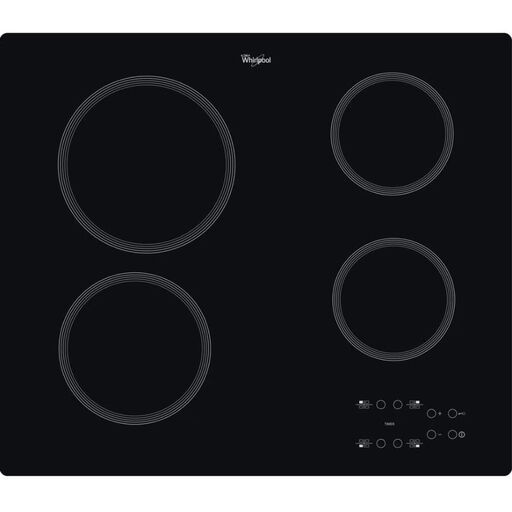 Image unavailable
Worth considering if you are replacing a hob with a four-zone ceramic model rather than an induction hob.
Before installation, check the dimensions of the appliance and cut-out, as well as whether the electrical connection is compatible with your setup.
No. Induction requires a ferromagnetic base, as UFC-Que Choisir explains. Check the saucepans and frying pans you use often, then check the cookware sizes supported by the hob you choose.
No, not in the same way as ovens: the European Commission says that energy labels are compulsory for ovens and cooker hoods, but not for hobs on their own. When comparing hobs, look at the technology, cooking zones and model-specific information.
Yes. Check the model’s instructions and have a qualified person inspect the installation before fitting the hob. Enedis points out that the power required depends on which appliances might be running at the same time; a general guideline cannot confirm that your kitchen’s circuit is suitable.
Consider a cooker if you also need to buy or replace the oven and a freestanding appliance will fit your available space. If you are keeping your oven, start by comparing standalone hobs that suit your kitchen.