If your pans are compatible and your installation is suitable, induction is particularly well suited to responsive cooking. A ceramic hob may be a better fit if you want to keep pans that don’t work with induction. Check the cut-out dimensions and electrical connection for your chosen model, then compare the cooking zones, controls and total cost, including cookware and installation. A portable cast-iron electric hob is not automatically a substitute for a built-in hob.
Who is this choice for?
People who cook frequently
If you regularly prepare several dishes, compare how quickly the hob heats up and how much energy it uses under relevant conditions. UFC-Que Choisir describes tests that measure the time and electricity needed to heat a pan of water.
Households looking to keep their pans
Before choosing induction, check the base of each pan: UFC-Que Choisir explains that it must be ferromagnetic to work on an induction hob. A ceramic hob may be worth considering if your existing cookware isn’t suitable for induction.
Households with installation constraints
If you’re replacing a built-in hob or considering a portable appliance, check the cut-out dimensions, electrical connection and requirements in the manual. Legrand distinguishes between the connection for a built-in hob and that for a portable hob fitted with a plug.
What should you compare?
Induction
Worth considering: if your cookware is compatible and the circuit for your built-in hob is suitable.
Bear in mind: UFC-Que Choisir says induction is generally more expensive to buy than ceramic hobs. Your pans also need a suitable base.
Ceramic
Worth considering: if you want to keep cookware that isn’t compatible with induction and are looking for a built-in hob with a smooth surface.
Bear in mind: radiant cooking zones heat the surface, which may stay hot after cooking. A residual heat indicator doesn’t remove the risk of burns.
Electric cast-iron hotplates
Worth considering: if a freestanding appliance or this type of hob is genuinely right for your installation and needs.
Bear in mind: a portable two-ring hob, such as the Severin DK 1042, is not directly equivalent to a built-in hob.
| What matters to you |
What to check |
Who should prioritise it |
| Responsiveness and energy use |
Compare tests carried out using the same heating task and results for gentle cooking. Don’t infer energy use from a single power rating. UFC-Que Choisir describes a test procedure that measures the time and energy needed to heat water. |
If you cook often, you may want to prioritise responsive heating and energy use in practice over maximum power alone; around 28% of consumers rank these criteria as a priority. |
| Cookware compatibility |
Check your pots and pans for compatibility information, then compare their diameters with the cooking zones on the model you’re considering. Induction requires a ferromagnetic base, according to UFC-Que Choisir. |
If you want to keep your current pans, check they’re compatible before choosing a technology; around 22% of consumers prioritise their existing cookware. |
| Installation and fitting |
Have the circuit and connection checked against the manual, and compare the cut-out dimensions with the opening in your worktop. Legrand distinguishes between the requirements for a built-in hob and those for a portable hob. |
If you’re replacing a hob or fitting out a kitchen, circuit, socket and cut-out compatibility may matter more than the technology you choose; around 22% of consumers prioritise installation. |
| Number and size of cooking zones |
Compare the diameters, the layout of the zones and how many pans you use at once. Also check whether the model has an extendable zone. |
If you prepare several dishes at the same time, check that the zones can accommodate all your pans together; around 17% of consumers prioritise this cooking capacity. |
| Cleaning and heat indicators |
Check that the controls are easy to read, review the cleaning instructions and look for a residual heat indicator. Bear in mind that a hot pan can warm the surface of an induction hob. |
If you want to identify zones that are still hot and clean the hob in line with the instructions, check the model’s indicators and controls; around 11% of consumers prioritise cleaning and safety indicators. |
Mistakes to avoid
-
Confusing the ceramic glass surface with the heating technology
An induction hob can have a glass-ceramic surface, but it heats the ferromagnetic base of the pan. A ceramic hob with radiant or halogen cooking zones works differently.
Check the exact technology in the model’s product information and make sure your cookware is compatible before comparing appliances.
If some of your pans aren’t suitable for induction, you may need to replace them.
-
Trusting the visible width without checking the installation
The external dimensions alone won’t confirm whether a built-in hob will fit the existing opening. The electrical connection must also meet the requirements in the model’s manual.
Compare the cut-out dimensions and required clearances, then have the circuit checked before ordering. Don’t carry out any unverified electrical alterations.
Depending on your home, you may need to adapt the worktop or installation.
-
Comparing only the price on the label
UFC-Que Choisir says induction is generally more expensive to buy than ceramic. The cost of replacing your hob also depends on which pans you’ll keep or replace, and on the installation.
Compare the appliance, any equipment you’ll need and any additional services. Ask for written details of the terms for any paid delivery or installation.
Replacing cookware and paying for additional services can affect the total cost. The French Ministry of the Economy reminds shoppers that sellers must provide written details of the cost of any paid delivery or set-up services they offer.
A guide to some brands and models
Bosch
The French PUE611BB5E and PKE611BB8E models are examples of a built-in induction hob and a built-in ceramic hob respectively.
- Bosch’s product information lists four cooking zones for each model and a timer on the relevant versions.
- These features aren’t a performance comparison and don’t apply to the entire Bosch range.
Electrolux
The EHV6232FOK is an example of a built-in ceramic hob with three cooking zones.
- Electrolux lists a zone for larger pans and a residual heat indicator for this model.
- Check the cut-out dimensions and the diameter of the zones for the specific model; these details don’t describe every Electrolux hob.
Severin
The DK 1042 is an example of a portable electric hob with two cast-iron hotplates, worth considering if a freestanding appliance meets your needs.
- Severin’s product information lists a total power rating of 2 500 W and a Type E/F plug for this model.
- Its portable, two-ring design isn’t directly comparable with a built-in hob.
Brandt
The BPI6313B is an example of a three-zone induction hob with no extendable zone, tested by UFC-Que Choisir.
- For this model only, UFC-Que Choisir notes, among other things, that it heats up quickly.
- The test also found that its shut-off safety feature could be improved in the event of a spill, and notes that the model is no longer sold. These findings don’t apply to the entire Brandt range.
Related Joybuy products
These Joybuy models include built-in induction and ceramic hobs, so you can compare their cooking zones, features and installation requirements.
 No image available
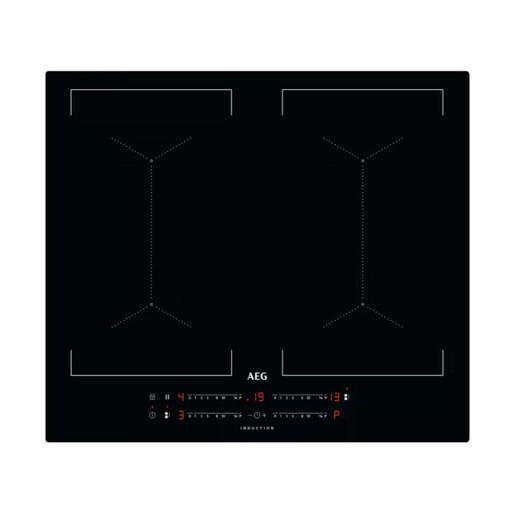
AEG IKS64453IB, built-in induction hob, 60 cm, 4 zones
Worth considering if you’re looking for four zones and want to be able to combine two FlexiBridge zones. Induction requires compatible cookware with a ferromagnetic base.
The product information lists a timer for each zone, a Stop&Go function and a residual heat indicator. The product description says it requires a suitable power supply and professional installation.
View on Joybuy
 No image available
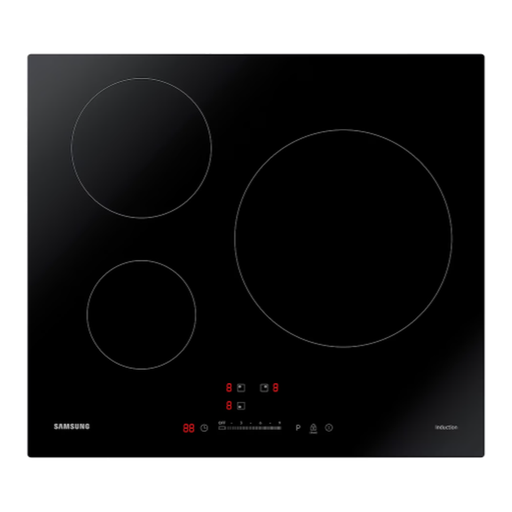
Samsung NZ63M3707AK, induction hob, 3 zones, 7200 W
Worth considering if three zones and a dual zone suit the pans you use together. Your cookware bases must be compatible with induction.
The product information lists a pause function, PowerBoost and a residual heat indicator. It’s described as having no plug, and installation must be carried out by a qualified electrician.
View on Joybuy
 No image available
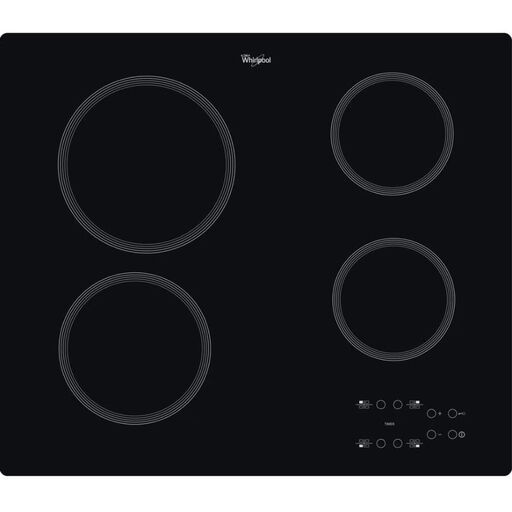
Whirlpool AKT 801-NE, ceramic hob, 4 zones
Worth considering if you’re looking for a built-in ceramic hob with four radiant zones and want to keep cookware that isn’t suitable for induction.
The product information lists nine power levels per zone, a timer for each zone and a child lock. The stated cut-out size is 560 × 490 mm. The description specifies a fixed connection by a qualified electrician and notes that the surface stays very hot after cooking.
View on Joybuy
 No image available
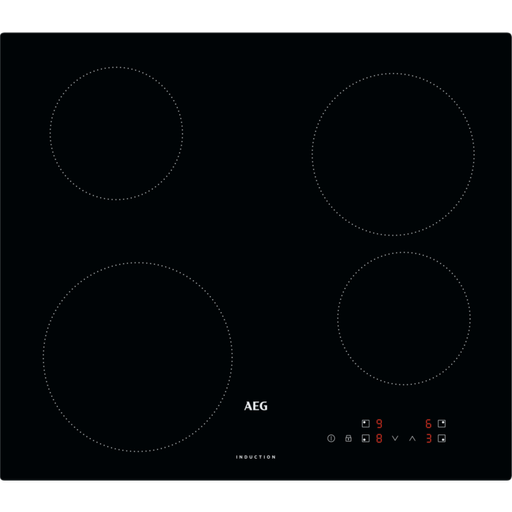
AEG IBS64200CB, semi-flush two-phase induction hob, 59 cm
Worth considering if a semi-flush induction hob suits your worktop. It isn’t designed for flush-fitting installation and requires compatible cookware.
The product information lists four zones, nine power levels, pan detection and a Booster function. The stated cut-out dimensions are 56 × 49 cm. The description requires installation by a specialist and specifies positioning and ventilation requirements.
View on Joybuy
 No image available
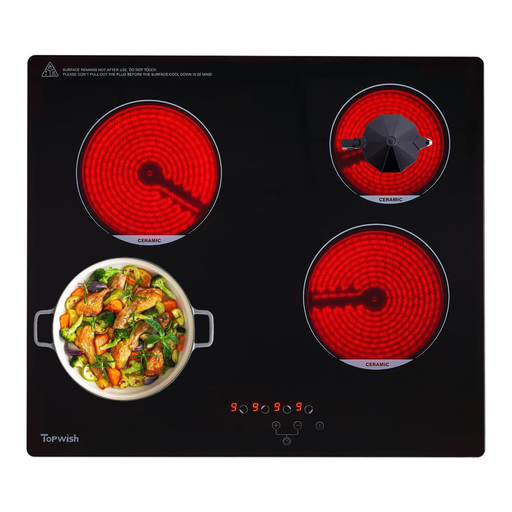
TOPWISH, built-in ceramic hob, 4 zones, 60 cm, 6600 W
Worth considering if a built-in ceramic hob with four zones suits your cookware and the opening in your worktop.
The title lists touch controls, a child lock, a residual heat indicator and overheat protection. The description specifies a connection without a plug by a qualified electrician.
View on Joybuy
Frequently asked questions
How can I tell if my pans will work on an induction hob?
Check that each pan has a ferromagnetic base. Without one, an induction zone won’t heat the pan. UFC-Que Choisir recommends checking the compatibility information and making sure your pans’ diameters suit the zones on the hob you’re considering.
Can a built-in hob be plugged into a standard socket?
Don’t assume it can. Legrand says that a built-in induction hob must be connected to a dedicated circuit, unlike a portable induction hob fitted with a plug. Legrand also specifies a dedicated circuit for ceramic hobs. Have your installation checked and follow the model’s manual; don’t carry out unverified electrical work.
Does induction eliminate all risk of burns, and how should I clean the hob?
No: a hot pan can warm the surface of an induction hob. Wait for it to cool before cleaning and follow the model’s instructions. With a radiant ceramic hob, also take residual heat into account and check the relevant indicator if there is one.
What costs and rights should I check when buying from a retailer in France?
Ask for the cost of any paid delivery or installation service in writing. The French Ministry of the Economy explains that the statutory guarantee of conformity covers new, second-hand and refurbished goods sold by a trader to a consumer. It is separate from any commercial guarantee that may be offered.


