
Livraison le jour même ou le lendemain

Qualité garantie

Débloquez vos offres de bienvenue: Livraison GRATUITE | Jusqu'à -80 % | 30 jours d'essai gratuits à JoyPlus
Téléchargez l'application
An indoor wall light can transform the atmosphere of a bedroom, living room or hallway without taking up floor space. But some models that look very appealing in a catalogue can turn out to be impractical in daily use: a tricky bulb to replace, a cable that’s too short, poorly directed light or an unsuitable protection rating.
Before you fall for a designer wall lamp, it’s worth checking a few practical details. Here are the main pitfalls to avoid, the criteria to compare and a selection of wall lights suited to different domestic uses in the UK.
A wall light can be used to create an atmosphere or to provide task lighting. A model with diffused light will sit comfortably near a sofa or in an entrance hall. Conversely, an adjustable source will be more useful for reading in bed or lighting a staircase.
Looks aren’t everything: examine the shape of the diffuser, the direction of the light and whether you can fit a suitable LED bulb.
E14 and E27 fittings are not interchangeable. An E14 wall light typically takes small screw bulbs, often used in compact light fittings. An E27 wall light accepts large screw bulbs, giving you a wider choice of shapes and wattages.
Also check whether the bulb is supplied. Several models in this selection are sold without a light source: you’ll need to buy one separately and check the maximum permitted wattage.
A wall light intended for a bathroom isn’t chosen the same way as one for a bedroom. An IP20 rating is for dry indoor use, while IP44 indicates protection against water splashes under the conditions specified by the manufacturer.
The exact position in the bathroom must comply with the applicable electrical zones. For a fixed installation, ask a qualified electrician for advice and carefully read the product instructions.
Never exceed the maximum wattage stated by the manufacturer. A low-energy LED bulb can provide sufficient brightness while reducing electricity consumption, but several checks are needed:
A wall light described as non-dimmable won’t become dimmer-compatible simply by changing the bulb.
In a narrow hallway or above a bedside table, the depth of the light fitting matters just as much as its height. Measure the space available between the wall and the furniture to avoid knocks and poorly placed shadows.
A large diffuser, like the Trio model with its 45 cm diameter, can light up a sizeable area, but it needs a clear wall. Conversely, a small decorative wall light fits more easily into an entrance hall or an alcove.
Models with a cable and built-in switch can be handy in a rental property or when you don’t want to create a permanent wall connection. For a wall light wired directly to the mains, installation must be done with the power off and in accordance with UK electrical regulations.
Also check the cable length, whether there’s a switch on the base or on the cord, and the type of insulation. Some models have a Class II double insulation rating – this is a specific electrical characteristic to consider during installation.
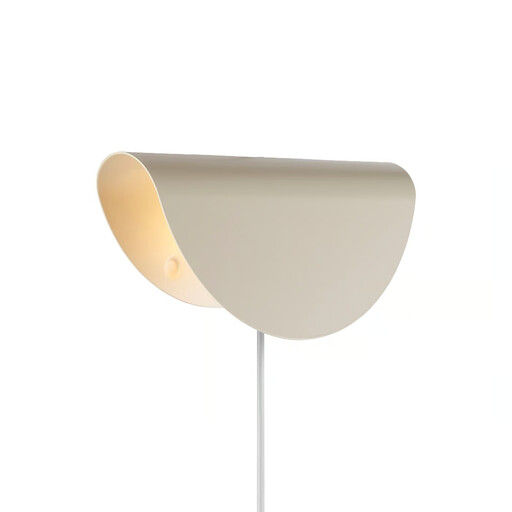
Why this choice suits this profile: Its compact size, beige finish and 150 cm cable with a built-in switch make it a good option for a first installation in a bedroom, hallway or stairwell.
The ability to direct light upwards or downwards lets you adjust the indirect lighting without relying on a fixed diffuser.
E14 fitting, maximum wattage 25 W, Class II and switch built into the cable. Bulb not included.
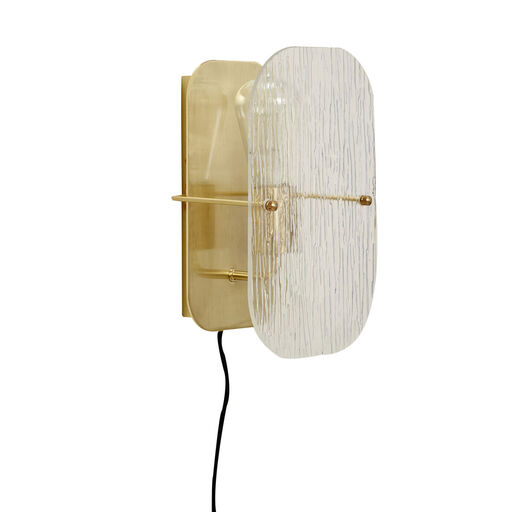
Why this choice suits this profile: The brass-coloured metal and textured glass add character to a living room, entrance hall or bedroom with a classic décor.
The listing clearly states the E27 fitting, maximum wattage of 15 W and no dimmer – no guesswork needed at the time of purchase.
Structured glass, brass finish, 250 cm black cable and CE certification stated. E27 bulb not supplied.
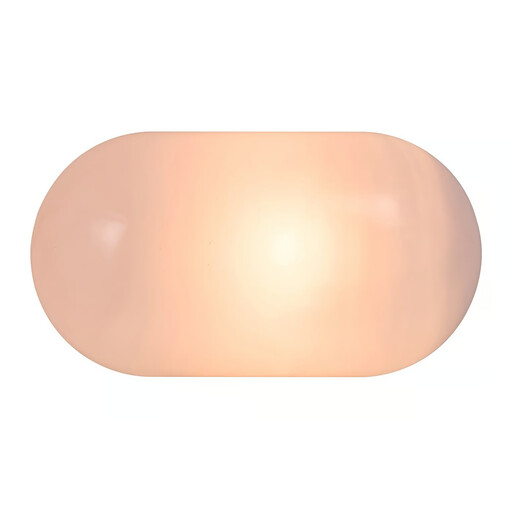
Why this choice suits this profile: Its IP44 rating and 21.75 cm height meet the needs of wall lighting in a bathroom, provided you follow the permitted installation zones.
The IP44 rating is clearly stated, unlike IP20 models which are only for dry indoor spaces.
E27 fitting, maximum wattage 55 W, parallel connection and dimmable with a compatible bulb.
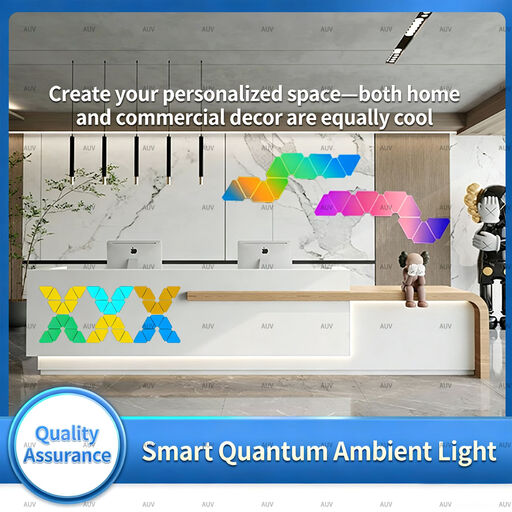
Why this choice suits this profile: Without a traditional fitting, this system is ideal for a child’s bedroom, a gaming room or any space where decorative wall lighting needs to change with the mood.
The listing specifies it’s an indoor product, states the power supply is included and reminds you that the panels must be kept away from moisture.
Six panels, app and remote control, music sync and timer.
For a bedroom wall light, go for diffused or wall-facing light, plus a switch that’s easy to reach. An E14 fitting works well for smaller sizes. Near the bed, a model with a built-in cable can also be handy when wall wiring is limited.
An IP20 rating is for dry indoor spaces only. In a bathroom, choose a model with an IP rating that matches the installation zone – for example, an IP44 wall light where that level of protection is required. Installation must comply with current electrical regulations and the manufacturer’s instructions.
Consumption depends mainly on the wattage and how long the light is on. An LED wall lamp can reduce consumption compared with a more energy-hungry source, but also compare the light output, usage time and whether the source can be replaced. With a wall light that takes interchangeable bulbs, the choice of bulb remains key.