
Livraison le jour même ou le lendemain

Qualité garantie

Débloquez vos offres de bienvenue: Livraison GRATUITE | Jusqu'à -80 % | 30 jours d'essai gratuits à JoyPlus
Téléchargez l'application
Want to keep an eye on your home, your children, or your pet? Nothing could be simpler. Whether you're a new parent wanting to watch over your sleeping baby, a pet owner curious about your cat's mischief, or simply looking for a discreet security solution for your apartment, the indoor security camera has become the key to newfound peace of mind.
But with an overwhelming number of options, it's hard to know where to start. Don't panic: this guide is here to break down the essential features and help you choose the model that truly fits your needs, all without the confusing marketing jargon.
Before diving into our top picks, let's review the few crucial points that will help you make an informed choice.
This is the most critical feature: a sharp image. Today, most cameras offer Full HD (1080p) or even 2K/4MP resolution, which is more than enough to make out details. But quality doesn't end at sunrise: nighttime performance is just as crucial. On this point, colour night vision makes a real difference compared to the classic black-and-white infrared. It allows you to more easily identify the colour of clothing or other key details when light is scarce.
Nearly all current models are Wi-Fi security cameras. Be sure to check compatibility with your network (2.4 GHz only, or dual-band 2.4/5 GHz for a more stable connection). Beyond the connection, it's the smart features that make a difference in daily use:
Your home and your intended use are key factors. Are you a renter? Opt for a drill-free camera that can simply be placed on a piece of furniture or attached with an adhesive. It's practical and leaves no marks. If you want to keep an eye on your garden from the living room, you'll need a model designed for monitoring through a window, equipped with anti-reflection technology. Finally, for a newborn, nothing replaces a dedicated system like a video baby monitor. It guarantees a more secure connection and features designed for little ones (lullabies, temperature sensor...).
We have selected three models that meet specific needs, all praised for their reliability and well-thought-out features.
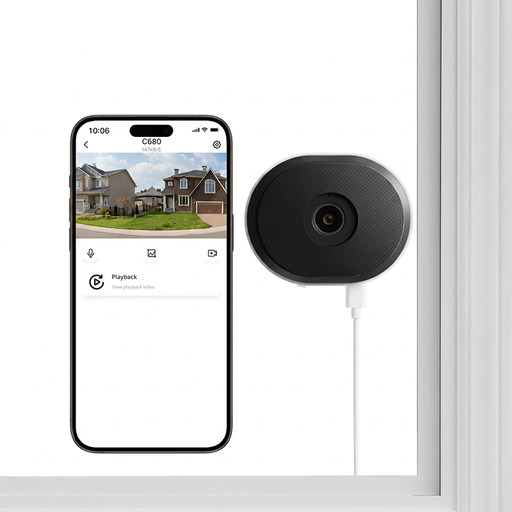
Why it stands out: The ZOSI C680 tackles a common problem: reflections that make monitoring through a window impossible. Its anti-glare technology ensures a clear image, even at night. Its drill-free installation makes it a top choice for apartments.
Highlights:
Who is it for? The smart choice for renters or homeowners who want to monitor a driveway, garden, or entrance from inside, without undertaking any installation work.
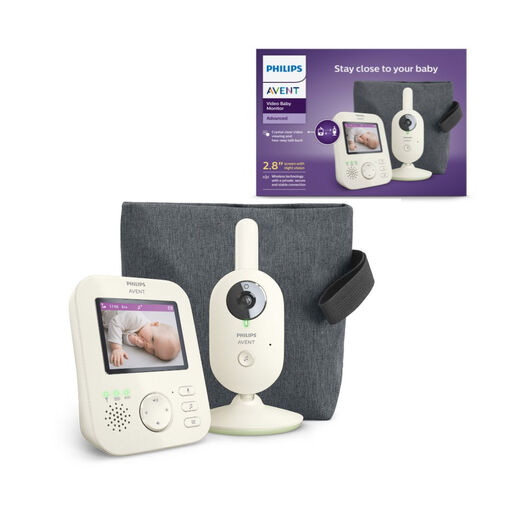
Why it stands out: More than just a camera, this Philips Avent model is a complete video baby monitor system. It relies on a private and secure 2.4 GHz wireless connection between the camera and its dedicated monitor, without ever depending on your Wi-Fi network.
Highlights:
Who is it for? Parents who want the safest and simplest solution to watch over their baby, without relying on Wi-Fi and with features designed for the child's comfort.
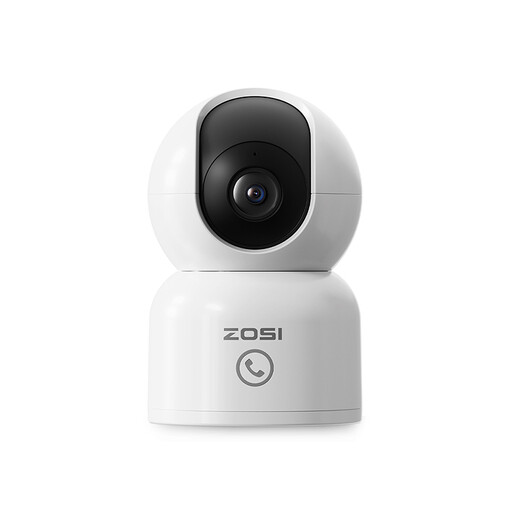
Why it stands out: With its motorised head, this 360° camera misses nothing. Its key strength? Auto-tracking, which allows it to follow the movements of a pet in the living room or a child during playtime.
Highlights:
Who is it for? Ideal for owners curious about their pets' secret lives, but also for families with young children, thanks to its full room coverage and interactive features.
Our selection focuses on specific use cases, but the market is full of models with a wide variety of features. If you haven't found the perfect match yet, feel free to explore a broader range.
? Discover our full collection of remote access security cameras
1. Can an indoor security camera see through a window at night? Generally, no. The infrared (IR) night vision on standard cameras reflects off the glass, creating a white halo that makes the image completely unusable. For effective through-window monitoring, it is essential to choose a model specifically designed for this purpose, equipped with anti-reflection technology like the ZOSI C680 in our selection.
2. What is the difference between a video baby monitor and a standard security camera? A video baby monitor is a closed system: a camera (baby unit) communicates directly with a dedicated monitor (parent unit) via a private connection, without using the internet. It's a closed circuit. In contrast, a standard security camera connects to your Wi-Fi network to be accessible from a smartphone app, wherever you are. The baby monitor is often preferred for its foolproof security and dedicated features (lullabies, night light...), while the Wi-Fi camera offers greater versatility and unlimited remote access.
3. How do I secure my Wi-Fi security camera? To protect your privacy, a few golden rules apply: use a complex and unique password for your account, enable two-factor authentication (2FA) whenever the app allows it, and regularly update the camera's internal software (the "firmware").