
Livraison le jour même ou le lendemain

Qualité garantie

Débloquez vos offres de bienvenue: Livraison GRATUITE | Jusqu'à -80 % | 30 jours d'essai gratuits à JoyPlus
Téléchargez l'application
Whether you want to monitor your home during the holidays, watch over your sleeping baby, or make sure your pet isn't turning the living room into a battlefield, there are plenty of reasons to get an indoor security camera. But faced with a jungle of models with sometimes confusing features, it can be hard to know where to start. Our guide is here to cut through the noise: we've identified the essential criteria and selected the best products to help you make an informed choice that's perfectly suited to your needs and budget.
Before you head to the checkout, let's review the key technical features that will truly make a difference in your day-to-day use.
A sharp, detailed image is the cornerstone of effective surveillance. While most models today offer Full HD (1080p) resolution, cameras with 2K resolution provide a superior level of detail, which is very useful for zooming in on a specific area without a pixelated mess. Night vision is also a non-negotiable feature. Most models rely on infrared LEDs for a perfectly clear black-and-white image, even in complete darkness. Higher-end cameras go even further by offering colour night vision, a major plus for identifying crucial details.
Nearly all models on the market are Wi-Fi security cameras, which makes installation a breeze: just plug it in, connect it to your home network via the app, and you're all set.
Recording storage is an absolutely critical point. Many manufacturers push their paid cloud subscriptions. While this option offers extra security, a no-subscription security camera is often a smarter choice for keeping your budget in check. These models record videos onto a simple microSD card. The advantage? You maintain complete control over your data, with no monthly fees.
Today, a good camera does more than just passively record. Motion detection has become a standard feature, but it's often a source of false alarms (a curtain moving in the breeze, the cat jumping on the sofa...). To avoid being spammed with useless notifications, opt for models equipped with artificial intelligence (AI) that can distinguish between a person, an animal, or a vehicle. Your smartphone will only buzz when it really matters.
To help you see things more clearly, here are three models we've selected, each catering to a specific need.
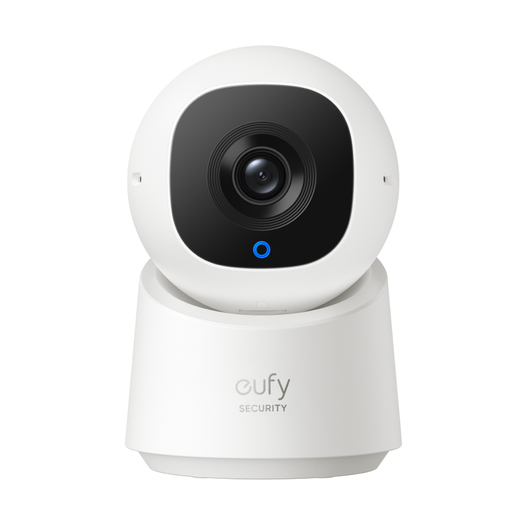
Why it stands out: Its greatest strength is its versatility. Equipped with Pan-Tilt-Zoom (PTZ) motorisation, it can scan a room 360° horizontally and tilt vertically, leaving no blind spots. Its onboard AI can automatically track a person in motion, a powerful asset for monitoring a large living area or children running around.
Key features:
Who is it for? Ideal for those looking for an all-in-one solution for a living room, office, or small business. It's also an excellent pet camera: its tracking function is perfect for keeping an eye on your dog or cat's adventures while you're away.
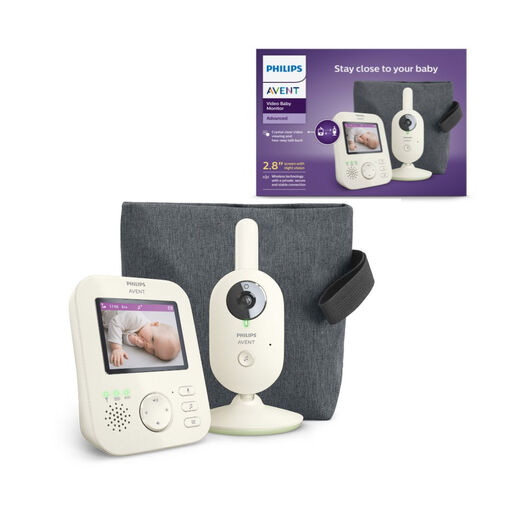
Why it stands out: There's no Wi-Fi here. This video baby monitor operates on a different principle: a proprietary and secure wireless connection between the camera (the baby unit) and its dedicated monitor (the parent unit). The advantage? It's completely independent of your internet network, making it immune to router outages or hacking attempts. A product designed from the ground up for parents' peace of mind and babies' safety.
Key features:
Who is it for? For new parents who want an ultra-reliable, secure, and ready-to-use solution, designed from top to bottom for monitoring an infant, without relying on a smartphone or a Wi-Fi connection.
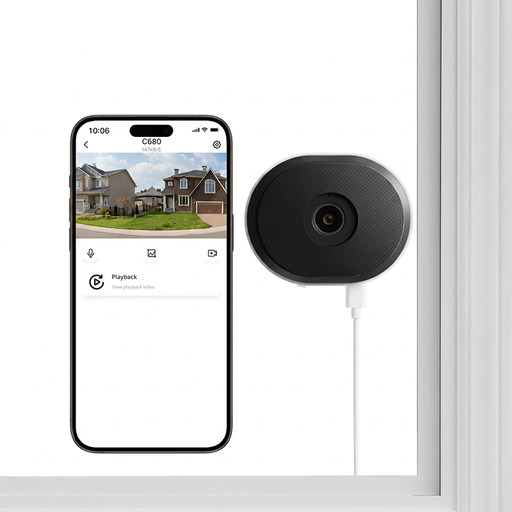
Why it stands out: The ZOSI C680 tackles a real conundrum: how to monitor the outdoors... from the indoors? Placing a standard camera behind a window is a bad idea: the reflections from the infrared LEDs at night make the image completely unusable. This model, however, is specifically designed to film through glass thanks to its anti-reflection technology. The icing on the cake: it simply sticks to the window pane, no drilling required. A must-have for renters.
Key features:
Who is it for? For anyone in an apartment or rental property who wants to monitor a driveway, their doorstep, or a garden without being able (or wanting) to install an outdoor camera. A clever, discreet, and effective solution.
The world of home surveillance is constantly evolving. If our selection doesn't check all your boxes, know that there is a myriad of other solutions available, with various designs, features, and price points.
Feel free to explore our complete collection of remote wireless cameras to find the hidden gem that will fit perfectly into your home.
1. Can an indoor security camera work without Wi-Fi? Yes, some devices like dedicated video baby monitors (such as the Philips Avent model featured) operate on their own secure radio frequency, without using the internet. Other cameras can record continuously to a microSD card without being connected, but you won't be able to view the live feed remotely. A Wi-Fi connection is therefore essential for receiving alerts and watching the live stream on your smartphone.
2. How can I store videos without paying for a subscription? The simplest and most cost-effective solution is to choose a no-subscription security camera that has a microSD card slot. All videos are then stored locally. When the card is full, the camera loop records, automatically overwriting the oldest footage. This is the case for the eufy and ZOSI models in our selection.
3. Is it legal to install a security camera in my home? Absolutely. You have every right to install cameras inside your home for your security. However, the law is very clear: you must only film the interior of your private property. It is strictly forbidden to film public spaces, your neighbour's garden, or the common areas of an apartment building (landing, hallway, etc.). Furthermore, if you employ domestic staff (such as a nanny or a cleaner), you are legally obligated to inform them of the presence and location of the cameras.