
Livraison le jour même ou le lendemain

Qualité garantie

Débloquez vos offres de bienvenue: Livraison GRATUITE | Jusqu'à -80 % | 30 jours d'essai gratuits à JoyPlus
Téléchargez l'application
Keeping an eye on your home, watching over a napping child, making sure the cat isn't redecorating, or checking in on an elderly parent: the reasons for installing an indoor camera are as numerous as they are personal. But with an overwhelming number of options on the market, how do you find the right one? This guide breaks down the essential criteria and presents a curated selection of top models to help you make the right choice, without getting lost in technical jargon.
Before you make a purchase, here are a few key points to consider. These are the features that will make all the difference in your day-to-day use.
For a camera to be useful, you need to be able to clearly identify what's happening on screen. A Full HD (1080p) resolution is the standard today, offering a sufficient level of detail for most situations. Also, consider night vision. Most models use infrared LEDs to film in complete darkness, producing a sharp black-and-white image. More sophisticated cameras even offer colour night vision, a major plus for distinguishing details.
A fixed model covers a defined angle, which is often sufficient for an entryway or a hallway. However, for a living room, a child's room, or to track a moving pet, a motorised 360° camera (Pan/Tilt) is essential. Controllable from your smartphone, it can scan the entire room, eliminating blind spots.
Modern cameras are much more than just electronic eyes. Their smart features provide real added value:
We have selected three models that meet a variety of needs, whether you're looking for a next-generation video baby monitor, a pet camera, or a discreet surveillance solution that blends in.
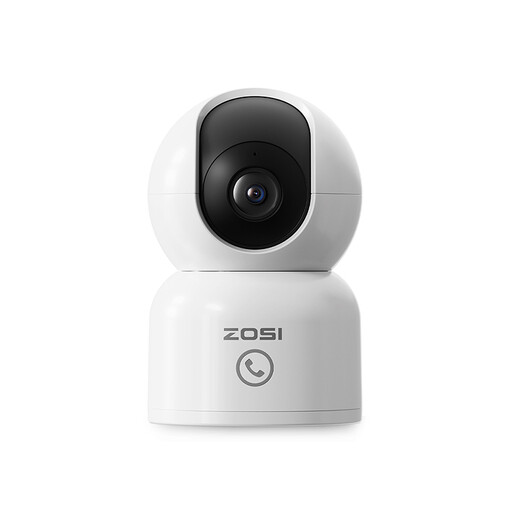
What Sets It Apart This model stands out with its 360° auto-tracking and one-touch call button. As soon as motion is detected, the camera follows the target. Better yet, a single press of the button on the camera sends a call notification to your smartphone—a feature as simple as it is reassuring for children or the elderly.
Key Features
Who Is It For? Ideal for parents who want to keep an eye on a playroom, or for owners of overly curious pets. Its call function also makes it an excellent way to stay in touch with loved ones at home.
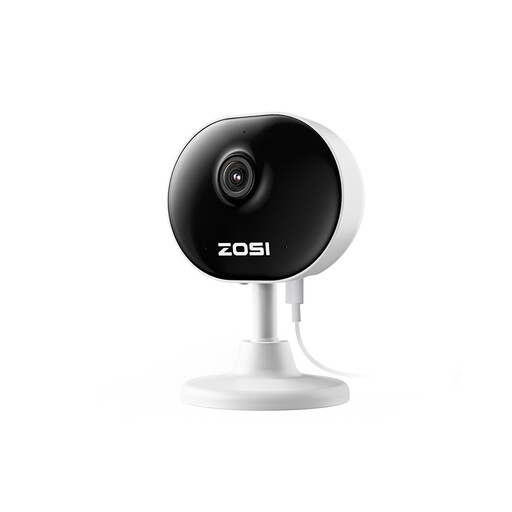
What Sets It Apart Its main asset: its ultra-compact size. Weighing only 85 grams, this camera blends into any decor without drawing attention. Installation is a breeze thanks to its magnetic base and 3M adhesive, all without needing to take out a drill.
Key Features
Who Is It For? Perfect for those who want a nearly invisible surveillance solution for an office, bedroom, or entryway. It's also the top choice for renters who can't (or don't want to) drill into walls.
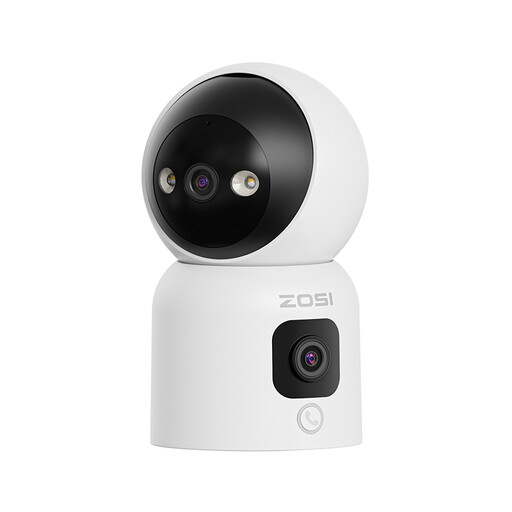
What Sets It Apart This model features not one, but two lenses for surveillance with zero blind spots. The first, a motorised lens, provides a 360° panoramic view, while the second, a fixed lens, keeps an eye on the entire scene. It also stands out with its colour night vision and a gesture call feature: a simple "OK" hand sign in front of the camera, and a video call is initiated.
Key Features
Who Is It For? For the most demanding users who will not tolerate any blind spots. It is particularly well-suited for large open spaces (living room, dining room) or for monitoring both a baby in a cot and the rest of the bedroom.
Home surveillance technology is evolving at lightning speed. Our selection is just a starting point to help you gain clarity. To explore a wider range of solutions and find the camera that perfectly matches your needs, feel free to browse our complete Detective Devices category.
Yes, you are perfectly within your rights to film the interior of your private property for your security. However, the law requires you to inform anyone who might be filmed (e.g., a nanny, cleaning staff, guests...). Be aware that it is strictly forbidden to film public spaces or your neighbours' property.
No, and this is an important point. Most cameras allow for local storage on a microSD card (usually not included). This lets you record and review your videos with no monthly fees. Paid subscriptions are for cloud storage, which acts as an additional backup if the camera is stolen or damaged.
In practice, AI person detection uses algorithms that analyse the video stream to distinguish a human silhouette from harmless motion (like a pet passing by or curtains moving in a breeze...). The result: you only receive notifications when a potentially important event occurs. This makes the system far more relevant and much less intrusive in your daily life.