
Livraison le jour même ou le lendemain

Qualité garantie

Débloquez vos offres de bienvenue: Livraison GRATUITE | Jusqu'à -80 % | 30 jours d'essai gratuits à JoyPlus
Téléchargez l'application
By the Joybuy Editorial Team, July 5, 2026
Finding the right basketball can be a difficult choice. You switch between the asphalt of the street court and the hardwood of the gym, and you need a ball that performs well on any surface. A 100% outdoor model quickly loses its playability, while an indoor ball gets damaged after just a few sessions outside. The goal: to find the perfect indoor-outdoor basketball that combines durability on abrasive surfaces with a high-quality feel.
In this guide, we'll break down the essential criteria and present a selection of versatile models that deliver on their promises. We'll give you the keys to making the right choice, without the marketing fluff, so only the game matters.
Before diving into our selection, let's review the key points that define a good hybrid ball. Here are three essential elements to check.
This is the most critical factor. The outer material changes everything.
To play well, you need the right-sized ball. This is essential for comfort and technical development. The two most common sizes are:
The durability of a durable basketball doesn't just depend on its cover. What's on the inside matters just as much. A well-designed carcass and a quality bladder ensure optimal air retention and a consistent bounce. The channels should be deep enough to facilitate grip and control, a major asset for an effective training basketball.
Based on these criteria, here are the models that caught our attention for their versatility and quality materials.

Why It Stands Out This model checks all the boxes for the versatile player. Its moisture-wicking PU composite leather cover provides a sense of control and a soft touch, similar to indoor balls, while being built to withstand sessions on the blacktop. Its classic colour is a subtle and timeless choice.
Highlights
Who It's For? Regular players (ages 13 and up) looking for a single ball for their training sessions and pickup games, regardless of the court.
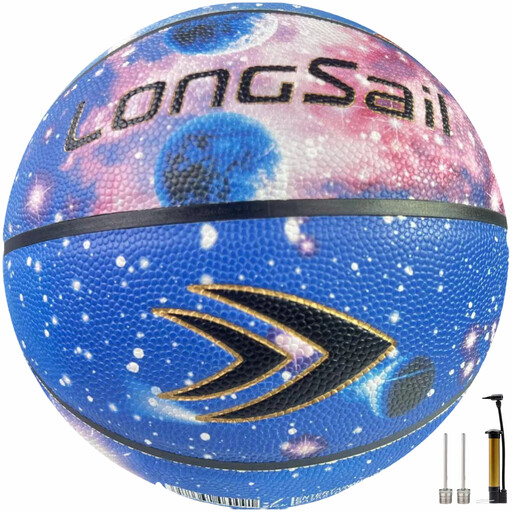
Why It Stands Out This ball shares the same technical foundation as the previous model but features a Sky Blue colourway that won't go unnoticed. It's the ideal option for those who want to combine performance and style on the court. The build quality is identical, ensuring the same great feel during play.
Highlights
Who It's For? Players looking for the same versatility and performance as the classic model, but with an added touch of originality.
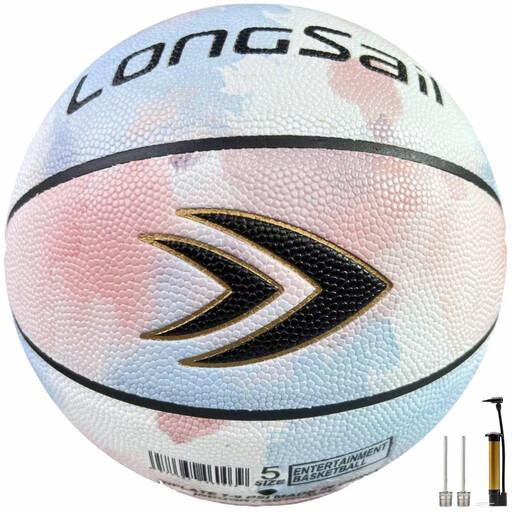
Why It Stands Out This ball is aimed at younger players. With its Size 5 and quality composite leather cover, it offers kids the same playing conditions as the adults, allowing them to train with high-performance equipment from the start. The 'ink colour' design is original and sure to be a hit.
Highlights
Who It's For? Young basketball players (ages 9-12) who need a quality ball to improve their game, whether at school, at their club, or on the local playground.
Our selection highlights some highly versatile models, but everyone has their own preferences when it comes to design, colour, or feel. If you want to find that perfect ball that perfectly matches your style, feel free to explore our catalogue.
? Discover our complete collection of Premium PU Leather basketballs to find other options suited to your game.
1. What is the difference between an indoor and an outdoor basketball? It all comes down to the cover material. Indoor balls are most often made of genuine leather or premium composite, offering an exceptional feel but being very fragile on abrasive surfaces. Outdoor balls are almost always made of rubber, a very durable material but with a less pleasant grip and feel. The indoor-outdoor basketball made of composite leather is the perfect compromise, designed to perform well on both types of courts.
2. How do I care for a composite leather basketball? To extend your ball's lifespan, a quick wipe with a damp cloth after each session is enough to remove dust and dirt. Avoid harsh cleaning products. Store it in a dry place, away from direct sunlight and extreme temperatures. Also, remember to check the pressure before playing.
3. What is the recommended inflation pressure for a basketball? The ideal pressure is usually indicated on the ball itself, near the valve. As a general rule, it is between 7 and 9 PSI (about 0.5 to 0.6 bar). A simple trick to check: drop the ball from a height of about 1.80 m (6 ft). It should bounce up to your waist (between 1.20 m and 1.40 m, or 4-4.5 ft). An under-inflated ball will have a soft, slow bounce, while an over-inflated ball will be too hard and difficult to control.