
Livraison le jour même ou le lendemain

Qualité garantie

Débloquez vos offres de bienvenue: Livraison GRATUITE | Jusqu'à -80 % | 30 jours d'essai gratuits à JoyPlus
Téléchargez l'application
An indoor LED light can sometimes be enough to transform the atmosphere of a home, while keeping electricity consumption under control. But you need to avoid impulse buying: light that’s too cold, incompatible dimensions, or smart features you can’t actually use can quickly spoil the experience. Before comparing different models, it’s best to separate the truly useful criteria from the marketing hype.
Power, measured in watts, mainly tells you about electricity consumption. On its own, it doesn’t let you judge the amount of light produced. For that, look instead at the luminous flux in lumens: a 1,380 lm LED ceiling light doesn’t illuminate the same way as a small 270 lm spot, even if both use LED technology.
In a hallway or entrance, moderate lighting is often perfectly adequate. In a kitchen or living room, it’s usually better to use multiple light sources to reduce shadowy areas.
A temperature of 3,000 K gives a warm light, particularly pleasant in a bedroom or living room. Around 4,000 K, the light becomes more neutral and works well in a kitchen, office or passageway. At 6,000 K and above, the light leans towards cool white: it appears brighter, but can feel uncomfortable in a room meant for relaxation.
Models with adjustable colour temperature, such as certain LED ceiling lights and recessed spotlights, let you adapt the lighting to different times of day.
A light fitting might look compact in a photo but still be incompatible with your ceiling, furniture or electrical setup. Remember to check:
Any installation connected to the mains must comply with French electrical regulations and be carried out with the power off. For a 230 V LED ceiling light, calling in a qualified electrician is still the safest option.
Measured in lumens, the luminous flux gives you an idea of the amount of light available. The beam angle matters too: a wide beam covers a large area, while an adjustable spot is better for lighting a specific zone.
For LED under-cabinet lighting, choose a model that provides even illumination across the worktop. In a display cabinet or on a shelf, a smart cabinet light can instead offer more targeted lighting.
The CRI, or colour rendering index, measures how accurately a light source reproduces colours. An index above 80, common on consumer models, is a decent baseline for residential use. In a kitchen, a good CRI helps you distinguish the nuances of food, surfaces and materials more clearly.
A dimmable LED ceiling light must be compatible with the dimmer switch you have installed. As for smart models, they may require you to use a specific app, a 2.4 GHz WiFi network, or a particular home automation protocol. Check the control method before you head to the checkout.
RGB LED lighting is primarily designed to create atmosphere or add a decorative touch. It doesn’t necessarily replace effective white light for cooking, reading or working.
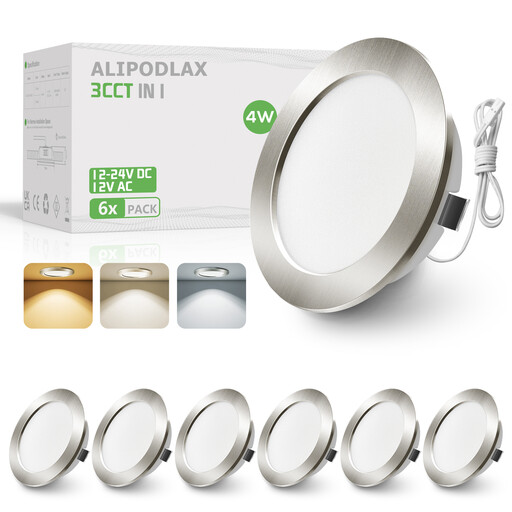
Why this choice suits this profile: This LED recessed spot is ideal for small projects, whether in a cabinet, shelf, ceiling or campervan. It offers a choice of three colour temperatures.
The dimensions are clearly stated: a cut-out of 55 to 58 mm and a mounting height of 14.5 mm. Please note, the 12-24 V transformer must be purchased separately.
4 W, 270 lm, choice of 3,000 K, 4,000 K or 6,000 K, IP44 rating and a 0.6 m output cable.
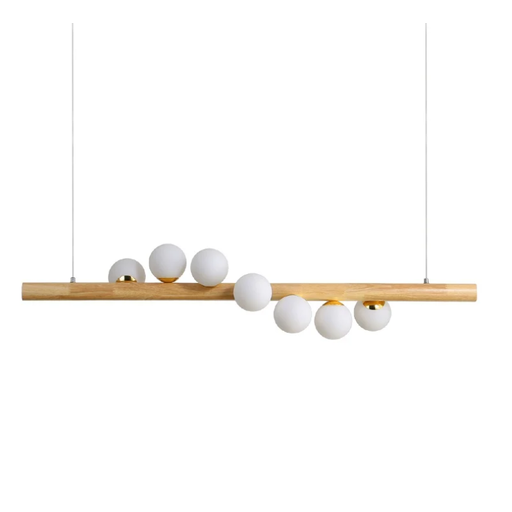
Why this choice suits this profile: This modern pendant light, designed for a kitchen island, combines wood, glass and metal to anchor a dining room or large living space.
The product page clearly states that this light is not dimmable and operates on 220-240 V. That saves you an unwelcome surprise if you were planning a dimmer installation.
Seven 5 W G9 LED bulbs included, a length of 1,200 mm and adjustable cables up to 1,500 mm.
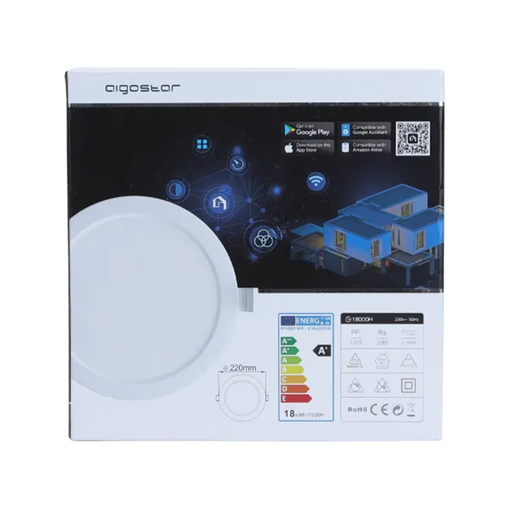
Why this choice suits this profile: This WiFi-connected LED downlight is designed for those who want to control a room’s lighting from a compatible smart home system.
The product page specifies a cut-out of 200 to 210 mm, an outer diameter of 220 mm and a recessed installation. Measure your ceiling carefully before ordering.
18 W, 1,380 lm, adjustable colour temperature from 3,000 K to 6,500 K, 110° beam angle and 230 V / 50 Hz power supply.
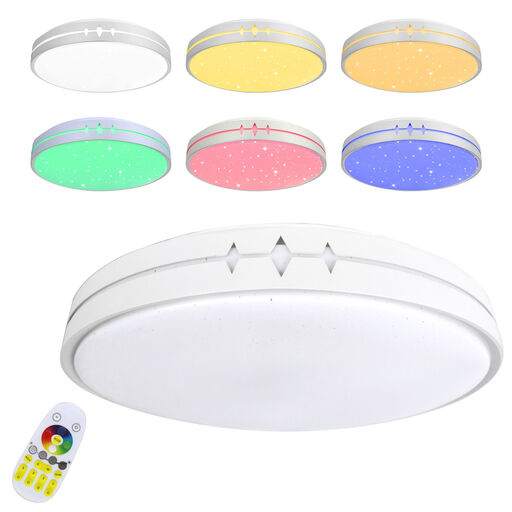
Why this choice suits this profile: With its 50 cm diameter, dimmable function and remote control, this ceiling light is ideal for a room where atmosphere matters as much as general illumination.
The product page mentions a power rating of 60 W, a dimmable function and RGB control. Check the available space and intended use before prioritising the decorative effect.
50 cm star design, RGB LED lighting, dimmable function and remote control as stated in the product description.
We’ve put together a comprehensive, real-time selection of products that meet these exacting criteria, as well as European safety standards.
An LED ceiling light generally provides overall illumination from a single point. Several recessed spots allow you to distribute the light more evenly and highlight specific areas. The right choice depends on the size of the room, the ceiling height and the wiring possibilities.
The cost depends on the wattage of the light, the number of hours it’s used and your electricity tariff. To estimate it, multiply the power in kilowatts by the usage time, then by the price per kilowatt-hour. Bear in mind, though, that a low wattage doesn’t mean a single light will be enough to illuminate the whole room.
The stated lifespan varies depending on the model, ventilation and quality of the power supply. Some product pages mention up to 18,000 hours, like the Aigostar downlight featured here. However, this is a figure provided by the manufacturer and doesn’t guarantee the same duration in every home.