What should you consider before choosing?
Start by considering the space available and whether you want to keep using an airer. Then compare the appliance and cycle specifications that suit your laundry loads.
Heat pump tumble dryer
Consider this if: you regularly dry loads of laundry and have space for a separate appliance.
Bear in mind: you’ll need to allow for the appliance and manage the collected water, as specified for the model.
Washer-dryer
Consider this if: your home only has space for one appliance to wash and dry your laundry.
Bear in mind: the drying load may be smaller than the washing load, and water consumption varies by model.
Dehumidifier and airer
Consider this if: you want to keep using an airer and remove moisture from the room while your laundry dries.
Limitation: your laundry still dries in the room, and the appliance won’t fix inadequate ventilation.
Washing machine with an effective spin cycle
Consider this if: you’re choosing a washing machine and plan to dry your laundry on an airer or in a tumble dryer afterwards.
Limitation: spinning helps shorten drying time, but laundry hung up indoors still releases moisture into the room.
| Priority | What to check | Your needs |
|---|
| Moisture in your laundry |
Check how the tumble dryer collects the water removed from your laundry, and whether a tank or drain will suit your installation. For a dehumidifier, compare the recommended room size, tank capacity and drainage options. |
I dry laundry in a small room and don’t want to rely on an airer alone. The Q-WASH study referenced by ADEME highlights how air-drying laundry indoors adds moisture to the home. |
| Space available |
Measure the space and check the appliance dimensions, connections and installation clearances. For a washer-dryer, compare the washing and drying capacities in kg. |
If I can only install one appliance, will I need to reduce a full washing load before starting the drying cycle? |
| Energy, water and noise |
Compare the energy label information for the model and cycle you’re considering. For a washer-dryer, pay particular attention to the wash-and-dry cycle and condensation technology; Beko says that some of its models use water for this function. |
The appliance will run near an occupied room, so I want to compare its noise and consumption figures on a like-for-like basis. |
| Spin performance |
Check the washing machine’s spin-drying efficiency class and choose a capacity that suits your loads. ADEME recommends choosing spin-drying efficiency class A when you want laundry to dry quickly afterwards. |
I plan to dry laundry indoors and want to reduce the amount of water it retains after washing. |
Which brands offer useful points of comparison?
These examples highlight categories and specifications to consider for individual models; they don’t represent every product range from each brand.
Bosch
A useful reference for comparing heat pump tumble dryers with different capacities.
- The Bosch catalogue lists capacity and, for some models, energy use per cycle.
- Check the capacity, consumption and noise level for each model rather than assuming they’re the same across the brand.
Miele
A useful reference for considering how to install a separate tumble dryer and collect the water it removes.
- Miele explains that, on the relevant appliances, collected moisture can be directed into a tank or a drain.
- Check the dimensions, connections and instructions for the model you’re considering before deciding where to install it.
Beko
A useful reference for comparing washer-dryers when space means you need a single appliance.
- Beko describes differences in condensation technology that may affect water use during drying.
- Compare the washing and drying capacities, as well as the water and energy figures, for the specific model.
Rowenta
A useful reference for considering a dehumidifier to use alongside an airer.
- Rowenta lists a laundry mode, a 3 L tank and continuous drainage as features of its Extrême Dry Compact+.
- These specifications apply to this model and don’t guarantee the same results in every room or resolve ventilation problems.
Appliances to compare on Joybuy
This selection includes washer-dryers for homes with space for just one appliance, heat pump tumble dryers for separate drying, and a dehumidifier to use with an airer. Compare each appliance’s specifications and installation requirements with your room and laundry loads.
 Image unavailable
Samsung WD11DG6B85BEU3, 11 kg / 6 kg washer-dryer
Combines washing and drying in one appliance, with an 11 kg washing capacity and 6 kg drying capacity. If you wash a load larger than 6 kg, you’ll need to reduce it before drying. Check the dimensions and connections required for your space.
View on Joybuy
 Image unavailable
Hotpoint CHD84MWBSEE, 8 kg heat pump tumble dryer
This 8 kg freestanding tumble dryer lets you dry laundry in the drum rather than on an airer. Before choosing where to put it, check its dimensions, how it handles condensate and the cycle’s consumption figures.
View on Joybuy
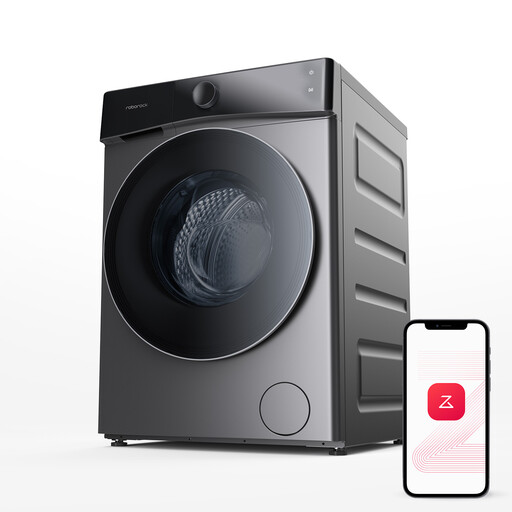 Image unavailable
Grey Roborock Zeo Lite, 10 kg / 6 kg washer-dryer
This washer-dryer suits homes with space for just one appliance, with a stated capacity of 10 kg for washing and 6 kg for drying. Compare these capacities with your usual laundry loads, then check the dimensions and consumption figures for the full cycle.
View on Joybuy
 Image unavailable
Comfee CD08EHP05W-HR, 8 kg heat pump tumble dryer
This 8 kg freestanding tumble dryer is an option if you want to dry a load in the drum. Before installation, check its dimensions, how it handles condensate and the consumption figures for the cycle that suits your needs.
View on Joybuy
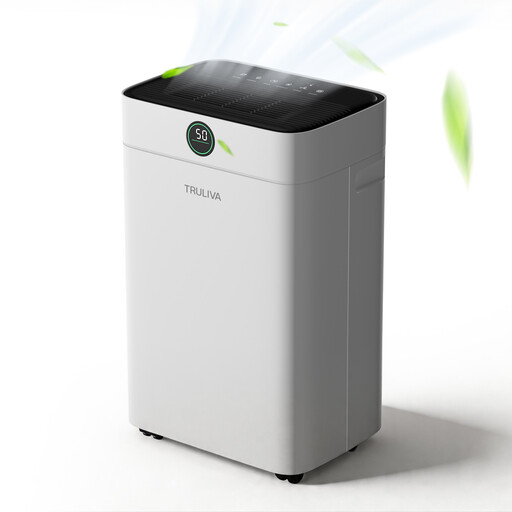 Image unavailable
TRULIVA dehumidifier with laundry mode, 2.8 L tank
Designed to be used alongside an airer, this model has a laundry mode, a 2.8 L tank and a hose for continuous drainage. Its stated capacity of 25 L/day is based on conditions of 90 % relative humidity and 95 °F; it doesn’t predict how much water it will collect in your home. Check the recommended room size and operating noise level. The appliance doesn’t replace ventilation.
View on Joybuy
Frequently asked questions
What should I choose if my home has no vent to the outside?
A heat pump tumble dryer is worth considering if you have space for a separate appliance. Miele says that moisture removed by the relevant appliances is collected in a tank or directed to a drain. Check the instructions for your chosen model, its power supply and installation requirements.
Why check two capacities on a washer-dryer?
Because its drying capacity may be lower than its washing capacity. Compare both figures in kg and check the load limit for a combined programme. You may need to remove some laundry from a wash load before drying it.
Can a dehumidifier replace ventilation in my home?
No. It can remove moisture from the room while your laundry dries on an airer, but it doesn’t replace the general, permanent ventilation required in France under the decree of 24 March 1982 on ventilation in homes. The Q-WASH study referenced by ADEME describes air-drying laundry as a source of indoor moisture.
Which specifications should I compare for everyday use?
For the large appliances covered here, the energy label provides comparable information on energy and water consumption, as well as noise, as ADEME notes. For a washer-dryer, check the wash-and-dry cycle figures. For a dehumidifier, also check the tank capacity and drainage options in light of how often you plan to use it.
What maintenance should I plan for?
Follow the instructions for the model you choose. For a tumble dryer, check the guidance on cleaning the filter and emptying the tank, if fitted. For a dehumidifier, the tank size and whether it has continuous drainage will affect how often you need to empty it.


