What should you check before choosing?
Start with the room where your laundry dries, then weigh up each option against the space available, how you’ll manage the water and the practicalities of day-to-day use.
Airer in a well-ventilated room
Consider this if: you have a large, well-ventilated room or one with mechanical ventilation extraction, as recommended in the study published by ADEME in 2023.
Bear in mind: laundry is exposed to the indoor air as it dries, and this option won’t make up for inadequate ventilation.
Tumble dryer
Consider this if: you’d rather dry your laundry in an appliance than leave it on an airer, and you have a suitable space for one.
Bear in mind: the appliance uses electricity, and you’ll need to manage the condensed water and carry out maintenance as instructed.
Dehumidifier with an airer
Consider this if: you want to keep using an airer and can install a dehumidifier suited to the room.
Bear in mind: your laundry will remain in the room, so you’ll need to manage the collected water and ensure adequate ventilation.
| Priority |
What to check |
What you need |
| Damp and ventilation |
For an airer, look for a large, well-ventilated room or one with mechanical ventilation extraction, in line with the study published by ADEME in 2023. Check that the home’s ventilation is working as it should, whether or not you use an appliance. |
I need to dry laundry indoors without relying on an appliance to make up for persistent excessive damp. |
| Space and installation |
For an appliance, measure its height, width and depth, as well as the route to its intended location. Check the instructions for clearance requirements and installation conditions, and choose a tumble dryer capacity that suits your usual loads. |
My airer takes up space in my living area, so I want to know whether I can actually install an appliance elsewhere. |
| Water management |
Check whether there’s a tank and its capacity, as well as whether continuous drainage is possible. If a hose is included, check this and the connection requirements in the instructions. |
If I dry laundry regularly, emptying the water shouldn’t become an unexpected chore. |
| Noise and electricity |
Compare the stated noise levels for the programmes you’re interested in. For tumble dryers, compare energy consumption figures on the same basis, such as kWh/100 cycles where this information is provided. |
An appliance near my living areas needs to suit the times I plan to use it. |
| Maintenance |
Check which filters, condenser and tank need maintaining for the model you’re considering. Bosch, for example, says that its tumble dryer’s lint filter should be cleaned after every use. |
I want to fit the necessary maintenance into my laundry routine. |
A few leading brands and models
These specifications relate to the models named by their manufacturers, not to their entire ranges.
Bosch
The WQG2450SFR Série 6 is a 9 kg heat pump tumble dryer worth considering if you have a dedicated space for it.
- Bosch lists a depth of 613 mm, a noise level of 64 dB(A), a self-cleaning condenser and a water drainage hose for this model.
- Measure the space and check the installation requirements for the WQG2450SFR. These specifications don’t apply to other Bosch tumble dryers.
Rowenta
The Extrême Dry Compact+ DH5260F0 is a dehumidifier to consider alongside an airer.
- Rowenta states a capacity of 16 L/day, coverage for a room of up to 40 m² or 100 m³, a 3 L tank and a 1 m hose for continuous drainage.
- Compare the size of your room and the stated test conditions with these figures. The collection capacity doesn’t guarantee that the same amount of water will be collected in your home.
Miele
The TEL685WP Steam&9kg lets you compare water management and published specifications for a 9 kg heat pump tumble dryer.
- Miele lists a condensed water tank, an integrated drainage kit, 101 kWh/100 cycles, 62 dB(A) and 184 minutes for the ECO programme.
- The stated cycle time applies to this model’s ECO programme. Also check its depth and the required clearances in the installation instructions.
Whirlpool
The CWD84MWBSFR is an 8 kg heat pump tumble dryer whose dimensions can help you check whether you have a suitable space.
- Whirlpool lists dimensions of 59,8 × 84,6 × 60,7 cm and a noise level of 63 dB for this model.
- These dimensions and noise level don’t apply to the entire range. Also check the clearance requirements for the CWD84MWBSFR.
Appliances to use alongside or instead of an airer
These Joybuy options include two dehumidifiers to use alongside an airer and two tumble dryers for drying laundry in an appliance. The right choice depends first on the room, ventilation and installation requirements.
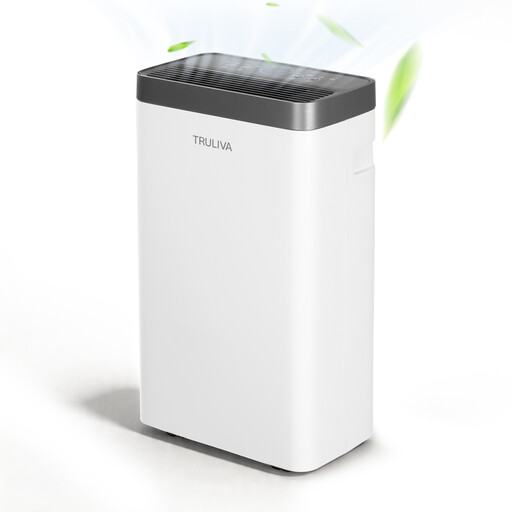 Image unavailable
TRULIVA AP10-2012EE dehumidifier
To use alongside an airer: the product name mentions a laundry mode, a 24-hour timer, automatic defrosting and continuous drainage. Check that the stated coverage of approximately 32 m² suits the room you have in mind. Before buying, check the humidity setting range and installation requirements; this appliance doesn’t replace ventilation.
View on Joybuy
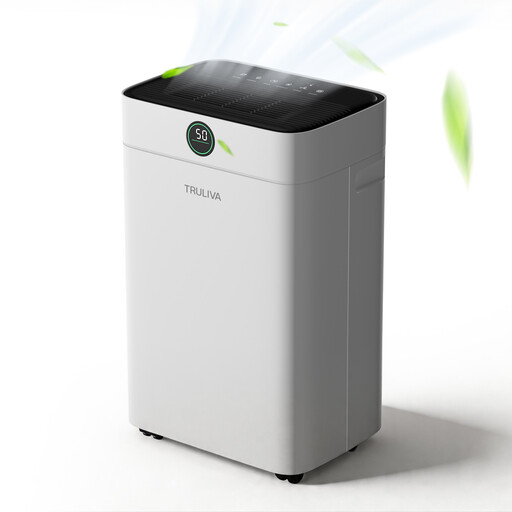 Image unavailable
TRULIVA dehumidifier, 25 L/day, 2,8 L tank
Designed to use alongside an airer, this model features a laundry mode, a 2,8 L tank and a hose for continuous drainage. The 25 L/day figure is a capacity stated under test conditions, not a guaranteed amount for your room. Check that it’s suitable for the space, and plan to empty the tank or connect the hose without neglecting ventilation.
View on Joybuy
 Image unavailable
Hotpoint CHD84MWBSEE, 8 kg heat pump tumble dryer
If you’d rather dry laundry in an appliance than on an airer, this model is described as an 8 kg heat pump tumble dryer with a C energy rating. Before setting aside a space for it, check its dimensions, clearance requirements and water management instructions, including whether a hose is supplied and how to connect it, if applicable.
View on Joybuy
 Image unavailable
Electrolux EDH1018CD GentleCare, 8 kg condenser tumble dryer
This 8 kg tumble dryer means you don’t have to leave laundry hanging in the room; its name mentions the OptiSense system and propane refrigerant. Check the space needed for installation and how to collect or drain the condensed water, following the instructions.
View on Joybuy
Frequently asked questions
Can a dehumidifier replace ventilation or a mechanical ventilation system?
No. A dehumidifier collects moisture, but it doesn’t replace the fresh-air ventilation you need. A study published by ADEME in 2023 recommends drying laundry in a large, well-ventilated room or one with mechanical ventilation extraction.
Do you need to empty the water from a tumble dryer or dehumidifier?
It depends on the model and how it’s installed: water may collect in a tank or drain through a hose if this option is available. Bosch lists a drainage hose for the WQG2450SFR tumble dryer; Rowenta lists a 3 L tank and a 1 m hose for the DH5260F0 dehumidifier. Check the instructions to see whether you can connect it at your chosen location.
What should you measure before buying a tumble dryer?
Measure the height, width and depth of the space, as well as the access route for getting the appliance there. Then check the clearance requirements in the instructions, along with the capacity, stated noise level and water management details for the exact model.
When should you address the property itself rather than buy an appliance?
If excessive damp persists, the ventilation seems inadequate, or you notice leaks or mould, don’t rely on an appliance to fix the underlying cause. ANIL lists inadequate ventilation and excessive damp among the problems that may require action regarding the property. Keep a record of what you observe and contact your landlord, property manager or a professional, depending on your situation.
Can you install a heat pump tumble dryer in a cool room?
Check the operating temperature range in the instructions for the model you’re considering. Electrolux lists a range of 5 °C to 35 °C for the EW7H5125SU; this doesn’t automatically apply to other tumble dryers.


