People who dry their laundry in a flat
If you don’t have any outdoor space, the room an airer takes up, drying time and air circulation all need to factor into your choice.


If you dry your laundry on an airer, start by choosing a spin setting that’s suitable for the fabrics, and keep the air circulating. If you do laundry frequently, a tumble dryer can save you from hanging clothes out to dry, provided it’s suitable for your home. A dehumidifier is an extra measure, not a solution to persistent damp caused, for example, by poor ventilation or water ingress, as Qualitel points out.
If you don’t have any outdoor space, the room an airer takes up, drying time and air circulation all need to factor into your choice.
Before you rule out an airer, check the available space, the clearances specified in the manual and how the model you’re considering handles condensed water.
If condensation keeps coming back or marks appear, look for the cause first. Qualitel lists poor ventilation, water ingress and inadequate insulation among the possible causes of damp in a home.
Consider this: if you’re keeping your airer and the spin programme is suitable for your fabrics.
Bear in mind: you’ll still need space for your laundry and to keep the room’s air circulating.
Consider this: if you do laundry frequently and can install and maintain the model in line with its manual.
Bear in mind: the appliance needs a permanent spot. Programme times and condensate handling vary by model.
Consider this: as a companion to an airer, after checking humidity levels and that air circulation and ventilation are working properly.
Limitation: it doesn’t replace air circulation or finding the cause of persistent damp.
| Factor | What to check | Your needs |
|---|---|---|
| Spin cycle and fabrics | Check the laundry care labels and your washing machine’s programmes. ADEME says a fast spin makes it easier to dry laundry indoors afterwards, but doesn’t recommend a setting that suits all fabrics. | I’m keeping my airer, but want to avoid putting laundry on it wetter than necessary. |
| Space and installation | Compare the tumble dryer’s dimensions with the route into your home and the actual space where it will go. Check the clearances, airflow and power supply requirements in the model’s manual. | There needs to be enough room to install and use the appliance without it getting in the way at home. |
| Condensed water | Check whether the model has a tank to empty or can be connected to a drain. Electrolux describes a drainage kit for condenser tumble dryers; check that it’s compatible with the specific appliance. | I’d like to know in advance whether I’ll need to empty a tank or whether a drain connection is possible. |
| Programmes and use | For each tumble dryer you’re considering, compare the capacity, energy label, programme times, stated noise level and maintenance requirements. Check that it has programmes suited to your fabrics. | I do laundry frequently, so I need to be happy with the cycle times and maintenance involved for the model I choose. |
| Damp in your home | Measure the humidity in the room and see whether condensation persists outside drying times. Qualitel notes that ventilation, water ingress or insulation could also be contributing factors. Keep rooms aired and ventilation running. | If marks or recurring condensation appear, I want to understand what’s causing them before adding another appliance. |
According to Qualitel, poor ventilation, water ingress or inadequate insulation can contribute to damp in a home. An appliance won’t fix these causes.
Measure the humidity, look for signs that persist and have the cause investigated before relying on a dehumidifier.
An appliance that fits in the room may still not have the required clearances, or a suitable way to handle water in your installation.
Measure the access route and the space, then check the model’s manual for clearances and drainage options.
Programme times, energy labels and fabric-care features vary between models. One feature on its own won’t tell you what everyday use will be like.
Compare the specifications for the exact models, including capacity, programmes, stated noise level and maintenance requirements.
A tumble dryer or dehumidifier doesn’t replace airing and ventilation in your home. ADEME recommends opening the windows to let in fresh air.
Keep up suitable airing habits and don’t block ventilation outlets. If you’re concerned about how they’re working, get this checked separately.
These brand examples can help you compare features on specific models, but you should still check the specifications and manual for the appliance you choose.
The range includes heat pump tumble dryers. The WQG13500FR is an example of the features to compare if you also dry smaller loads.
The GentleCare YW6HI841DC heat pump tumble dryer is worth considering if programmes designed to care for fabrics are important to you.
Beko offers a range of heat pump tumble dryers, with capacities and features that vary by model.
These options include tumble dryers for homes where an appliance can be installed, and dehumidifiers to consider as an extra measure alongside an airer. Your choice depends first on the space available, how often you do laundry and the damp situation in your home.
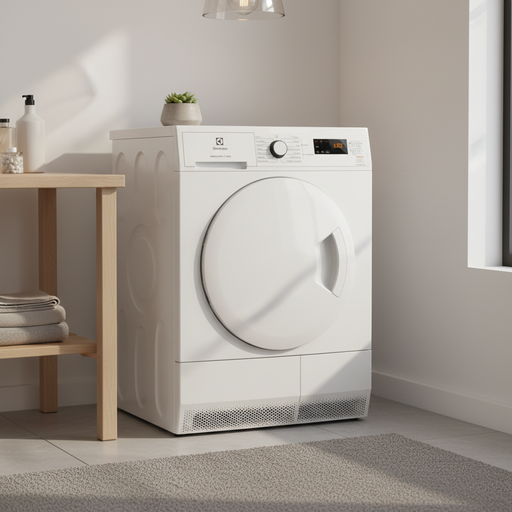 Image unavailable
An option for drying regular loads without an airer, if your home is suitable for installation. The product name lists an 8 kg capacity, the OptiSense system and a propane refrigerant. Check the manual for the required clearances and how to collect or drain the water.
 Image unavailable
Worth considering for frequent laundry loads if you have a suitable space. The product name lists an 8 kg capacity and a C energy rating. Compare programme times, then check the dimensions, clearances and water handling details in the manual.
 Image unavailable
Consider it as an extra measure alongside an airer, not as a replacement for a tumble dryer or ventilation. The product name lists a 2,8 L tank and a continuous drainage hose. The stated capacity of 25 L/day is based on 90 % relative humidity and 95 °F; it doesn’t predict the results in your room. The manual specifies a clearance of 10 inches around the appliance.
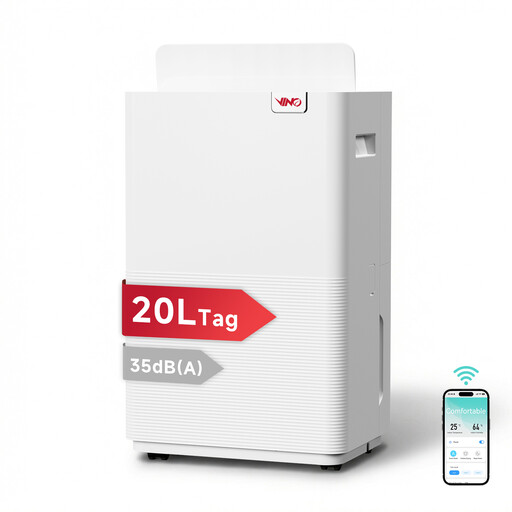 Image unavailable
Consider it as an extra measure when laundry is drying on an airer in a room where humidity is monitored. The product name lists a 2,5 L tank and Auto, Dry and Sleep modes. The 20 L/day capacity is stated at 30 °C and 80 % relative humidity. Check the dimensions and the noise level for this model before choosing where to put it.
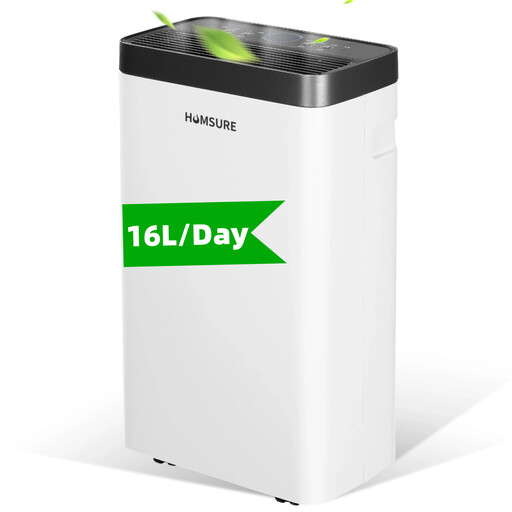 Image unavailable
An extra option for a room where laundry is drying on an airer, once you’ve checked what’s causing any persistent damp. The product name lists a 24 h timer and a 1,4 L tank. The 16 L/day capacity is stated at 95 °F and 90 % relative humidity; it may not reflect performance in your home. Check the modes available and the installation instructions for the exact model.
No, it shouldn’t be the only response to persistent damp. Qualitel lists poor ventilation, water ingress and inadequate insulation among the possible causes of damp. If condensation keeps coming back or marks appear, look for the cause.
Yes. Choosing an appliance doesn’t replace circulating the air. ADEME recommends opening the windows wide for 5 to 10 minutes each day. Keep your home’s ventilation systems running too.
Not necessarily: water handling depends on the model and may involve a tank that needs emptying. Electrolux also offers a kit that lets water from some condenser tumble dryers drain into a suitable outlet. Check that the kit is compatible and consult the manual for the appliance you’re considering.