If you often dry laundry in a poorly ventilated home, check the ventilation first: neither a drying appliance nor a dehumidifier can replace a properly working ventilation system. A separate tumble dryer is worth considering if you have space; a washer-dryer is better suited to homes with room for just one appliance, but check its drying capacity separately. A clothes airer, with or without a dehumidifier, should be assessed according to the room and its ventilation.
Who are these options for?
Households that often dry laundry indoors
When ventilation is limited, how long damp laundry remains in the room is an important factor in your choice. ADEME notes that air-drying releases a lot of moisture into the indoor air; using an appliance doesn’t remove the need to check your home’s ventilation.
People with space for just one machine
A washer-dryer combines both functions, but its drying capacity may be lower than its washing capacity. UFC-Que Choisir highlights this difference: compare both figures before planning a wash-and-dry cycle.
Clothes-airer users considering a dehumidifier
You can consider a dehumidifier as an addition to air-drying, taking into account the size of the room, how the water is emptied and where you place the clothes airer. It is not a ventilation system.
What should you check before choosing?
Start by considering ventilation and available space, then compare the amount of laundry each option can actually dry and the practicalities of using it.
| Priority | What to check | Consider your needs |
|---|
| Ventilation and humidity |
Check that vents and the ventilation system are working properly. If you use a clothes airer, consider the room’s size and ventilation; a dehumidifier doesn’t bring in fresh air. |
If I regularly dry laundry indoors, I don’t want to rely on an appliance alone to manage humidity. ADEME describes air-drying as releasing a significant amount of moisture and highlights the role of ventilation in removing it. |
| Space and load size |
Measure the space, including clearance for the door to open. For a washer-dryer, compare the washing and drying capacities separately. |
I only have space for one machine, or I need to dry full loads without removing laundry between the two stages. UFC-Que Choisir notes that a washer-dryer’s drying capacity is lower than its washing capacity. |
| Cycle and energy use |
Compare the figures for the cycle you’ll use: wash-and-dry rather than washing alone for a washer-dryer. Check the energy and water consumption and cycle duration listed for the exact model. |
I want to know what my usual programme involves, rather than relying solely on an energy rating shown for washing. ADEME explains how to read the reference consumption figures on the energy label; the model’s entry in EPREL can provide further information. |
| Installation and drainage |
Check the manual for connection requirements and clearance. A vented tumble dryer needs a suitable outlet to the outside; for a condenser model, check how the collected water is handled. |
I want to install the appliance in the space available without assuming that an air outlet or water drain is already usable. UFC-Que Choisir explains that a vented tumble dryer needs an opening to the outside or access to an air duct. |
| Noise and maintenance |
Compare the stated noise level in dB(A), access to the filters and maintenance instructions. For a dehumidifier, check the tank and whether continuous drainage is possible. |
If the appliance will run near a living area, its noise and how often you’ll need to empty it matter just as much as the floor space it takes up. |
What pitfalls should you avoid?
-
Choosing an appliance without checking the ventilation
ADEME notes that air-drying releases a lot of moisture and that mechanical ventilation removes moisture and pollutants from the home. A dehumidifier does not provide this air exchange.
Before buying, locate the extractor vents and check that they work. If damp is a persistent problem in your home, don’t treat an appliance as a diagnosis or a solution to the building itself.
-
Relying on the washing capacity alone
With a washer-dryer, the drying capacity may mean you need to reduce the load after washing before starting the drying cycle. UFC-Que Choisir highlights this trade-off.
Compare both capacities for the exact model, then check the figures for its wash-and-dry cycle rather than washing alone.
-
Planning for a vented tumble dryer without a suitable outlet
According to UFC-Que Choisir, this type of appliance needs an opening to the outside or access to an air duct.
If the space doesn’t allow for this, consider condenser models and their installation requirements, particularly how to manage the condensed water.
-
Assuming a dehumidification capacity guarantees a drying time
A figure given in litres per day describes the appliance’s capacity under specific conditions; it doesn’t guarantee the same results with every clothes airer or in every room.
Check the conditions attached to the stated figure, the recommended room size, the noise level and how to empty or drain the water. Treat claims about faster drying as manufacturer statements.
A guide to selected ranges
Bosch
The range includes separate heat-pump tumble dryers, worth considering if you have room for a second appliance. Bosch’s product details for the WQG2450SFR list a maximum capacity of 9 kg and dimensions of 842 × 598 × 613 mm.
- The stated dimensions and capacity of the WQG2450SFR give you specific details to compare with your available space and household laundry loads.
- Check the model’s manual for how to handle condensed water and the clearance needed for installation.
LG
LG’s range includes the F964R35WR washer-dryer, listed by LG France with a washing capacity of 9 kg and a drying capacity of 6 kg.
- The stated washing and drying capacities help you check whether your planned loads are suitable for an appliance that combines both functions.
- For this model, as with any washer-dryer, compare the wash-and-dry cycle and make sure your load is within the drying capacity.
Rowenta
The Extrême Dry Compact+ DH5260F0 dehumidifier is an example of an option to use alongside a clothes airer, not as a replacement for ventilation.
- Rowenta states that this model can remove up to 16 L/day and is suitable for spaces of up to 40 m² or 100 m³. Compare these figures with the conditions specified by the brand and the size of your room.
- The stated capacity doesn’t guarantee the same results in your home or a specific drying time.
Appliances available on Joybuy
These options include washer-dryers for homes with space for one appliance, plus a dehumidifier to consider alongside a clothes airer. For each one, check the installation requirements and your home’s ventilation.
 Image unavailable
Samsung WD11DG6B85BEU3, 11 kg washing, 6 kg drying
This washer-dryer combines both functions in one appliance. For a continuous wash-and-dry cycle, keep the load within the 6 kg drying capacity. Check the dimensions, connections and wash-and-dry cycle figures for the exact model.
View on Joybuy
 Image unavailable
Samsung WD10HG6U34BEU3, 10 kg washing, 6 kg drying
Designed for homes with space for one appliance, this model combines washing and drying, with a stated drying capacity of 6 kg compared with 10 kg for washing. Check the available space and connections, as well as the duration and energy and water consumption of the wash-and-dry cycle.
View on Joybuy
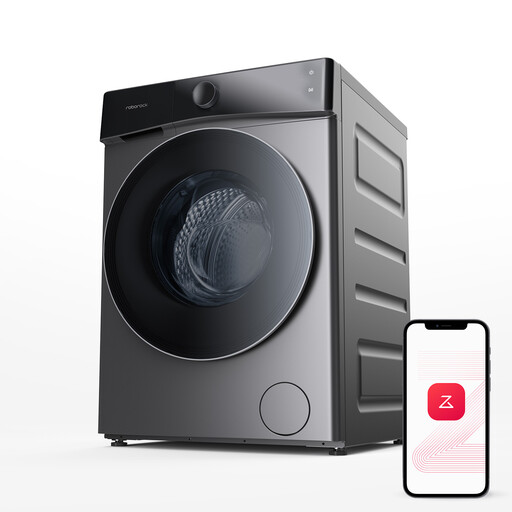 Image unavailable
Roborock Zeo Lite Gray, 10 kg washing, 6 kg drying
This all-in-one model is worth considering if you have space for just one appliance; its stated drying capacity of 6 kg is lower than its 10 kg washing capacity. Its name lists 27 wash programmes, automatic dosing and an automatic filter-cleaning system. Check the dimensions, connections and figures for the cycle you plan to use.
View on Joybuy
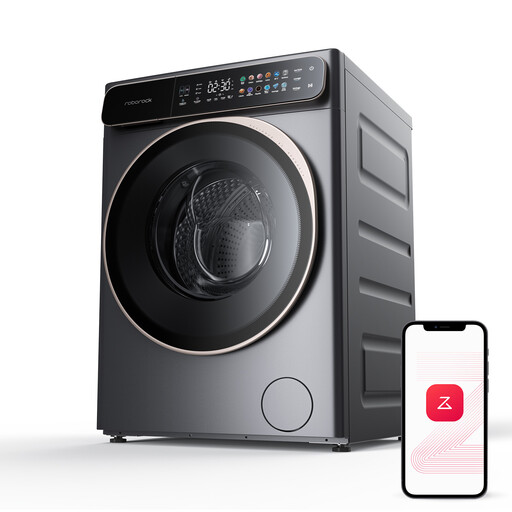 Image unavailable
Roborock Zeo One Gray washer-dryer
This washer-dryer is another option for combining both functions in one appliance. Before choosing it for regular laundry, confirm the washing and drying capacities for the exact variant, along with its dimensions, connections and cycle figures.
View on Joybuy
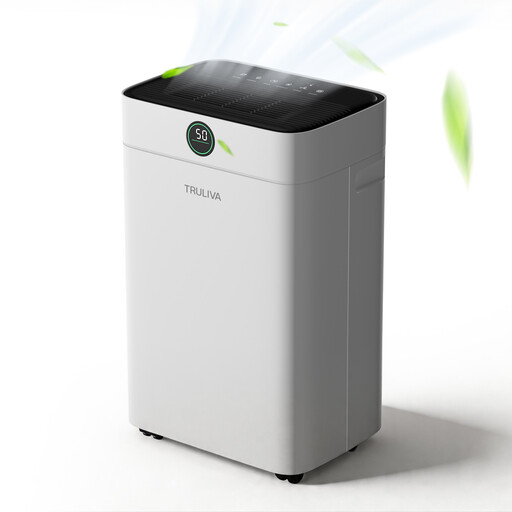 Image unavailable
TRULIVA 25 L/day, 2.8 L tank and drainage hose
The laundry mode on this dehumidifier is intended to be used alongside a clothes airer, not as a replacement for ventilation. Its stated capacity of up to 25 L/day is based on conditions of 90 % relative humidity and 95 °F. Check whether it’s suitable for your room, how noisy it is and how easy it is to access the 2.8 L tank or continuous drainage.
View on Joybuy
Frequently asked questions
Can you install a vented tumble dryer without an outlet to the outside?
Not without suitable ventilation: UFC-Que Choisir says you need an opening to the outside or access to an air duct. If there isn’t one where you plan to install it, consider condenser tumble dryers and check their installation instructions.
Does a dehumidifier replace the ventilation in your home?
No. It can remove water from the air in a room, but it doesn’t refresh the air like a properly working ventilation system. ADEME notes that mechanical ventilation continuously removes moisture and pollutants, so check that your system is working even if you use a dehumidifier.
Why check a washer-dryer’s drying capacity separately?
Because these appliances can dry less laundry than they can wash, as UFC-Que Choisir points out. To run both stages consecutively without removing any laundry, keep the load within the drying capacity of your chosen model.
Which figures should you compare for a wash-and-dry cycle?
Compare the energy and water consumption, duration and capacity for the wash-and-dry cycle of the exact model, rather than looking only at the washing figures. ADEME explains how to read the reference consumption figures on the energy label; the European Commission’s EPREL database provides access to the declared information for relevant models in the European Union.


