If you have room for an airer and time to let your laundry dry, start by comparing washing machines’ spin efficiency. A washer-dryer saves you from needing a second appliance, provided its drying capacity suits your loads. For frequent, large loads, a separate tumble dryer offers dedicated capacity but needs space of its own. According to UFC-Que Choisir, a washer-dryer can dry less laundry than it can wash; a dehumidifier can help when drying clothes in a room that gets damp from time to time, but it won’t fix poor ventilation or water ingress.
Who are these solutions for?
People living in a studio or small flat
If a second appliance would get in the way or won’t fit in the room, compare the footprint of a washer-dryer with the space needed for an airer. With a washer-dryer, also check how much laundry you’ll be able to dry after washing.
Households with frequent or large loads of laundry
If you regularly dry large loads and can install a dedicated appliance, consider its drying capacity, dimensions and stated noise level together.
Households affected by occasional damp
If the room gets more humid when you dry laundry in it, an additional appliance may be worth considering. However, recurring condensation or damp patches mean you should check the ventilation and look into possible causes in your home, as ADEME and Qualitel explain.
What factors set these solutions apart?
In a small home, first work out what’s most likely to limit your choice: the space available, how much laundry you need to dry, or damp during drying.
| Your priority |
What to check |
What matters to you? |
| Space |
Measure the space available, including the depth with the door open. For a washer-dryer, compare the washing and drying capacities separately. |
When I can’t fit two appliances, I want to dry moderate loads without blocking the way; around 42% of consumers would make saving space their top priority. |
| Frequent loads |
Compare the drying capacity with your usual loads, then check the dimensions and stated noise level of any separate appliance you’re considering. |
When laundry piles up, I want to dry large loads regularly, even if that means making space for a second appliance; this capacity would be a top priority for around 33% of consumers. |
| Room humidity |
Check the airflow and ventilation. For an additional dehumidifier, consider whether it’s suitable for the room, as well as its tank capacity and noise level. |
When drying laundry makes my room damp from time to time, I want to manage the humidity without overlooking ventilation; around 25% of consumers would put this need first. |
Mistakes to avoid before you buy
-
Confusing washing capacity with drying capacity
A washer-dryer won’t necessarily dry the whole load it has just washed. For example, LG lists a washing capacity of 8.5 kg and a drying capacity of 5 kg for the F852SV52IRS.
Choose a drying capacity based on the loads you actually want to dry in the machine, not just its washing capacity.
If a load is too large to dry at once, you may need to split it across several cycles.
-
Measuring only the tumble dryer’s width
The depth and the space needed in front of the appliance can determine whether it will fit. Bosch lists dimensions of 842 × 598 × 613 mm for its WQG24502FR tumble dryer.
Measure the alcove, access routes and clearance needed to open and maintain the model you’re considering, and check its installation instructions.
-
Relying on a dehumidifier to fix persistent damp
According to ADEME, ventilation removes moisture from the home. Qualitel lists poor ventilation and water ingress among the possible causes of damp. A portable appliance won’t address these underlying issues.
If condensation keeps returning or you notice damp patches or smells, check the ventilation and look for the cause before treating a dehumidifier as an additional measure.
-
Comparing a wash-only cycle with a full wash-and-dry cycle
Wash-only information doesn’t tell you everything about using a washer-dryer when you run both functions one after the other.
For each model you’re considering, compare the capacities, cycle duration and energy use for the cycle you’ll actually use.
Brands to consider, model by model
LG
The range includes shallow washer-dryers and separate heat-pump tumble dryers. Compare models based on the space available and the load you need to dry.
- LG lists a depth of 47.5 cm, a washing capacity of 8.5 kg and a drying capacity of 5 kg for the F852SV52IRS.
- The depth and capacities of this example don’t apply to other LG models; a full wash load may be too large to dry all at once.
Bosch
Its separate heat-pump tumble dryers are worth considering if you have room for a dedicated appliance in your home.
- Bosch lists a capacity of 8 kg and dimensions of 842 × 598 × 613 mm for the WQG24502FR.
- The stated noise level of 61 dB(A) and dimensions apply to this specific model; check the space available and the specifications of the model you choose.
Samsung
The brand offers washing machines and washer-dryers. Check the depth and both capacities for each individual model.
- Samsung lists the WD70T554DBE as a washer-dryer with a washing capacity of 7 kg and a drying capacity of 4 kg.
- Samsung’s guide says that depth can vary with capacity, so you can’t work out how much space you need from the stated load capacity alone.
Joybuy appliances for indoor laundry drying
These appliances suit three different needs: drying laundry in a separate tumble dryer, combining washing and drying in one machine, or managing occasional room humidity with an additional dehumidifier.
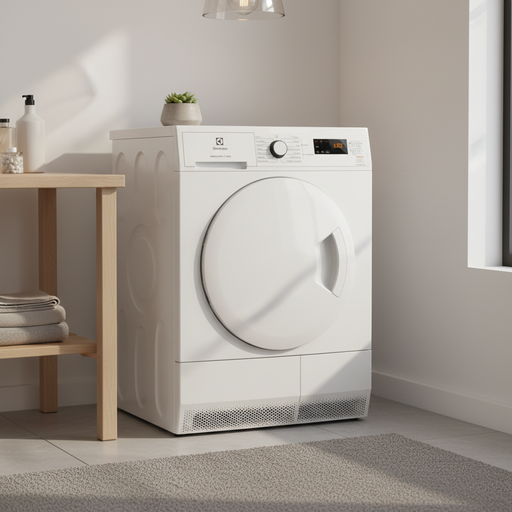 Image unavailable
Electrolux EDH1018CD GentleCare, 8 kg tumble dryer
This condenser tumble dryer is suited to households with space for a separate appliance and loads of up to 8 kg. Check the installation dimensions and required clearances before deciding where to put it.
View on Joybuy
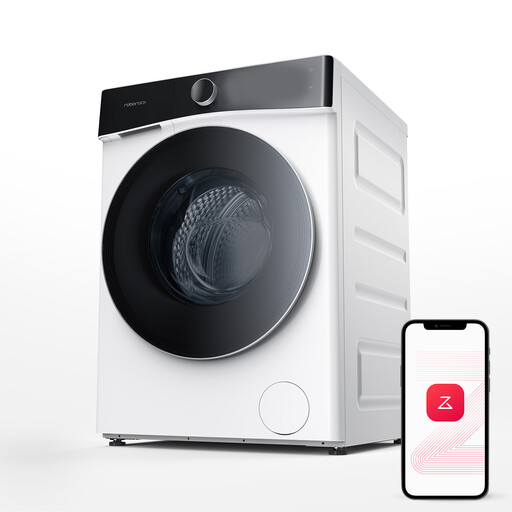 Image unavailable
Roborock Zeo Lite Zeo-Cycle, 10/6 kg washer-dryer
To avoid needing a second appliance, this washer-dryer offers a washing capacity of 10 kg and a drying capacity of 6 kg. You’ll need to reduce a full wash load before drying it. Also check the dimensions and the wash-and-dry cycle information to make sure it suits your needs.
View on Joybuy
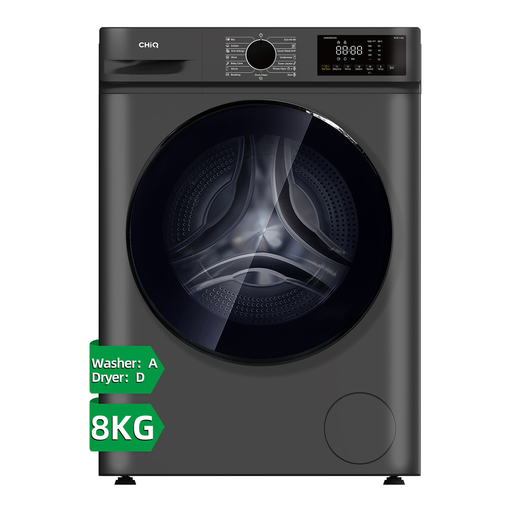 Image unavailable
CHiQ JW85882HG, 8/5 kg washer-dryer
This washer-dryer combines washing and drying in one machine, with a stated washing capacity of 8 kg and a drying capacity of 5 kg. If it needs to fit into an alcove, confirm the exact measurements before buying: the dimensions provided for this model don’t match.
View on Joybuy
 Image unavailable
Hotpoint CHD84MWBSEE, 8 kg heat-pump tumble dryer
This separate 8 kg tumble dryer may suit regular loads if you have a dedicated space for it. Measure the space and check the required clearances, programme times and energy use for the model you choose.
View on Joybuy
 Image unavailable
TRULIVA 25 L/day, dehumidifier with 2.8 L tank
With its laundry mode, this appliance can help when humidity rises occasionally while you dry clothes indoors. Its stated capacity of 25 L/day is based on 95 °F and 90 % relative humidity, so don’t expect the same result in your room. It won’t replace proper ventilation or finding the cause of persistent damp.
View on Joybuy
Frequently asked questions
Can a washer-dryer dry all the laundry it has just washed?
Not always. According to UFC-Que Choisir, a washer-dryer’s drying capacity is lower than its washing capacity. Check both capacities for the specific model. For example, LG lists a washing capacity of 8.5 kg and a drying capacity of 5 kg for the F852SV52IRS.
Do you need a vent to the outside to install a tumble dryer?
A condenser tumble dryer can be installed without a vent to the outside, according to UFC-Que Choisir. Even so, check the instructions for your chosen model, the space it needs and how it collects or drains water.
Is a dehumidifier enough if condensation keeps coming back?
No. It can help as an additional measure, but it won’t fix poor ventilation or water ingress. ADEME highlights the role of ventilation in removing moisture, while Qualitel describes several possible causes of persistent damp. Look for the cause if the signs keep returning.
What should you compare when choosing a washer-dryer?
First compare the drying capacity with your loads, then check the dimensions to make sure it will fit. To see how it will work for you, read the information for wash-only and wash-and-dry cycles separately, including their duration and energy use.


