Households that do laundry frequently
If you want to free up the space taken by your clothes airer regularly, consider the drum capacity, programme duration and the space available for installing a tumble dryer.


If you regularly dry full loads and have a suitable space, start by comparing heat pump tumble dryers. UFC-Que Choisir states that condenser tumble dryers, including heat pump models, can be installed without an external vent. If you want to keep using your clothes airer, a dehumidifier collects some of the moisture in the air, while a fan circulates the air without collecting that moisture. In either case, ADEME recommends a well-ventilated room or one with suitable mechanical extraction. Also check the space required, how water is managed and what maintenance is needed.
If you want to free up the space taken by your clothes airer regularly, consider the drum capacity, programme duration and the space available for installing a tumble dryer.
If you want to keep using your airer while managing the moisture released by your laundry, check the room’s ventilation and whether you can collect or drain away the water.
If the appliance needs to go in a living room or a small room, compare its footprint and noise level, and check that the space is suitable for drying laundry.
Consider this if: you regularly dry full loads and have room for a separate appliance that does not need an external vent.
Bear in mind: you’ll need to collect the water and maintain the filters. UFC-Que Choisir states that cycles can be longer than those of standard condenser models.
Worth considering: if you’re comparing a model that’s already available or an older model without a heat pump.
Compare: UFC-Que Choisir states that these models generally have shorter cycles, but use more energy than heat pump models. Check the energy label for the specific model.
Consider this if: you want to keep using your clothes airer and collect some of the moisture in the air.
Bear in mind: you’ll need space for both the appliance and the airer, as well as a way to empty the tank or drain away the water. The stated extraction rate depends on the ambient conditions.
Consider this if: your priority is to circulate air around your laundry in a well-ventilated room or one with suitable extraction.
Keep in mind: a fan does not collect water from your laundry. Air circulation is no substitute for proper ventilation.
For drying laundry on an airer, ADEME recommends using a large, well-ventilated room or one with a mechanical ventilation extraction vent. Your choice also depends on what you want to prioritise: drying loads in a drum, keeping your clothes airer or circulating the air.
| What matters | What to check | Who it matters most to |
|---|---|---|
| Drying full loads regularly | Capacity suited to your loads, programme duration and kWh/100 cycles on a like-for-like basis; dimensions and water management. | If I do laundry frequently, I want to free up the space taken by my clothes airer without choosing a capacity that doesn’t suit my needs. Around 36% of consumers prioritise regularly drying full loads. |
| Managing moisture from a clothes airer | The conditions used to measure the stated L/day, tank capacity and option for continuous drainage; room ventilation. | If I keep using my clothes airer, I want to take account of the moisture it produces and know how the collected water will be drained away. Around 28% of consumers put moisture management first. |
| Fitting the appliance into a small room | Dimensions and clearances specified in the manual, space for the clothes airer and stated noise level in dB(A). | When space is limited, I want to avoid an appliance or clothes airer getting in the way of using the room. Around 22% of consumers prioritise the appliance’s footprint and noise level. |
| Comparing energy use and maintenance | For a tumble dryer, check the energy label and kWh/100 cycles. Also compare programme duration, access to the filters and maintenance instructions. Since 1 July 2025, the European Commission states that an A to G scale applies to tumble dryers covered by the rules and sold in the EU. | If I’m comparing running costs and regular maintenance tasks, I want to look at energy use and upkeep for the specific model. Around 14% of consumers put these criteria first. |
A heat pump tumble dryer also condenses water. These terms therefore do not describe two mutually exclusive technologies.
Check the exact technology used by each model, then compare figures for the same type of programme.
For the Rowenta DH5260F0, Rowenta states a maximum extraction rate of 16 L per day and a 3 L tank: these are two different figures. Meaco says that the extraction rate of a compressor dehumidifier falls as the temperature and relative humidity decrease.
Compare the measurement conditions, stated extraction rate, tank capacity and option for continuous drainage separately.
Without continuous drainage, the tank on this 3 L model needs to be emptied.
A fan circulates air, but does not collect the moisture released by your laundry. ADEME recommends drying laundry in a well-ventilated room or one with suitable extraction.
Before choosing a fan, check where you can hang your laundry and how the room will be ventilated.
The GentleCare 600 EW6HI5829SB is an example of an 8 kg heat pump tumble dryer.
The WQG245A0FR is an example of a 9 kg heat pump tumble dryer. Compare it against your needs based on capacity and available space.
The brand offers different models for dehumidifying the air or circulating air around laundry on a clothes airer.
Meaco presents the Arete One range as a dehumidifying option for flats and small rooms.
This selection includes heat pump tumble dryers for drying loads in a drum, dehumidifiers to use with a clothes airer, and a fan for circulating air. Each option suits different needs.
 Image unavailable
Worth considering for drying loads in a drum if you have space for a separate appliance that does not need an external vent.
Heat pump; 8 kg capacity; white; C rating.
Allow space for the appliance. Direct drainage requires access to a water outlet if you use this option.
 Image unavailable
Worth considering if the 10 kg capacity suits your loads and you have a suitable space for a tumble dryer.
Heat pump; 10 kg capacity; D rating.
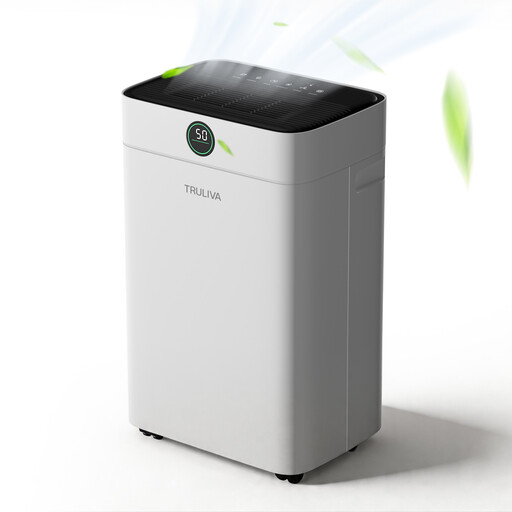 Image unavailable
Worth considering if you want to keep using your clothes airer and collect some of the moisture in the room.
Stated extraction rate of up to 25 L/day; 2.8 L tank; continuous drainage hose listed in the product name.
Allow at least 10 inches of clearance around the appliance. The tank needs to be emptied if you are not using continuous drainage.
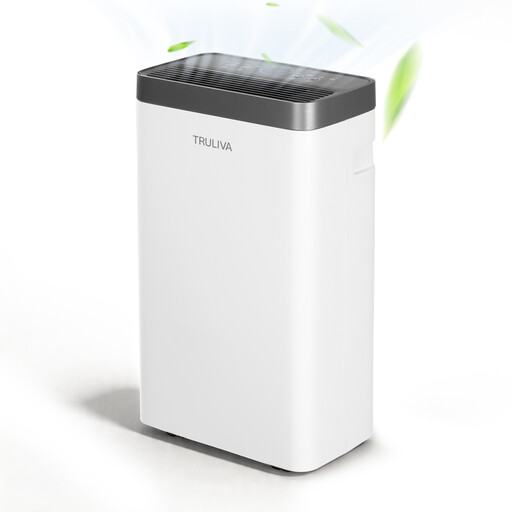 Image unavailable
Worth considering if you want to keep using your clothes airer and are looking for a dehumidifier for your home.
The description mentions a laundry drying function, a 24-hour timer, automatic defrost and continuous drainage.
Allow at least 10 inches of clearance around the appliance. The 1.35 L tank needs to be emptied if you are not using continuous drainage.
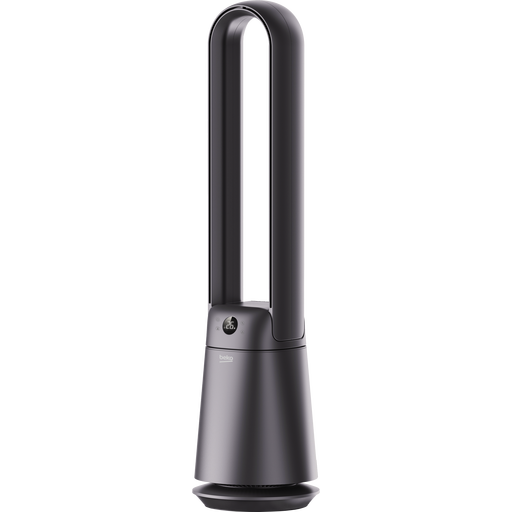 Image unavailable
Worth considering if your priority is to circulate air around your clothes airer in a properly ventilated room.
Tower fan; stated power: 37 W.
A fan does not collect moisture released by your laundry and is no substitute for ventilating the room.
The extraction rate in L/day refers to the amount collected under specific conditions over a given period, while the tank capacity is the volume it can hold before it needs to be emptied. Meaco says that the extraction rate of a compressor model falls as the temperature and relative humidity decrease, so compare the measurement conditions.
Follow the manual for the model you have bought, as maintenance tasks vary from one model to another. For applicable appliances, Electrolux recommends cleaning the fluff filter after every cycle and provides instructions for maintaining the condenser.
Don’t treat them as a general replacement for ventilation in your home. ADEME recommends drying laundry in a large, well-ventilated room or one fitted with mechanical ventilation extraction, and advises against blocking air inlets or outlets.
The legal guarantee of conformity applies to new or second-hand goods sold by a business to a consumer. The French Ministry of the Economy states that you have two years to claim under this guarantee, which is separate from any commercial warranty.
For tumble dryers covered by the rules and sold in the European Union, the scale shown in shops and online has run from A to G since 1 July 2025, according to the European Commission. Check the label and product information for the specific model rather than relying on the old A+++ to D scale.