What should you check before choosing?
Check your ventilation
Consider this first: if damp persists after drying, the air does not seem to be extracted properly, or damp marks keep returning.
What to bear in mind: the work required depends on your existing system and home. A portable appliance will not fix a ventilation fault.
Use a dehumidifier
Consider this: as extra help if measured humidity rises mainly when laundry is drying indoors, after checking the ventilation.
Limitation: it removes water from the air, but will not identify or address the cause of damp marks on walls.
Switch to a tumble dryer
Consider this: if you want to hang less laundry indoors and have a suitable space for a dryer.
Trade-off: mechanical drying uses electricity, and you will need to follow the model’s installation and maintenance requirements.
Once you know when the humidity appears, consider the room and your drying habits before comparing appliance specifications.
| Priority | What to check | Based on your needs |
|---|
| Measuring humidity |
Use a hygrometer to check relative humidity before, during and after drying. Qualitel’s general guide for homes is between 40 % and 60 %, though this should be considered in the context of the room and temperature. |
Does condensation only appear while my laundry is drying, or does the humidity stay high afterwards? |
| Ventilation and the source of damp |
Check the air inlets and outlets, and make sure the mechanical ventilation system (VMC) is working if your home has one. If damp marks persist, have their cause investigated, as France Rénov’ recommends. |
Damp marks keep returning even when I have not done laundry. I want to understand the cause before adding an appliance. |
| Dehumidifier |
Compare the room’s actual volume with the stated capacity in L/jour and check the conditions under which it was measured. Also check the tank, continuous drainage option and noise level for your intended use. |
I dry laundry in a particular room and want extra help suited to its size, without stopping the ventilation. |
| Mechanical drying |
Match the tumble dryer’s capacity to your usual loads. Check where it can go, its maintenance instructions and the model’s energy label. Que Choisir compares tumble dryer technologies by their electricity use. |
I do laundry frequently and would rather use an indoor clothes airer less, provided I can install and maintain the appliance. |
A few brands to know
These examples show different types of equipment. The specifications mentioned apply to the models or ranges named, not to every product from each brand.
Rowenta
Rowenta’s range includes the Extrême Dry Compact+, a dehumidifier the brand presents for household damp and drying laundry.
- Rowenta states that this model has a capacity of 16 L/jour and covers up to 40 m² or 100 m³.
- These stated figures are not enough to predict how it will perform in every room or to size other models in the range.
Bosch
Bosch’s French range includes heat pump tumble dryers, an option to consider if you want to reduce how much laundry you hang indoors.
- This technology lets you dry clothes mechanically without an air outlet to the outside, according to Que Choisir’s tumble dryer guide.
- You will still need to check the capacity, energy use and installation requirements of the model you choose.
Atlantic
Atlantic’s range includes the Hygrocosy single-flow mechanical ventilation system for homes.
- Atlantic’s product information describes airflow that adjusts according to humidity.
- Choosing a ventilation system depends on your home’s existing layout and installation. Damp alone is not enough to determine which model you should install.
Joybuy options for drying laundry
This selection includes dehumidifiers to help when drying laundry indoors, plus a heat pump tumble dryer to reduce the need to hang clothes inside. Before choosing an appliance, check the ventilation and investigate the cause of any persistent damp.
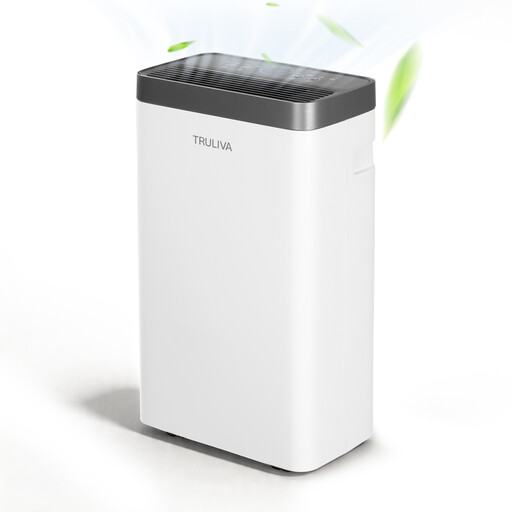 Image unavailable
TRULIVA AP10-2012EE dehumidifier with laundry mode
If humidity rises when you dry laundry indoors, this model offers a laundry mode, a 24 h timer and continuous drainage. It is stated to cover around 32 m². Compare this with your room’s actual volume and check the capacity conditions before choosing.
View on Joybuy
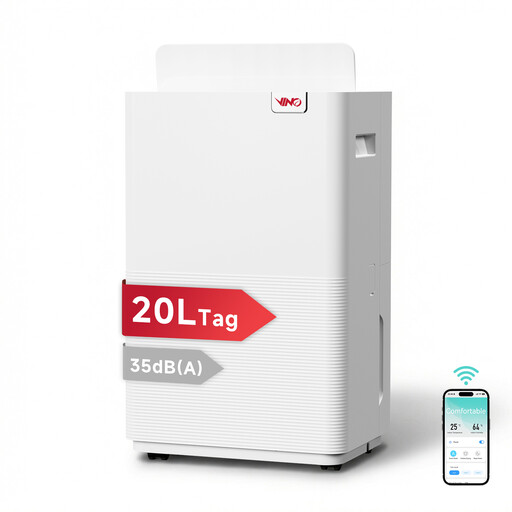 Image unavailable
VINO 20 L dehumidifier with WiFi and 2.5 L tank
The Dry mode may suit households that often dry laundry indoors, while WiFi control lets you operate the appliance remotely. The title states that it covers up to 40 m². Check what the stated 20 L capacity means for your room’s conditions, and check the noise figure for the mode you want to use.
View on Joybuy
 Image unavailable
Hotpoint CHD84MWBSEE 8 kg heat pump tumble dryer, class C
This 8 kg tumble dryer offers a way to hang less laundry around your home. Compare its capacity with your usual loads, then check the manual for the space needed, installation requirements and maintenance instructions. Refer to the model’s energy label to assess its energy use.
View on Joybuy
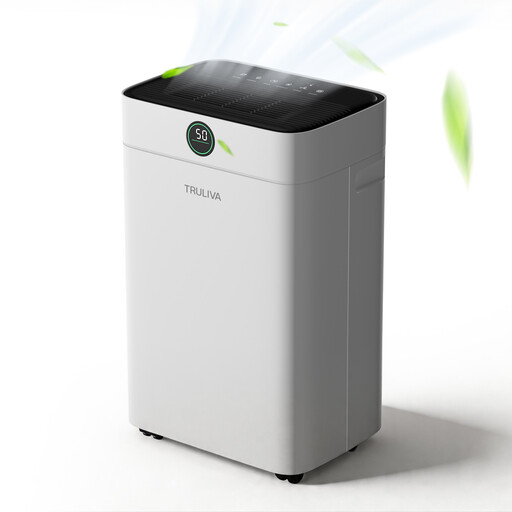 Image unavailable
TRULIVA 25 L/jour dehumidifier with 2.8 L tank
The laundry mode and continuous drainage hose give you two ways to manage humidity and collect water while drying laundry indoors. The 25 L/jour figure is a stated capacity, not a guarantee of how much it will extract in your home. Compare it with your room’s volume and the model’s measurement conditions.
View on Joybuy
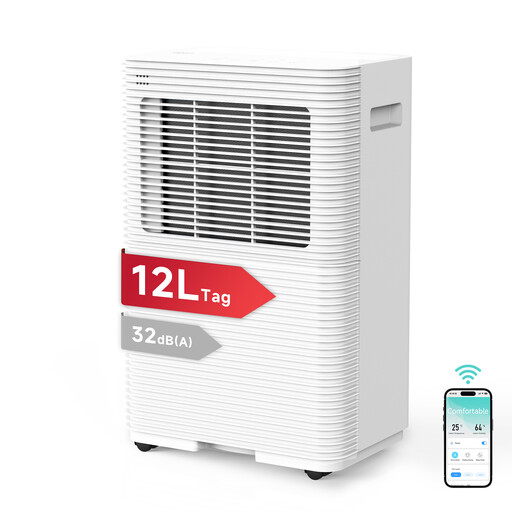 Image unavailable
VINO 12 L dehumidifier with WiFi and 1.8 L tank
Its Dry mode and WiFi control may be useful if you want to operate the appliance while your laundry is drying. It is stated to cover up to 24 m². Check your room’s volume and the conditions used for the stated 12 L capacity. If noise is a concern, confirm which measurement applies to the mode you plan to use.
View on Joybuy
Frequently asked questions
When should I measure humidity after hanging laundry out to dry?
Measure it before and during drying, then again after airing the room or running the VMC to see whether the rise persists. Qualitel’s general guide for relative humidity in a home is between 40 % and 60 %. Interpret your readings in the context of the temperature, room and activities taking place.
Can a dehumidifier replace a VMC or deal with damp walls?
No. A dehumidifier can provide extra help in a room where laundry is drying, but it cannot replace the continuous removal of moisture by suitable ventilation, as described by ADEME. If you notice marks on the walls, France Rénov’ recommends having their cause investigated rather than relying on a portable appliance.
Does a heat pump tumble dryer need an air outlet to the outside?
No. According to Que Choisir, condenser models, including heat pump dryers, do not need an air outlet to the outside, unlike vented tumble dryers. However, check the model’s manual for where it can go, its connections and maintenance instructions.
How do I compare two dehumidifiers for drying laundry?
Compare the stated room volume, capacity in L/jour and the conditions under which it is quoted. Then check the tank, water drainage and noise level. A higher stated capacity alone is not enough to predict how much moisture the appliance will extract in your home. Also consider your humidity readings and how often you dry laundry indoors.


