Households without room for two appliances
A washer-dryer combines both functions in one appliance. However, you’ll need to keep loads within its drying capacity, which is often lower than its washing capacity, as UFC-Que Choisir explains.


If you often dry large loads and have room for two appliances, compare separate tumble dryers. If you only have space for one appliance, a washer-dryer means adapting the load to its drying capacity, which is usually lower than its washing capacity, as UFC-Que Choisir points out. Spinning your laundry and then drying it on an airer is another option if the room and ventilation are suitable: ADEME recommends a large, well-ventilated room or one with mechanical ventilation extraction.
A washer-dryer combines both functions in one appliance. However, you’ll need to keep loads within its drying capacity, which is often lower than its washing capacity, as UFC-Que Choisir explains.
If you run several loads one after another, compare the capacity of a separate tumble dryer with that of a full washer-dryer cycle, and consider how much room you have for installation.
To keep drying your laundry naturally, you’ll need a suitable room and good ventilation. ADEME highlights that air-drying laundry releases moisture into your home.
Start with the space available and how much laundry you need to dry, then compare cycle times and the conditions needed for air-drying.
Worth considering: if you regularly dry large loads and have room to install a second appliance.
Bear in mind: the space it takes up and how you’ll collect the condensation water or, if the model allows, connect it to a drain.
Worth considering: if you need to fit washing and drying into a single space.
Be prepared for: a drying capacity that is usually lower than the washing capacity and, according to UFC-Que Choisir, longer drying times than with a separate appliance.
Worth considering: if you can set aside a suitable room for damp laundry without adding a tumble dryer.
Bear in mind: the space needed for an airer and adequate ventilation to deal with the moisture released, in line with ADEME’s recommendations.
| Criteria | What to check | Who is this important for? |
|---|---|---|
| Space available | Measure the space with the door open, and check whether you can install a second appliance in accordance with its instructions. | If your utility room can only accommodate one appliance, avoiding the need for a second space is key; around 33% of consumers prioritise this. |
| Load to be dried | Compare drying capacities in kg and, for a washer-dryer, check the capacity for a full cycle rather than just its washing capacity. | If you do laundry frequently, having to remove some items before drying makes things more complicated. Around 27% of consumers prioritise drying the intended load without splitting it. |
| Timing and sequence | Check the programme duration for your needs and the maximum load for a continuous wash-and-dry cycle. | If you run several loads one after another, waiting or handling laundry between cycles matters more; around 20% of consumers prioritise this drying schedule. |
| Air-drying | Check that you have space to hang your laundry and can dry it in a large, well-ventilated room or one with mechanical ventilation extraction. | If I want to keep using my airer, I need a suitable room for it. For around 20% of consumers, continuing to dry laundry this way is the main priority. |
The permitted load for drying may be lower. Bosch, for example, specifies 9 kg for washing but 6 kg for the wash-and-dry cycle on the WNG24402FR.
Check the washing capacity, drying capacity and full-cycle capacity separately for the model you’re considering.
UFC-Que Choisir says that washer-dryers generally take longer to dry laundry than separate tumble dryers. If you need to reduce the load, you may also have to handle the laundry again.
If you run several loads in a row, compare the duration of the programmes you’re likely to use and the load each one can handle.
According to ADEME, air-drying laundry releases a lot of moisture into the air inside your home.
Where possible, choose a large, well-ventilated room or one with mechanical ventilation extraction. A tumble dryer won’t solve a ventilation problem.
The label on washer-dryers shows separate figures for washing alone and for a full wash-and-dry cycle. A figure for one doesn’t tell you how much the other uses.
Compare figures for the same function and cycle, and check the stated reference load too.
The Bosch models mentioned here let you compare a dedicated tumble dryer with a washer-dryer from the same brand, without making assumptions about the rest of the range.
AEG’s heat-pump tumble dryer range is worth considering if you have space for a dedicated appliance.
Miele offers both dedicated tumble dryers and combination appliances, with capacities that illustrate the two different set-ups.
These appliances offer two ways to dry laundry indoors: choose a washer-dryer if one appliance is better suited to your space, or install a separate tumble dryer if you have room for one. For each model, compare its drying capacity with the size of your usual laundry loads.
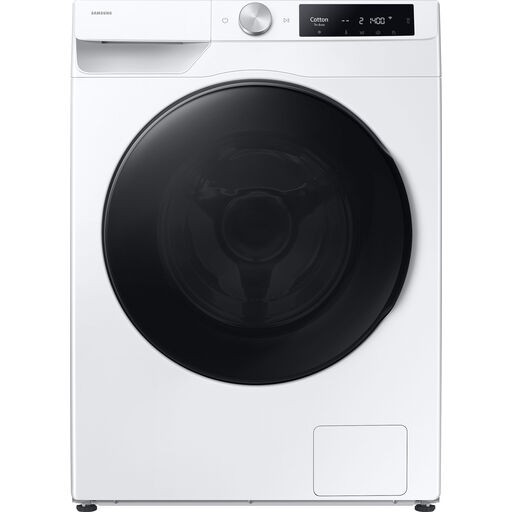 Image unavailable
Worth considering if you want to wash and dry with a single appliance. The model name indicates an 11 kg washing capacity and a 6 kg drying capacity, so keep full-cycle loads within this lower limit.
 Image unavailable
A dedicated appliance to consider if you can set aside space for it. The model name indicates an 8 kg drying capacity. Check its dimensions, programme duration and energy label to make sure it suits your needs.
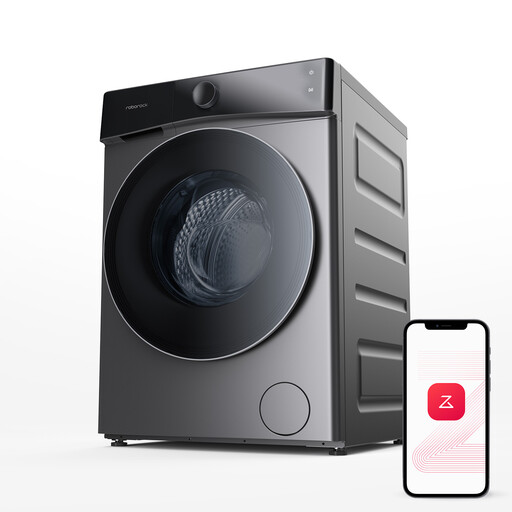 Image unavailable
A single-appliance option if you can adjust the amount of laundry you need to dry. The model name lists a 10 kg washing capacity and a 6 kg drying capacity. Check the dimensions and programmes to make sure they suit your loads.
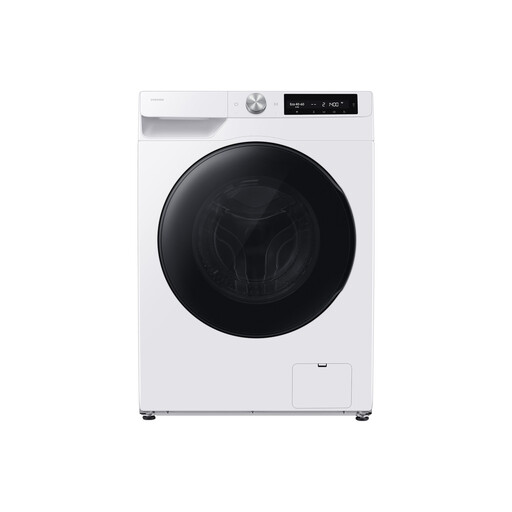 Image unavailable
Worth comparing if you’re looking for a combination appliance. The model name gives a 10 kg washing capacity and a 6 kg drying capacity. If you want to wash and dry a load without removing any laundry between cycles, it must stay within the full-cycle capacity.
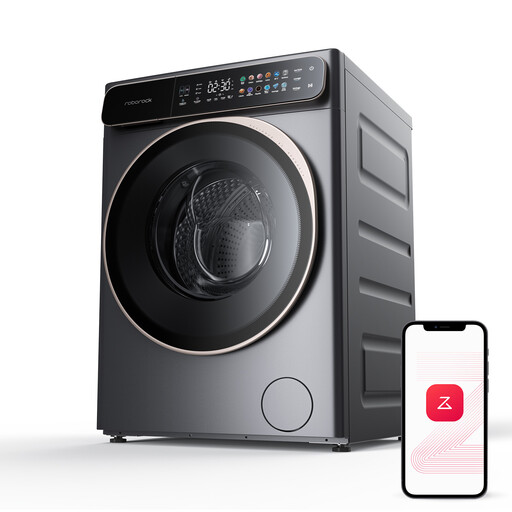 Image unavailable
Worth considering if you’d rather have one appliance than a separate tumble dryer. The model name lists a 10 kg washing capacity and a 6 kg drying capacity. Also check the space it needs and the duration of the cycle you’d use.
Because you can only dry a full wash load without removing any laundry if it’s within the capacity for the complete cycle. For example, Bosch lists a 9 kg washing capacity and a 6 kg wash-and-dry capacity for the WNG24402FR.
According to the European Commission, a condenser model doesn’t need an air-exhaust duct to the outside. However, check the model’s instructions for details on collecting condensation water, connection options and installation requirements.
Choose a room that can handle the moisture released. ADEME recommends a large, well-ventilated space or a room with mechanical ventilation extraction, preferably humidity-controlled. This precaution doesn’t replace checking for any ventilation problems.
First, compare figures for the same function and cycle. For washer-dryers, the European Commission lists information including energy use per 100 cycles, water use per cycle, duration and noise. Distinguish between washing alone and a full wash-and-dry cycle, and check the capacities for each.