What should you compare before choosing?
Start with where your laundry will dry, then compare each option with the size of your loads and the tasks it involves day to day.
| Priority |
What to check |
Your needs |
| Humidity and ventilation |
With a standard or heated airer, check the room and how well the air circulates. A dehumidifier works alongside an airer but doesn’t replace ventilation; a condenser tumble dryer collects water according to the model’s specifications. For air-drying, ADEME recommends a large, well-ventilated room or one with mechanical ventilation extraction. |
I want to dry my laundry without relying on an appliance to make up for poor ventilation. |
| Space and laundry load |
Compare a tumble dryer’s capacity in kg with its installation dimensions. For an airer, check its maximum load and how much space it takes up both open and folded. For a dehumidifier, compare the stated room size with the room where you’ll use it. |
Can I leave an airer open at home, or do I need to set aside a permanent spot for a machine? My usual loads also need to fit the equipment I choose. |
| Electricity and drying time |
When comparing similar tumble dryers, check the energy use in kWh/100 cycles alongside the relevant capacity and programme. For an electric airer, consider its power in W alongside how long it will actually be on: power alone doesn’t tell you how much electricity it will use per load. |
If I do several loads in a row, I want to compare running time and energy use on a like-for-like basis, rather than choosing based on a single energy rating or power figure. |
| Water and maintenance |
Check how easy it is to access the tank and, if you want continuous drainage, whether the model and location support a suitable connection. Also check how easy it is to reach the filter and follow the instructions for maintaining the tumble dryer’s condenser. |
I’d like to know how often I’ll need to empty a tank or clean a filter before choosing an appliance. |
Tumble dryers and dehumidifiers on Joybuy
These options offer two ways to organise indoor laundry drying: use a tumble dryer, or keep using an airer and run a dehumidifier in the room. The right choice depends in part on the space you have and how you’ll manage the water.
 Image unavailable
Hotpoint CHD84MWBSEE, 8 kg heat-pump tumble dryer, Class C
If you’d rather dry your laundry in a machine than on an airer, this model has an 8 kg capacity and a Class C energy rating. Check its installation dimensions, the energy use on its energy label, and how water is collected or drained to make sure it suits your space.
View on Joybuy
 Image unavailable
Electrolux EDH1018CD GentleCare, 8 kg condenser tumble dryer
This 8 kg condenser tumble dryer lets you dry your laundry in a machine without leaving an airer up. Its name mentions OptiSense and propane refrigerant. Before comparing energy use, check the space you’ll need, access to the collected water and the energy label for the exact model.
View on Joybuy
 Image unavailable
Comfee CD08EHP05W-HR, 8 kg heat-pump tumble dryer, Class D
This 8 kg model is an option if you’d rather dry your laundry in a machine than in the room. Joybuy France lists it with a Class D energy rating. To decide where to install it and how to use it, check its dimensions, the energy use on its energy label and how it handles condensed water.
View on Joybuy
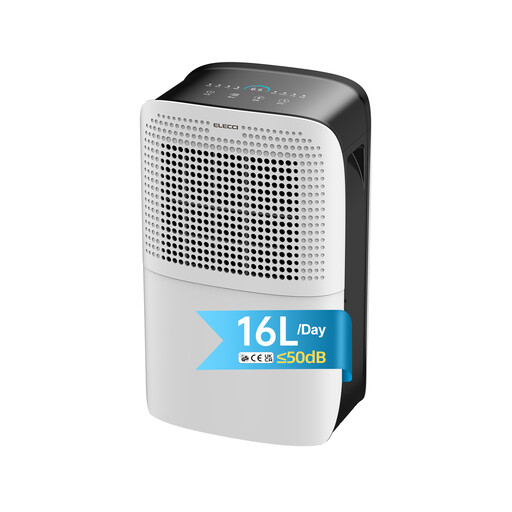 Image unavailable
ELECCI, 16 L/day dehumidifier with 3.1 L tank
Worth considering if you dry laundry on an airer and also want to remove moisture from the room’s air. The product name lists a capacity of 16 L/day, a 3.1 L tank, a hose for continuous drainage and a 24-hour timer. The stated capacity depends on the test conditions. Make sure the room is suitably ventilated and check the conditions for using the appliance in your space.
View on Joybuy
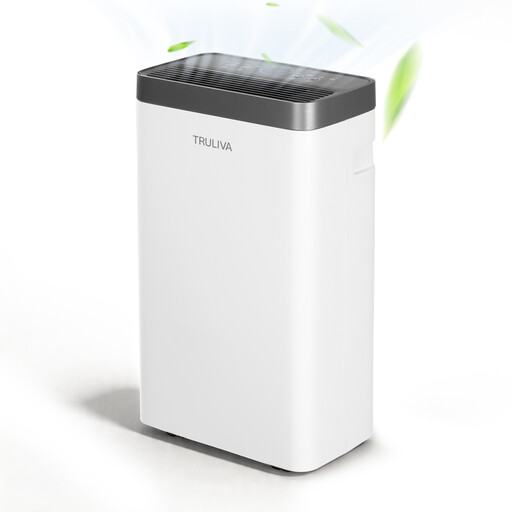 Image unavailable
TRULIVA AP10-2012EE, dehumidifier for rooms of around 32 m²
This dehumidifier can be used alongside an airer when laundry is drying in a room. Its name lists a room size of around 32 m², a laundry-drying mode, a 24-hour timer and continuous drainage. Check the operating conditions, where the hose needs to go and how well the room is ventilated.
View on Joybuy
Frequently asked questions
Can a dehumidifier replace ventilation or a mechanical ventilation system?
No. It can remove moisture from the air while your laundry dries on an airer, but it doesn’t refresh the air in your home in place of suitable ventilation. For indoor air-drying, ADEME recommends a large, well-ventilated room or one with mechanical ventilation extraction.
When should you consider a vented tumble dryer?
Only consider one if you can install it with the vent duct leading outside, in line with the model’s instructions. If that isn’t possible, look at a condenser or heat-pump model and check how its condensed water will be collected or drained.
What should you measure before buying a tumble dryer?
Measure the space and access routes, then check the clearances required in the instructions. Next, compare the capacity, dimensions, noise level and access to the tank or drainage outlet for the specific model. As a guide to dimensions, Bosch lists its 9 kg WQG2450SFR as 842 × 598 × 613 mm.
What maintenance does a condenser or heat-pump tumble dryer need?
Follow the appliance instructions for cleaning the filter and, where accessible, the condenser. Electrolux recommends cleaning the filter after every cycle in its maintenance guidance. Before buying, check that these parts will be easy to reach where you plan to install the appliance.


