If you have a large, well-ventilated room or one with mechanical ventilation extraction where you can dry your laundry, an airer is still worth considering. If you do laundry frequently and don’t have a suitable room, compare heat pump tumble dryers by load capacity, cycle times and condensate management. A dehumidifier can complement an airer, but its drying time is not directly comparable with that of a tumble dryer.
Who are these options for?
Households without a suitable drying room
You regularly dry laundry indoors but don’t have a large, well-ventilated room or one with mechanical ventilation extraction. Where you dry your laundry is the first decision to make: ADEME recommends these room conditions for air-drying.
Households that do laundry frequently
You need to plan how much space each load requires and when your laundry will be dry. For a tumble dryer, compare the capacity and Eco programme duration for the exact model, as listed in its product information.
People who want to keep using an airer
You’re considering adding a dehumidifier and can manage a water tank or drainage. De’Longhi’s product information shows why it’s important to check the conditions used to measure extraction, as well as the tank and drainage options, rather than looking only at the litres-per-day figure.
What should you consider when choosing?
First, check where your laundry can dry. Then consider how each option suits how often you do laundry and how much space you have.
Airer only
Worth considering: in a large, well-ventilated room or one with mechanical ventilation extraction, in line with ADEME’s recommendations.
Bear in mind: your laundry will take up space while it dries and release moisture into the air indoors.
Heat pump tumble dryer
Worth considering: if you do laundry regularly, have space to install an appliance and can collect or drain away the condensed water.
Bear in mind: the space the appliance takes up and the Eco programme duration, which you’ll need to check for each model.
Airer with a dehumidifier
Worth considering: if you want to keep using an airer and remove some of the moisture from the room’s air.
Bear in mind: the airer will still take up space, and you’ll need to empty the appliance’s tank or arrange drainage.
| What matters |
What to check |
Who it matters to |
| Humidity and ventilation |
Look for a large, well-ventilated room or one with mechanical ventilation extraction. If you’re considering a dehumidifier, check the conditions used to measure extraction and how water is managed. |
If there’s no obviously suitable room, I want to plan how to dry my laundry without relying solely on limited ventilation. Around 40% of consumers put humidity and ventilation first. |
| Load size and drying time |
For a tumble dryer, compare the capacity in kg and the Eco programme duration for a full load on the exact model. |
When I have several loads to do, I want a clearly stated capacity and a cycle with a predictable duration. Around 30% of consumers prioritise load size and drying time. |
| Space and everyday maintenance |
Measure the space and access routes. Depending on the appliance, make sure you can reach the tank or connect a drain hose. |
In a small space, I want to be able to install the appliance and deal with the collected water without making every load more complicated. Around 30% of consumers put these practical considerations first. |
Mistakes to avoid
-
Putting the airer in the only room available
Not using an electrical appliance doesn’t solve the problem of humidity: ADEME describes air-drying as releasing particularly high levels of moisture into the air indoors.
Before choosing this option, look for a large, well-ventilated room or one with mechanical ventilation extraction. If there isn’t an obviously suitable room, reconsider how you’ll dry your laundry regularly.
-
Choosing a tumble dryer based on its energy rating alone
The rating alone won’t tell you whether the load capacity and programme duration suit your laundry. Model-specific information published in EPREL lets you compare these features separately.
Compare the kg capacity, Eco programme duration, energy consumption declared on the same basis, noise level and condensate management in the product information for the models you’re considering.
-
Assuming litres per day tells you how long laundry will take to dry
A dehumidifier’s extraction rate is quoted under specific temperature and humidity conditions. For example, De’Longhi gives a figure for its DEP210 measured at 30 °C and 80 % relative humidity. This doesn’t tell you how long your laundry will take to dry.
Check the measurement conditions alongside the quoted figure, and look at the power rating, tank and drainage options.
-
Forgetting where the collected water will go
Depending on the model, a condenser tumble dryer or dehumidifier may need its tank emptied, or may allow water to be drained away through a hose.
Before deciding where to place the appliance, check that you can access the tank, whether a hose can be connected and whether the hose is included.
Brands to know
These examples of ranges and models can help you identify features to compare; they don’t represent every appliance from each brand.
Bosch
Its heat pump tumble dryers offer models to compare by capacity, programmes and water management.
- Bosch Electroménager France lists a water drain hose for the WRB247C0FR.
- The WRB247C0FR’s drain hose doesn’t mean that another Bosch model will include one.
Miele
The range includes heat pump tumble dryers to compare by capacity and condensate drainage.
- Miele France lists a 9 kg load capacity, a condensate tank and an integrated drainage kit for the TQ 1000 WP.
- These features apply to the TQ 1000 WP; check the specifications of any other model separately.
De’Longhi
Its dehumidifiers are worth considering if you want to keep using an airer and manage the water extracted from the air.
- De’Longhi France quotes an extraction rate of 10 L/24 h for the DEP210 at 30 °C and 80 % relative humidity.
- This figure, measured under specific conditions, doesn’t tell you how long laundry will take to dry; drainage options vary by model.
Appliances for two different approaches to drying
This Joybuy selection includes a heat pump tumble dryer for drying clothes in a drum, as well as dehumidifiers to consider alongside an airer. For each appliance, check that the installation and water management suit your home.
 Image unavailable
Hotpoint CHD84MWBSEE, 8 kg heat pump tumble dryer
Worth considering if you want to dry regular loads in a drum and have enough space. The product name gives a capacity of 8 kg and a C rating; also compare the Eco programme duration and the energy consumption declared for the exact model. If you plan to connect a drain hose, check that your installation is compatible and that the hose is included.
View on Joybuy
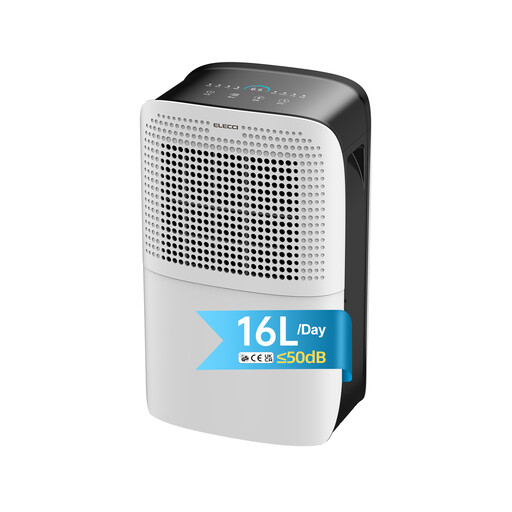 Image unavailable
ELECCI 16 L/day, 3.1 L tank with hose
Worth considering alongside an airer if you have space for the appliance and can manage the collected water. The product name states an extraction rate of 16 L/day, a 3.1 L tank and a hose for continuous drainage. Check the conditions used to measure extraction and the dimensions before deciding where to put it: litres per day doesn’t determine how long laundry will take to dry.
View on Joybuy
 Image unavailable
VINO 20 L, 2.5 L tank, WiFi
Worth considering if you’re keeping an airer and want a dehumidifier with a Dry mode. The product name lists a 2.5 L tank and WiFi controls. Check the conditions used to measure extraction, the dimensions and the noise level for the version being sold: the noise figures given for this model are inconsistent.
View on Joybuy
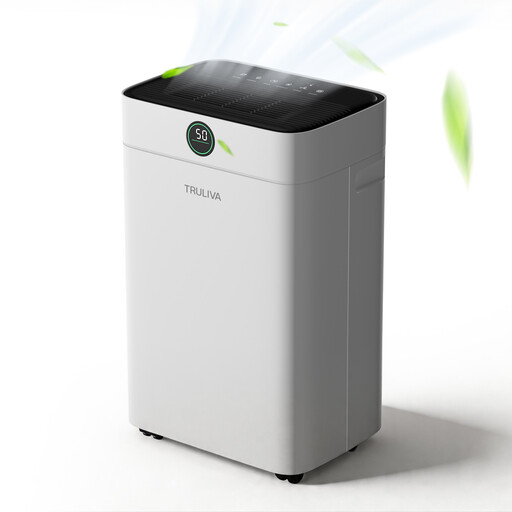 Image unavailable
TRULIVA 25 L/day, 2.8 L tank with hose
Worth considering alongside an airer if you can empty the tank or arrange continuous drainage. The product name states an extraction rate of 25 L/day, a 2.8 L tank and a drain hose. This rate depends on the measurement conditions and doesn’t predict drying time; also allow for the clearance required around the appliance.
View on Joybuy
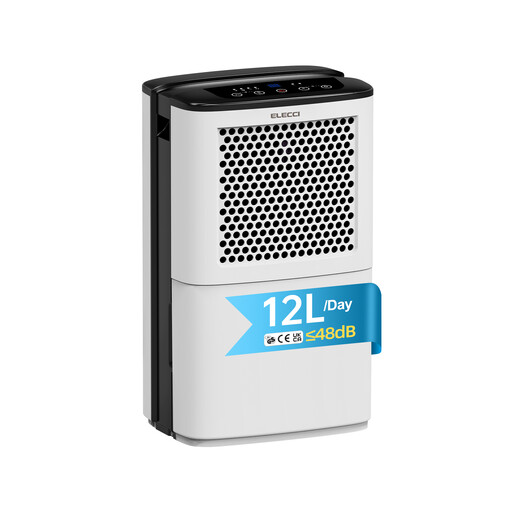 Image unavailable
ELECCI 12 L/day, 3.8 L tank with hose
Worth considering if you’re keeping your airer and want the choice of emptying the tank or using continuous drainage. The product name lists an extraction rate of 12 L/day, a 3.8 L tank and a hose. Only compare this rate with figures measured under the same conditions. When planning your laundry, consider how long the appliance will actually need to run.
View on Joybuy
Frequently asked questions
Does a heat pump tumble dryer need an external air vent?
No. A condenser model collects water in a tank or drains it away, unlike a vented tumble dryer, which expels moist air outside, as the European Commission explains. Check the manual for the model you’re considering to confirm the connection options and whether a hose is included.
What should I compare beyond a tumble dryer’s energy rating?
Compare the capacity, energy consumption declared on the same basis, Eco programme duration for a full load, noise level and condensation efficiency for the exact model. Product information published in EPREL lets you compare these features without assuming that the same rating letter means the same cycle duration.
Can a dehumidifier replace a tumble dryer?
A dehumidifier can help when you’re drying laundry on an airer by removing moisture from the air, but it doesn’t dry a load in a drum using a stated cycle. The extraction rate in L/24 h depends on the temperature and humidity conditions given by the manufacturer. Before choosing this combination, also check the power rating, tank and drainage options.
What maintenance does a condenser tumble dryer need?
Follow the manual for your chosen model when cleaning the filter and managing the tank or drain connection. Before installing the appliance, make sure you can easily access anything the manual says you need to clean or empty.


